
LED Christmas Lights: Superior Efficiency, Thermal Safety, and Longevity for American Households
Upgrading from legacy incandescent strings to modern LED alternatives is the single most critical decision a homeowner can make to optimize winter decorating, reduce maintenance, and ensure absolute safety across domestic environments. Traditional incandescent holiday bulbs convert up to ninety percent of their consumed electrical energy into thermal radiation rather than visible light, turning delicate evergreen branches into hidden fire hazards while driving up household utility costs during peak winter months.
Modern LED christmas lights operate at a fraction of that power consumption, drawing minimal electrical current and remaining remarkably cool to the touch even after consecutive days of continuous operation. This near-zero thermal output completely eliminates the risk of scorching dry pine needles or damaging delicate fabric surrounds on nearby furnishings, making them exceptionally safe for households with children and active pets. Furthermore, high-grade solid-state diode construction withstands accidental impacts, harsh sub-zero temperatures, and severe winter storms far better than fragile glass filaments. By integrating advanced semiconductor technology into holiday displays, homeowners achieve extraordinary energy savings without sacrificing the authentic warmth and welcoming ambiance expected of a traditional American Christmas.
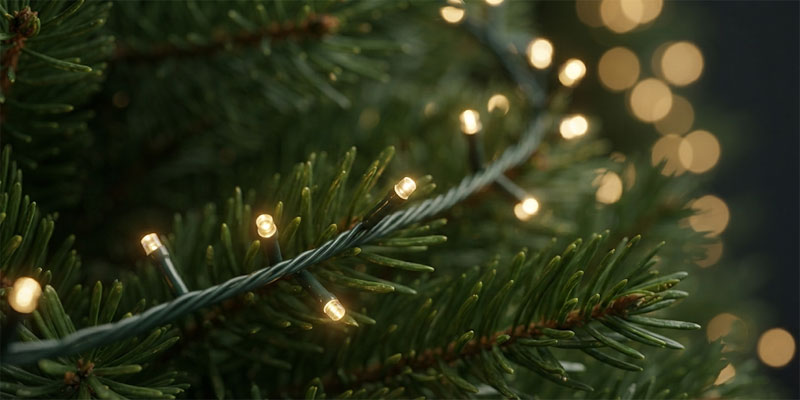
Furthermore, the lifespan of commercial-grade LED holiday strings stretches across tens of thousands of operating hours, effectively eliminating the frustrating annual cycle of testing dead bulbs and replacing burnt-out fuses. Advanced diodes maintain consistent chromaticity over years of seasonal deployment, ensuring that your holiday investment retains its pristine brilliance year after year. For American families facing rising municipal electricity rates and stringent environmental standards, switching entirely to certified energy-efficient LED strings provides both immediate financial relief on January utility statements and long-term ecological responsibility.
White Christmas Lights versus Colored Displays: Mastering Interior Color Psychology
The emotional resonance, spatial perception, and visual sophistication of a holiday display hinge entirely upon precise color temperature management and strategic palette curation. Selecting the appropriate hue dictates whether an interior space feels like a refined residential sanctuary or an overwhelming commercial storefront.
The Restorative Power of Warm White 2700K Illumination
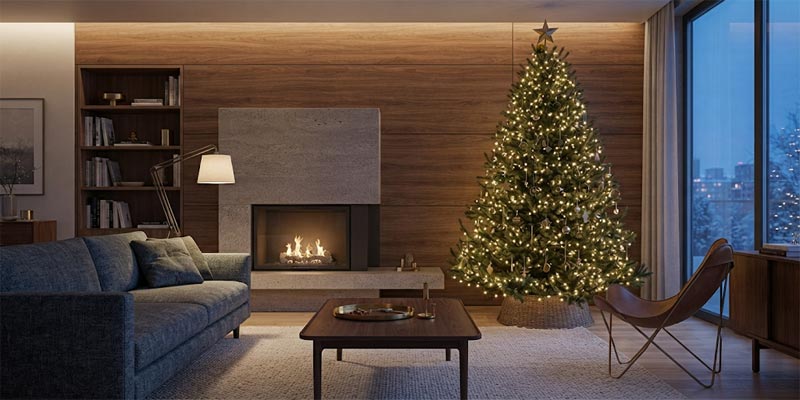
For homeowners striving for understated elegance and sophisticated interior harmony, white christmas lights calibrated to a cozy 2700K color temperature establish an inviting, restorative environment. This specific amber-shifted spectrum complements natural architectural timber, exposed stone fireplaces, and rich velvet or wool textiles. Unlike harsh blue-white LEDs that suppress evening melatonin production and induce visual fatigue, a carefully tuned 2700K output respects circadian rhythms, offering a seamless extension of the warm, ambient lighting principles found within our core collection of artisanal Table Lamps designed for everyday residential living.
The psychological impact of a 2700K color profile cannot be overstated during dark winter months in regions experiencing harsh northern climates. In American homes where living rooms serve as multi-functional zones for family gathering, reading, and quiet evening unwinding, warm white holiday strings provide a soft visual anchor that softens sharp interior shadows and creates a deeply comforting cocoon-like atmosphere. It replicates the cozy, intimate feeling of an open hearth without the associated maintenance or smoke hazards.
Dynamic Energy and Sophisticated Balance of Multi-Color Options
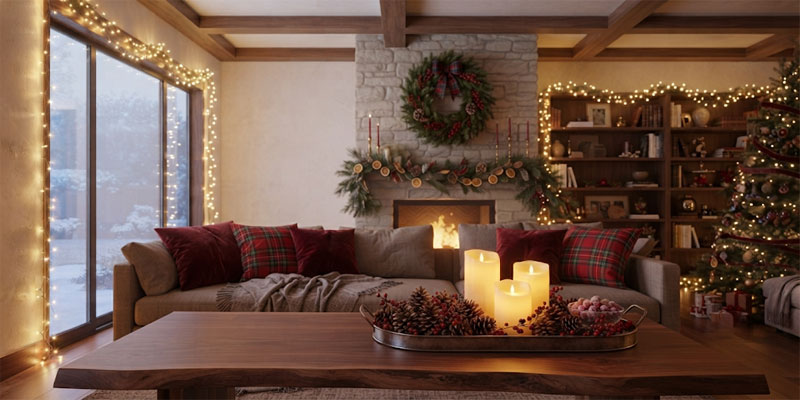
For families with children and those seeking traditional festive vibrancy, colored christmas lights inject lively personality into shared entertainment spaces. Modern multi-color LEDs utilize precision optical filters and phosphor coatings to prevent color bleeding or harsh chromatic transitions. This ensures that vibrant ruby reds, deep emerald greens, and rich sapphire blues harmonize gracefully, enhancing rather than overwhelming the sophisticated interior design of contemporary American living rooms.
When balancing colored lights indoors, professional interior designers recommend pairing them with neutral foundational décor and matte finishes. This deliberate contrast prevents sensory overload and maintains a curated, high-end aesthetic that bridges the gap between playful holiday cheer and timeless interior styling, ensuring that adult living spaces retain their refined character throughout the holiday season.

Professional Techniques for Mastering Christmas String Lights and Tree Wrapping
Achieving a professionally styled holiday tree requires structural methodology rather than random, haphazard wrapping. The most common amateur mistake involves looping light strings superficially around the exterior perimeter of branches, leaving large, unlit dark voids near the trunk and creating an artificial, flat appearance that lacks depth.
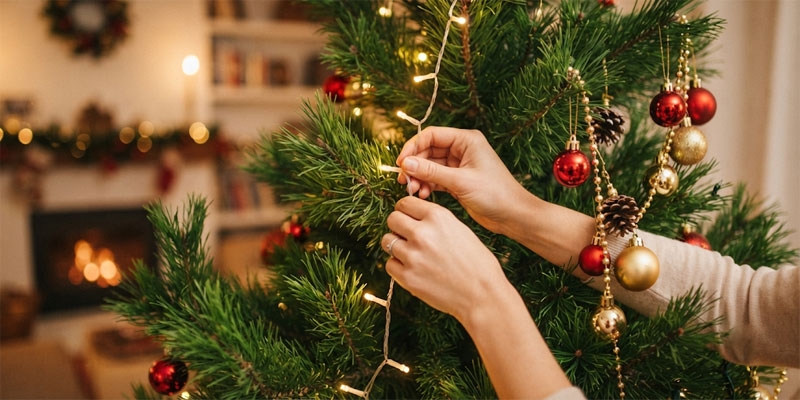
Master interior designers and professional decorators utilize a vertical weaving technique with christmas string lights to overcome this visual limitation. Instead of circling the tree horizontally in concentric rings, decorators begin at the base near the trunk and weave strings systematically outward along major structural branches, then back inward toward the center. This dimensional layering distributes luminous density evenly throughout the entire canopy, creating remarkable three-dimensional depth that celebrates the organic architecture of the tree. When extending string lights across architectural room perimeters, maintaining precise, measured spacing prevents visual clutter and preserves clean, intentional sightlines.
To execute this technique flawlessly, divide your Christmas tree lights layout into distinct vertical sectors or visual wedges. Work methodically from the interior trunk outward toward the branch tips, weaving the wire back and forth along the branch structure. This method not only secures the strings against accidental displacement by active pets or playing children but also conceals green or brown wire profiles entirely within the dense foliage, creating the illusion that light emanates naturally from within the tree itself.
Fairy Lights: Delicate Intimacy and Micro-Scale Interior Accentuation
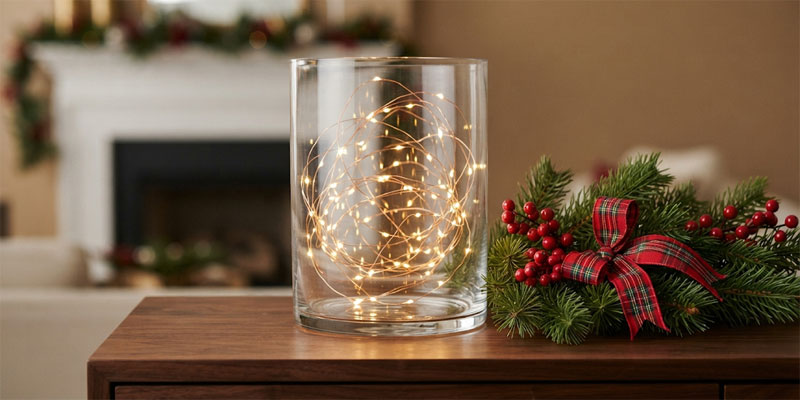
While heavy string lights anchor primary focal points, ultra-fine fairy lights provide unmatched versatility for subtle, intimate interior accentuation. Characterized by exceptionally thin, flexible copper or silver wire profiles, fairy lights virtually disappear against background surfaces, leaving only floating points of warm luminescence visible to the observer.
Homeowners can weave these slender strands through glass hurricane vases, wrap them delicately around staircase handrails, or tuck them artfully along open bookshelf compartments to introduce magical points of light. This subtle layering provides a gentle, gradual transition from bright architectural overhead fixtures to intimate evening relaxation, reinforcing the cohesive design narrative of thoughtful illumination throughout the home.
The microscopic scale of fairy wire allows it to conform effortlessly to intricate furniture moldings, table centerpieces, and floral arrangements. Because they operate on low-voltage USB or battery configurations, they offer complete placement freedom away from standard wall outlets, solving complex spatial design challenges in awkward corners of living rooms, dens, and reading nooks without creating tripping hazards or cord clutter.
Outdoor Christmas Lights: Rigorous Weatherproofing and Neighborhood Curb Appeal
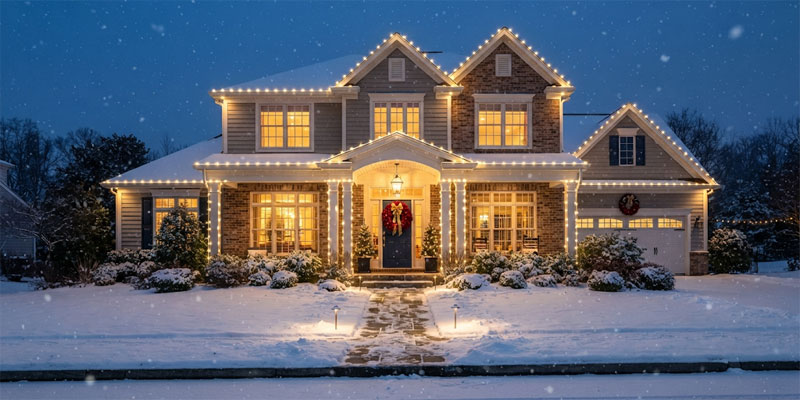
Extending festive illumination to the exterior architecture elevates neighborhood curb appeal and creates a welcoming, hospitable threshold for holiday guests and family members across American communities. However, outdoor installations face severe environmental stressors, including freezing rain, heavy snowfall, accumulating ice, and sustained high-speed winter winds.
Ingress Protection Ratings and Environmental Resistance
Outdoor christmas lights require robust ingress protection ratings—minimally IP65 or higher—to prevent moisture infiltration, internal condensation, and subsequent electrical short circuits. Premium outdoor sets incorporate molded rubber gasket seals, heavy-duty insulated wiring jackets, and weather-resistant plug caps that guarantee uninterrupted, safe operation throughout harsh winter storms.
Secure Architectural Framing and Mechanical Protection
When outlining rooflines, porch columns, and landscape shrubbery, installers should utilize specialized insulated shingle clips and gutter hooks rather than damaging nails, staples, or screw fasteners that compromise electrical wire insulation. Secure, tension-managed routing prevents wind-induced friction and abrasion, protecting your seasonal investment and preserving the exterior finish of your home.
Furthermore, American homeowners must verify that all outdoor extension cords and mechanical timers are explicitly rated for wet-location use and equipped with built-in Ground Fault Circuit Interrupter (GFCI) protection to prevent electrical hazards during freeze-thaw cycles. Ignoring these safety protocols risks tripping whole-home electrical panels or creating dangerous ground faults in wet turf.
Solar Christmas Lights: Sustainable Off-Grid Independence for Exterior Zones
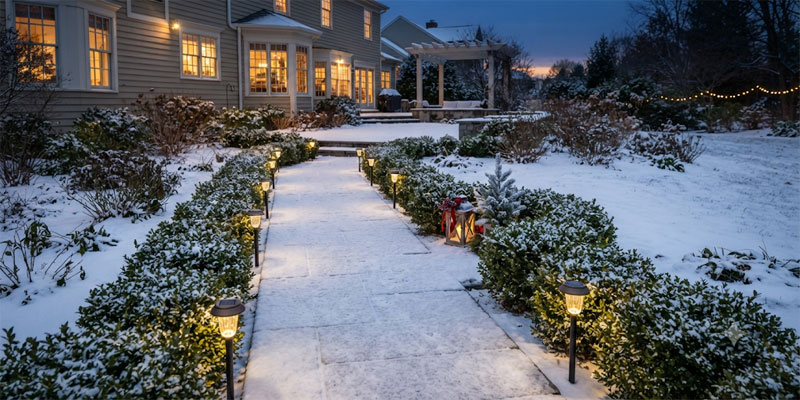
As American homeowners increasingly prioritize sustainable living practices and energy independence, solar christmas lights offer a brilliant, eco-friendly alternative for landscape and garden illumination. Equipped with high-efficiency monocrystalline photovoltaic panels and integrated high-capacity lithium-ion storage cells, these advanced fixtures harness daytime sunlight to power evening displays automatically.
Solar holiday lighting eliminates the need for unsightly, hazardous extension cords stretching across manicured lawns or outdoor walkways, removing tripping hazards completely for visiting guests and children. Modern solar controllers incorporate intelligent dusk-to-dawn sensors that manage energy distribution efficiently, guaranteeing steady, reliable illumination even throughout overcast winter weeks.
Deploying solar lights along garden pathways, driveway borders, and distant yard trees allows homeowners to extend their festive design narrative beyond the immediate perimeter of the house structure without incurring additional electrical costs or navigating complex outdoor wiring routes through frozen ground.
Post-Season Storage and Maintenance Strategies for Extended Lifespan
The annual frustration of untangling knotted, broken light strands next December stems entirely from improper post-holiday teardown, handling, and storage techniques. Rushing the removal process often places excessive mechanical stress on delicate internal wiring joints, crimping copper cores and causing premature electrical failure.
A Three-Step Tangle-Free Storage Protocol
-
Unplug, Test, and Inspect: Carefully detach all strings from power sources, inspect bulbs for cracks, and check wire insulation for wear before packing away your displays.
-
Utilize Rigid Spools or Cardboard Wraps: Wind each individual string evenly around sturdy cardboard cutouts, plastic storage reels, or custom spools rather than balling them loosely into cardboard boxes.
-
Climate-Controlled Storage Environments: Pack neatly wrapped strands inside sealed, moisture-proof plastic storage containers and store them in temperature-stable environments like an interior hall closet rather than a freezing, damp attic or uninsulated garage.
Adhering to these disciplined storage protocols ensures that your holiday lighting inventory remains pristine, operational, and immediately ready for rapid deployment when the next winter season arrives, saving both time and replacement costs.
Frequently Asked Questions
How do I calculate the exact number of Christmas lights needed for my tree?
A reliable professional rule of thumb is utilizing approximately 100 individual LED lights for every vertical foot of tree height. For example, a standard 7-foot holiday tree requires roughly 700 to 800 lights to achieve a lush, balanced density without appearing sparse or overly congested.
Can indoor Christmas lights be safely used outdoors during freezing weather?
No. Indoor light strings lack the weather-resistant gasket sealing, heavy-duty UV-resistant insulation, and moisture barriers required to withstand rain, snow, and ice accumulation. Always verify that product packaging explicitly indicates an outdoor listing before exterior installation.
How can I prevent circuit breakers from tripping when connecting multiple light strings?
Modern LED Christmas lights draw minimal electrical current compared to vintage incandescent bulbs, allowing you to connect significantly more strings end-to-end safely. Always consult the manufacturer’s maximum run specifications and avoid exceeding recommended series limits to protect your home’s electrical circuits.
What are the primary advantages of warm white LED lights over traditional incandescent bulbs?
Warm white LEDs consume up to 90% less electricity, generate virtually zero thermal output (eliminating fire risks), last for tens of thousands of operating hours, and maintain a cozy 2700K color profile that replicates the nostalgic glow of vintage filaments.