


The Architectural Role of Living Room Table Lamps
Lighting design is a spatial discipline that dictates how human beings perceive volume, intimacy, and comfort within an interior layout. While ceiling fixtures provide baseline visibility, secondary luminaires establish character and personal zone boundaries.
Dynamic Layering: Ambient, Task, and Accent Illumination
Effective living room lighting relies on three synchronized layers: ambient background glow, focused task lighting, and sculptural accent illumination. Overhead downlights supply raw foot-candles, but relying solely on them produces flat, institutional shadows that strain optical accommodation.
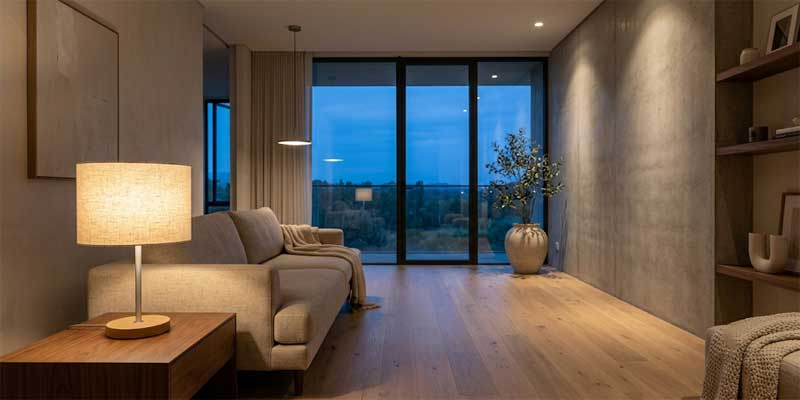
Integrating dedicated table lamps for living room arrangements introduces targeted mid-level illumination. A strategically positioned luminaire illuminates functional zones—such as an armchair reading nook or a low-profile media console—without spilling invasive glare into conversation zones. By independently controlling these light layers, homeowners can transition smoothly from vibrant afternoon gatherings to restful evening wind-downs.
Visual Anchors and Spatial Proportion
Luminaires serve as volumetric anchors that visually tether furniture groupings to the architectural envelope. Without intentional vertical lighting accents, expansive living rooms risk appearing sparse, cold, and disconnected.
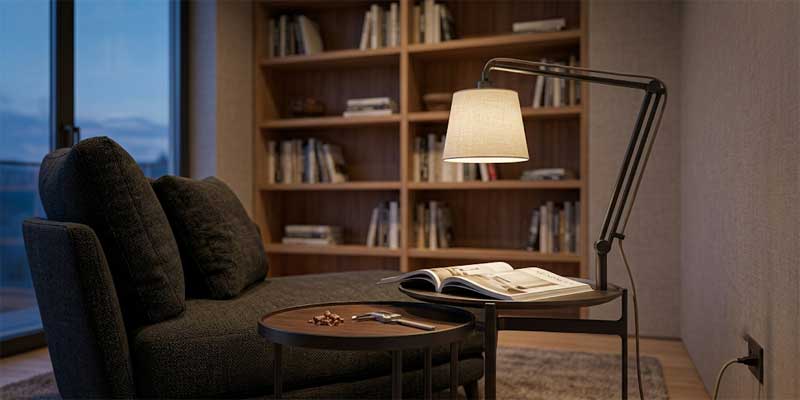
A substantial luminaire placed alongside a low-slung sectional draws the eye upward, celebrating vertical ceiling volume while softening sharp joinery and wall transitions. The tactile combination of matte anodized alloys, textured natural linen, and hand-finished timber bases creates tactile counterpoints to leather upholstery, architectural concrete, or natural stone flooring.
Critical Photometric Standards for Living Spaces
A visually pleasing lamp must deliver clean, biologically supportive optical performance. Evaluating key technical specifications ensures your lighting enhances domestic well-being rather than causing digital-era eye fatigue.
Color Temperature: The Restorative Science of 2700K Warm Light
Color temperature, measured in Kelvin (K), dictates the emotional tone and circadian impact of interior spaces. Higher temperatures above 4000K mimic midday sun and emit significant blue light wavelengths, which stimulate cortisol production and delay natural melatonin release.
Living room table lamps should emit a steady, warm white light between 2700K and 3000K. This warm spectrum replicates the tranquil amber tones of traditional incandescent filaments and twilight horizons. It softens room transitions, enriches warm wood grains, and allows the human nervous system to relax naturally without sacrificing visual contrast for evening tasks.
High Color Rendering Index (CRI 95+) for True Material Vibrancy
The Color Rendering Index (CRI, Ra) measures how accurately an artificial light source reveals the authentic pigments of physical objects compared to natural daylight (CRI 100). Cheap commercial LEDs often cut corners with low-CRI diodes (Ra < 80) that impart a dull, sickly greenish-gray cast across interior materials.
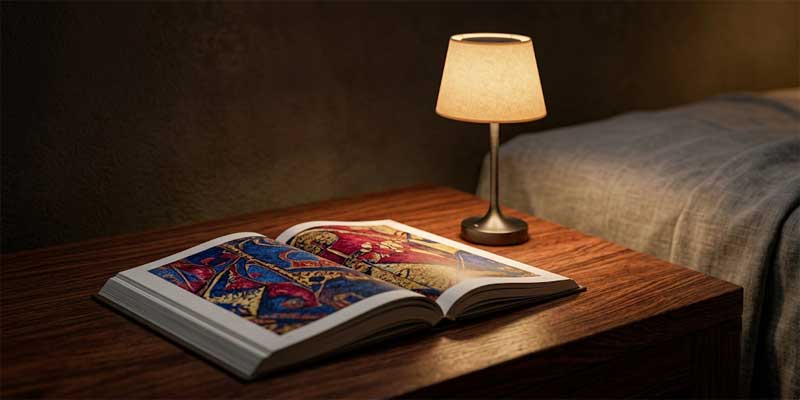
TAKETI fixtures deploy premium LED modules delivering CRI 95+ with a minimum R9 (saturated red) rating of 80. This optical precision guarantees that architectural textiles, original art, polished walnut surfaces, and natural skin tones retain their organic richness, depth, and spatial warmth under low-light evening conditions.
Eliminating Optical Flutter: Ripple-Free Constant Current Drivers
Invisible optical flutter—caused by cheap pulse-width modulation (PWM) power drivers—rapidly switches LEDs on and off at rates subconscious to the naked eye. Even when imperceptible, this rapid micro-stroboscopic flutter triggers ocular fatigue, tension headaches, and sensory exhaustion during prolonged reading or leisure.
Professional-grade fixtures utilize custom-tuned constant current DC drivers engineered to suppress ripple frequency entirely. Delivering smooth, uninterrupted luminous flux guarantees continuous visual protection. Your eyes remain relaxed throughout hours of evening reading, sketching, or conversation.
| Photometric Metric | Standard Mass-Market Fixtures | TAKETI Architectural Luminaires | Practical Impact on Home Life |
| Correlated Color Temp | 3500K – 5000K (Harsh / Cool) | 2700K Warm White Equilibrium | Promotes evening melatonin synthesis and visual calm |
| Color Rendering (CRI) | CRI 70 – 80 (Blanched / Muddy) | CRI 95+ (R9 > 80 Deep Spectrum) | Accurately renders architectural wood, art, and textiles |
| Stroboscopic Ripple | High-Frequency PWM Flutter | Zero-Flicker Constant Current DC | Eliminates migraine triggers, eye strain, and optical fatigue |
| Dimming Architecture | Stepped clicks or absent | Stepless Continuous Capacitive Touch | Intuitive adaptation from functional task to ambient glow |
Ergonomic Placement Guidelines Across Living Room Zones
A premium fixture delivers maximum aesthetic and ergonomic value only when placed in correct proportion to surrounding furniture and eye levels.
                  TYPICAL SITTING EYE LEVEL (38" - 42")
                                   │
             ┌─────────────────────┴─────────────────────┐
             ▼                                           ▼
   ┌──────────────────┐                         ┌──────────────────┐
   │ Lower Shade Rim  │◄── MUST SIT AT EYE ───►│  Bottom of Shade │
   │ (38" to 42" AFF) │    LEVEL TO SHIELD      │  Blocks Glare    │
   └─────────┬────────┘    DIRECT DIODE/BULB    └────────┬─────────┘
             │                                           │
   ┌─────────┴────────┐                         ┌────────┴─────────┐
   │ Side/End Table   │                         │ Sofa / Armchair  │
   │ (24" - 26" High) │                         │ Seat Cushion     │
   └──────────────────┘                         └──────────────────┘
End Table Lamps for Living Room: Proportions Beside the Sofa
Placing end table lamps for living room surfaces flanking main sofas demands strict attention to seated eye lines. When you sit comfortably on an upholstered couch, your eye level generally rests between 38 and 42 inches from the finished floor.
The lower rim of the lampshade must align horizontally with this seated eye height. If the shade sits too high, the bare bulb exposes seated family members to uncomfortable glare; if mounted too low, the downward cone of illumination narrows excessively, casting dark shadows across the tabletop. As a proven baseline: a side table measuring 24 inches tall pairs best with an end table lamp standing between 26 and 30 inches in overall height.
Beautiful Table Lamps for Living Room Console and Credenza Displays
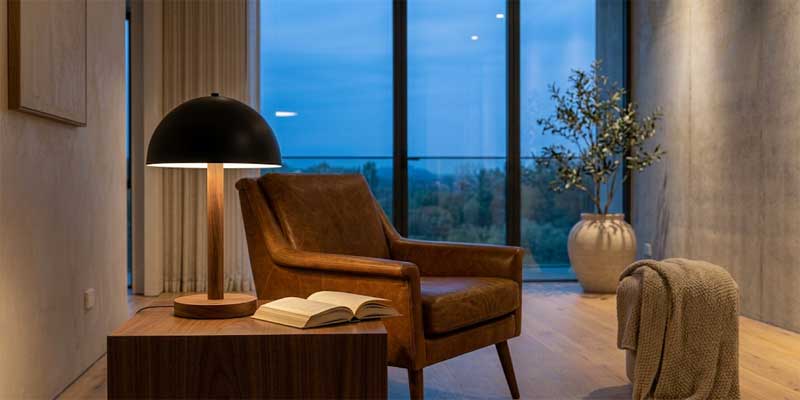
Positioning beautiful table lamps for living room credenzas, low sideboards, and hallway entry consoles shifts the design focus toward sculptural presence and ambient wash. Because users often view these fixtures while standing or passing through, total luminaire height can expand gracefully to 32 to 36 inches.
Styling a linear console table benefits from an off-center asymmetrical placement: pairing a versatile table lamp with low stone vessels, stacked hardcovers, or framed prints creates a curated focal point. This composition distributes visual weight evenly without cluttering surfaces, directing a gentle cascade of warm light down textured casework facades.
Balancing Coffee Tables and Open Floating Furniture
Illuminating floating living room setups—where couches sit away from perimeter walls—presents cord management and line-of-sight hurdles. Center coffee tables require low-profile, glare-free fixtures that never block across-the-room sightlines between seated guests.
Select a weighted luminaire with a wide, diffused base shade or indirect dome reflector that directs foot-candles strictly downward onto the table surface. Keep fixture heights under 18 inches to preserve uninterrupted room flow and prevent accidental tipping during animated gatherings.
Form Factors and Design Languages
Living room aesthetics demand luminaires that command architectural respect whether illuminated at midnight or resting unlit in morning sunlight.
Contemporary Table Lamps for Living Room Styling
Achieving a clean, contemporary aesthetic requires clean silhouettes, hidden fasteners, and authentic structural materials. Contemporary table lamps for living room environments bypass ornate ornamentation in favor of purposeful geometric restraint.
Pairings of matte, media-blasted aluminum alloy shafts with precision-turned solid FSC-certified white oak bases anchor minimalist living rooms. An honest material junction celebrates architectural authenticity, resisting transient decorative fads to deliver lasting durability.
Mid-Century Modern and Japandi Influences
The intersection of Scandinavian functionality and Japanese wabi-sabi minimalism (Japandi) remains one of the most enduring movements in residential design. These interiors prioritize low-sheen organic surfaces, warm earth tones, and softly filtered illumination.
Luminaires featuring unbleached textured linen drum shades, spun ceramic pedestals, or steam-bent wooden elements distribute a gentle, atmospheric glow. This diffused luminescence softens clean-lined mid-century seating, exposed ceiling rafters, and wide-plank wood flooring.
Functional Innovations: Untethered Freedom and Modern Controls
Modern living demands lighting that adapts effortlessly to dynamic open-concept floor plans, reading rituals, and evolving seating configurations.
Cordless Table Lamps for Living Room Spatial Versatility
Standard corded luminaires force furniture to hug perimeter walls or rely on unsightly, hazard-prone extension cords traversing open rug pathways. Utilizing high-capacity cordless table lamps for living room setups liberates your design layout from static wall outlets.
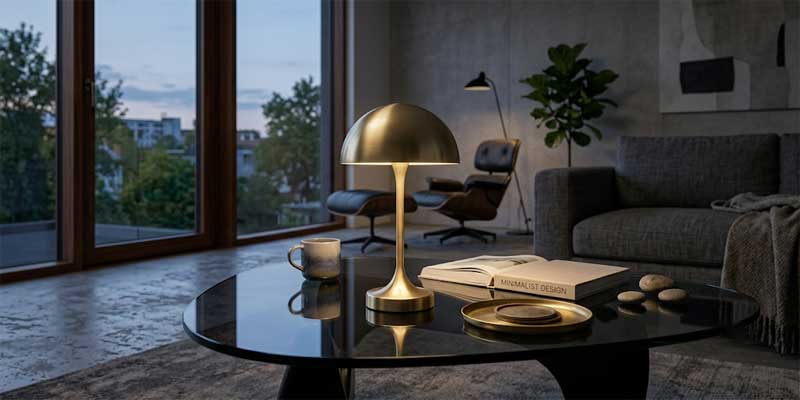
Rechargeable table lamps engineered with high-density lithium-ion power cells deliver 12 to 24 hours of sustained, continuous 2700K illumination on a single USB-C charge cycle. Homeowners can effortlessly move the fixture from a sofa end table during an afternoon reading session to an al fresco patio side table or a central floating cocktail tray during evening entertaining.
       CONVENTIONAL CORDED FIXTURE vs. TAKETI RECHARGEABLE CORDLESS

    [ Wall Outlet ]                            [ Internal Li-ion Cell ]
          │ (Trip Hazard / Static)                       │ (100% Mobile)
          ▼                                              ▼
┌───────────────────┐                         ┌───────────────────┐
│ Trailing Cord on  │                         │ Cordless Freedom  │
│ Flooring or Rugs  │                         │ Across Any Zone   │
└─────────┬─────────┘                         └─────────┬─────────┘
          ▼                                             ▼
  Restricted to Room                          Effortlessly Shifted:
  Perimeter Boundaries                        End Table ➔ Coffee Tray
Modern Table Lamps for Living Room Environments: Capacitive Touch Controls
Traditional rotary inline switches, dangling pull chains, and foot-pedal toggles interrupt minimalist design lines and frequently wear out mechanically over time. Clean-lined modern table lamps for living room schemes prioritize sleek, intuitive capacitive touch control interfaces.
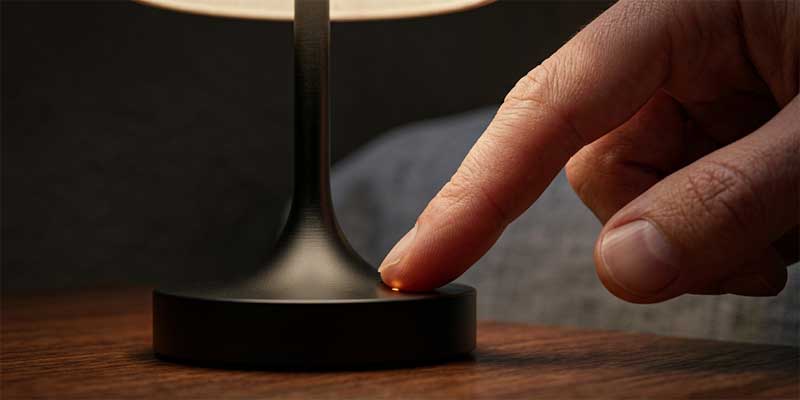
TAKETI luminaires incorporate touch-sensitive touch pads directly into the solid metal base housing. A single brief touch toggles the light state smoothly; continuous resting contact activates stepless dimming from 100% task focus down to a delicate 5% ambient night glow. Integrated memory circuitry retains your preferred light level across power cycles.
Curating Dual Formations: Table Lamps for Living Room Set of 2
Arranging luminaires in pairs introduces rhythm, structural order, and intentional visual weight to broad living room elevations.
Table Lamps for Living Room Set of 2: Balanced Symmetry
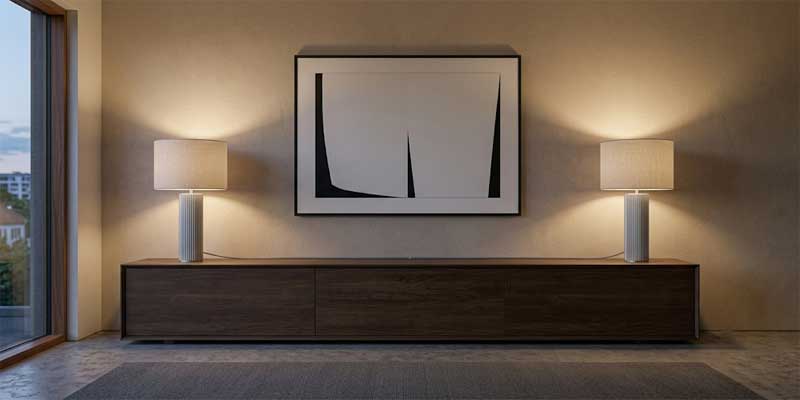
In traditional, transitional, and formal architectural residences, deploying a matched table lamps for living room set of 2 establishes an orderly, calming axis of symmetry.
Position twin luminaires on matching end tables flanking a grand sofa, or space them evenly across an elongated dining credenza or media wall. This dual-fixture rhythm brings structural discipline to wide walls, framing fine art or architectural windows between twin warm-light beacons.
Dynamic Asymmetry: Mixing Forms with Shared Materiality
For asymmetrical layouts where matched pairs feel rigid, modern design encourages dynamic cohesion. Rather than placing identical models on disparate side tables, select fixtures that share a singular design DNA—such as identical brushed aluminum metalwork or matched linen shade weaves—while varying in height or base geometry.
This curated balance delivers intentional cohesion without predictable uniformity, complementing modern sectional couches, L-shaped seating lounges, and eclectic living spaces.
Sizing and Proportion Reference Matrix
To ensure effortless planning before placing your fixture, consult this sizing reference matrix tailored to standard living room furniture dimensions:
| Furniture Placement Zone | Average Table Surface Height | Recommended Lamp Total Height | Shade Diameter Range | Ideal Luminaire Purpose |
| Sofa End / Side Table | 22″ – 26″ (56 – 66 cm) | 26″ – 30″ (66 – 76 cm) | 12″ – 16″ (30 – 41 cm) | Seated reading, conversation warmth, primary zone anchor |
| Media Console / Credenza | 28″ – 34″ (71 – 86 cm) | 28″ – 34″ (71 – 86 cm) | 14″ – 18″ (35 – 46 cm) | Background balance, wall wash, sculptural focus |
| Central Coffee Table | 14″ – 18″ (35 – 46 cm) | 12″ – 16″ (30 – 41 cm) | 8″ – 10″ (20 – 25 cm) | Low-level cocktail warmth, glare-free center glow |
| Deep Bookshelf Nook | Fixed Shelf Spacing | 10″ – 14″ (25 – 35 cm) | 6″ – 8″ (15 – 20 cm) | Deep shelf accent, library cove reading, textured backdrop |
Sustainable Craftsmanship and Longevity
True luxury in contemporary lighting centers on enduring material honesty, repairability, and responsible, low-impact manufacturing practices.
Solid Metals and Sustainable Hardwoods
Disposable home decor built from hollow stamped sheet metal, brittle plastics, and toxic synthetic resin produces unacceptable environmental waste. Sustainable living room luminaires celebrate tactile permanence and durable raw materials.
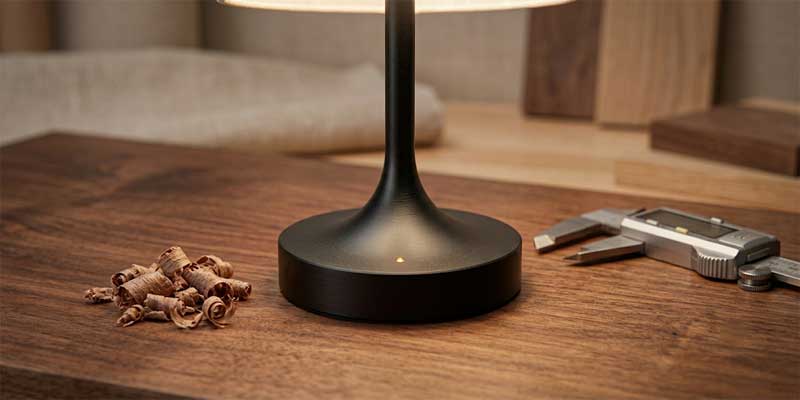
TAKETI builds lamp housings using solid 6063 aerospace-grade aluminum alloys, CNC-milled to tight dimensional tolerances, and pairs them with sustainably harvested, FSC-certified hardwoods like American Walnut and White Oak. Surfaces are finished with solvent-free anodized treatments and natural hand-rubbed plant waxes, ensuring components age gracefully and build a natural patina over decades of service.
Modular Electronics and Recyclable Packaging
Architectural lighting must reject built-in obsolescence. Every electronic sub-assembly—including driver boards, capacitive touch switches, high-CRI LED arrays, and rechargeable battery cells—should feature fully modular, user-accessible construction.
If a battery cell reaches the end of its useful service cycle after years of daily illumination, it can be unbolted and swapped without discarding the handcrafted aluminum and timber chassis. Furthermore, all TAKETI product packaging is 100% plastic-free, arriving in custom unbleached pulp cartons printed with soy-based inks that return harmlessly to natural recycling loops.
Practical Buyer’s Checklist for Living Room Luminaires
Before finalizing your living room luminaire selections, review this essential technical checklist to ensure uncompromising visual and architectural performance:
-
Verify Correlated Color Temperature: Ensure the integrated diode or bulb sits strictly between 2700K and 3000K to preserve evening circadian rest.
-
Check the Seated Shade Clearance: Confirm that sitting adjacent to the table places the lower shade rim precisely level with your eyes (38″ – 42″ from the floor) to eliminate exposed bulb glare.
-
Inspect the Color Rendering Metric: Demand independently verified CRI ratings of 95+ (with R9 red spectrum > 80) to maintain true textile, wood, and skin vibrancy.
-
Confirm Continuous DC Driver Spec: Choose constant current drivers over cheap PWM switches to protect family members from invisible eye strain and headaches.
-
Match Base Scale to Table Depth: Ensure the base diameter occupies no more than one-third of your side table’s usable depth, leaving room for books, coasters, and personal objects.
-
Plan for Cable Safety or Go Cordless: For open-plan seating floating in the middle of the room, choose high-capacity cordless lamps to eliminate trip hazards and unsightly extension cords.
-
Evaluate Finish and Material Authenticity: Prioritize solid anodized aluminum, cast brass, kiln-fired ceramics, and genuine hardwoods over faux-finished composites.
Frequently Asked Questions
What is the ideal wattage and lumen output for a living room table lamp?
For general living room ambient and reading applications, an LED light source delivering between 450 and 800 lumens (equivalent to a traditional 40W to 60W incandescent bulb) provides ideal visual illumination. Luminaires equipped with capacitive stepless dimming allow you to dial output down to 50–100 lumens for relaxing evening television watching or movie nights.
How do I choose between a fabric drum shade and an opaque metal dome?
Textured fabric shades (such as natural linen) cast both a wide downward functional pool and a warm, omnidirectional ambient glow throughout the surrounding room, making them ideal all-around living room fixtures. Opaque metal or ceramic domes focus all luminous flux downward onto the table surface, providing high-contrast task illumination perfect for dedicated reading chairs or highlighting desktop displays.
Can I mix different table lamp styles within the same living room?
Yes. Contemporary interior design encourages thoughtful stylistic variation. To keep the space feeling unified rather than cluttered, maintain a consistent color temperature (such as 2700K throughout all fixtures) and repeat a shared material element—like natural walnut or brushed anodized aluminum—across both fixtures.
Are rechargeable cordless lamps durable enough to serve as permanent living room fixtures?
Yes, high-grade cordless table lamps built with premium lithium-ion battery arrays and efficient LED diodes provide steady, high-output illumination. When kept plugged into subtle, low-profile magnetic USB-C charging pads on a side table, they operate as permanent corded luminaires; when guests arrive or outdoor entertaining begins, they lift away instantly to bring warm light anywhere across your home.
How do I prevent exposed bulb glare when walking past tall table lamps?
To shield the naked light source from standing viewers, choose lamps with closed top diffusers, frosted glass shields, or shades featuring taller proportions that enclose the interior light cluster. Alternatively, placing taller luminaires (30″+) on lower credenzas or consoles prevents passing guests from looking down directly into the socket assembly.