

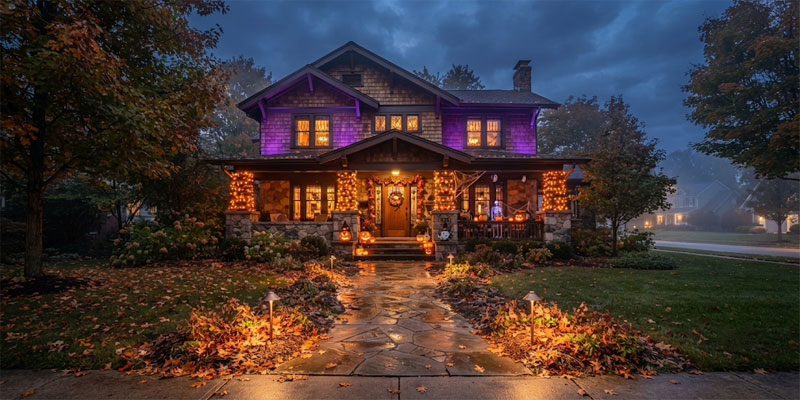
Heavy-Duty Engineering for Outdoor Halloween Lights
Outdoor halloween lights in our collection are built to withstand the punishing freeze-thaw cycles, driving rainstorms, and relentless humidity typical of late autumn across North American climate zones. Standard mass-market consumer sets rely on fragile PVC insulation and unsealed copper pins that corrode within days of ground exposure, tripping sensitive outdoor breakers and leaving dark gaps in your decorative layout. TAKETI exterior systems feature high-grade thermoplastic elastomer (TPE) jackets, integrated silicone O-ring moisture barriers, and nickel-plated brass contact terminals, delivering continuous dusk-to-dawn performance from early October through late November without requiring maintenance.
Weatherproof Structural Rigidity and Ground Architecture
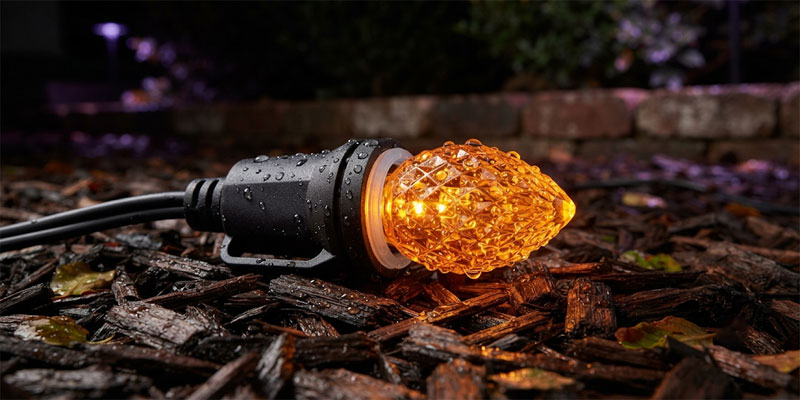
Fixtures situated close to wet turf, perimeter flower beds, and low foundation plantings face constant exposure to standing moisture and lawn sprinkler overspray. Our heavy-duty stakes and luminaire housings carry certified IP65 and IP67 ingress protection ratings, preventing wind-driven rain and soil microbes from penetrating sensitive electrical compartments.
-
High-impact ABS ground stakes resist lateral bending when driven into hardened, rocky, or partially frozen autumn soil.
-
Molded socket seals compress tightly against bulb bases, preventing capillary water intrusion during heavy downpours.
-
Heavy-gauge eighteen-gauge black wire runs blend seamlessly into dark wood mulch, pea gravel, and damp lawn turf while preventing voltage drops over runs exceeding one hundred and fifty feet.
Resistance to Thermal Shock and Moisture Condensation
Rapid temperature swings between warm autumn afternoons and freezing midnight hours cause air inside poorly sealed fixtures to contract, pulling moist exterior air through microscopic gaps in cheap plastic housings. This internal condensation corrodes socket contacts and clouds internal lenses, degrading light transmission.
TAKETI commercial exterior luminaires integrate breathable, liquid-impermeable ePTFE pressure relief membranes. These membranes allow air pressure to equalize freely as internal diodes warm up and cool down, while barring liquid water, morning dew, and chemical lawn treatments from entering internal electronic housings.
Minimizing Mechanical Fatigue from Strong Autumn Winds
Late October frequently brings gusty coastal squalls and blustery prairie windstorms that subject exterior wiring harnesses to continuous mechanical flex stress. Inferior copper strands experience metal fatigue and internal fracture under persistent whipping, creating hidden electrical shorts.
Our exterior strings incorporate high-tensile aramid core fibers braided directly alongside stranded copper conductors. This structural reinforcement absorbs physical wind shock, protects terminal junctions, and prevents the wire elongation that typically leads to loose socket connections on high roof eaves and exposed perimeter railings.
Electrical Load Balancing and Circuit Protection
Home electrical systems operating in older suburban neighborhoods often share exterior receptacles with garage power tools, freezer units, or interior hall lighting. Calculating total electrical load ensures that elaborate holiday displays operate without exceeding residential safety thresholds.
Calculating Continuous Amperage Loads
Standard National Electrical Code (NEC) guidelines mandate that continuous electrical loads—defined as circuits running continuously for three hours or longer—must not exceed eighty percent of a breaker’s rated capacity. On a fifteen-ampere outdoor branch circuit at 120 volts, your continuous capacity ceiling is twelve amperes or 1,440 watts.
TAKETI commercial LED luminaires operate at an average of 0.06 watts per diode, allowing homeowners to run extensive decorative layouts comprising thousands of illumination points on a single circuit feed. This efficiency leaves abundant electrical capacity for sound effects, animated props, and pathway safety units without overloading household electrical infrastructure.
Mitigating Ground Fault Circuit Interrupter (GFCI) Nuisance Outages
Class A GFCI receptacles are engineered to trip whenever residual current leakage to ground exceeds four to six milliamperes. Unsealed cord connection plugs resting directly on damp soil or wet fallen leaves routinely cause nuisance tripping that cuts power to entire front-yard displays.
All TAKETI exterior lighting arrays utilize threaded, screw-tight IP67 quick-connect fittings equipped with inner rubber compression rings. These water-tight connections eliminate the need for makeshift plastic wrap or electrical tape, keeping exterior circuits dry, stable, and completely immune to moisture-induced leakage current.
Thematic Integration with Physical Halloween Decorations
Halloween decorations require directional illumination to establish dramatic shadows, visual contrast, and lifelike depth. Without targeted lighting, realistic skeletons, weathered gravestones, and sprawling faux cobwebs appear flat and artificial under ambient street lighting. Our directional accent spotlights and compact wash luminaires are designed to work in tandem with physical lawn props, sculpting deep dimensional relief and concealing synthetic mounting hardware once darkness falls.
Directional Shadow Sculpting and Prop Illumination
Achieving theatrical suspense relies on directional light placement rather than flat, direct illumination. Highlighting the contours of outdoor props requires placing small, high-output fixtures at low grazing angles or directly behind centerpiece structures to cast elongated silhouettes across building walls.
-
Conceal micro-spotlights inside faux hollow landscape boulders or behind hay bales to cast raking forty-five-degree cross-light across carved details.
-
Position ground fixtures behind tombstone clusters to project sharp, menacing silhouettes forward onto light-colored exterior siding.
-
Balance warm amber fill lighting with deep green or violet rim lighting to visually isolate key decorative figures from dark background shrubbery.
Highlighting Cemetery Props and Weathered Headstones
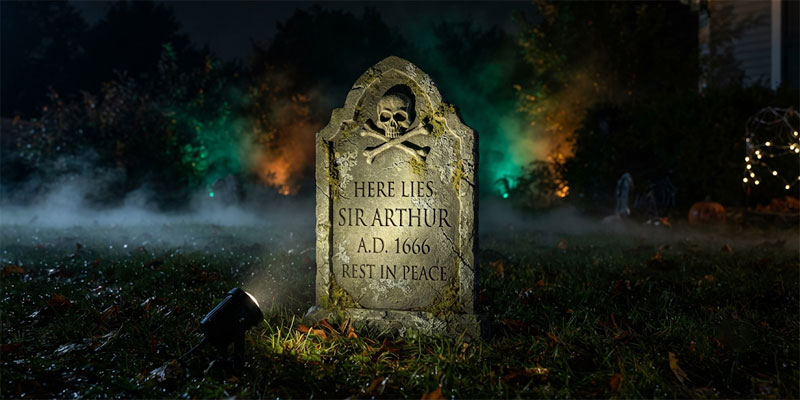
Lawn cemetery displays lose their eerie impact when flooded with broad, overhead light. Placing our miniature 3-watt narrow-beam pinspots flush with the turf rakes light upward across foam or resin tombstones, emphasizing simulated fractures, carved gothic typography, and faux moss textures.
Backlighting stone markers with a soft cyan or deep purple flood creates distinct separation between the props and surrounding foundation hedges. This optical layering makes a thirty-foot suburban front lawn feel like an expansive, mist-filled cemetery setting with convincing visual depth.
Silhouette and Rim Illumination on Life-Sized Figures
Life-sized figures such as animated phantoms, skeletal sentries, and hanging reapers require high-contrast edge definition to prevent their forms from vanishing against dark siding. Placing a narrow fifteen-degree spotlight behind a standing figure throws its ribcage and limb shadows onto driveway pavers.
Pairing rear silhouettes with a discreet warm amber uplight aimed directly beneath facial features illuminates hollow jawlines and empty eye sockets with a menacing glow. This eliminates the cheap daytime look of synthetic props, turning them into commanding focal points that capture the attention of approaching trick-or-treaters.
Chromatic Strategy for Dramatic Autumn Displays
A well-executed Halloween display relies on a deliberate, cohesive color strategy rather than an unfocused mix of competing hues. Randomly blending red, green, blue, yellow, orange, and purple creates an overwhelming carnival look that dilutes suspense and visual sophistication.
Primary Saturated Purple and Rich Pumpkin Amber
A refined seasonal design pairs two dominant complementary colors to build consistent mood. Saturated deep purple serves as an ideal baseline hue, mimicking late twilight shadows while deepening the natural tones of fallen autumn leaves.
Layering rich pumpkin amber against a purple foundation introduces warmth and high-contrast tension. The warm amber highlights focal elements such as entry porches, steps, and hand-carved details, while the surrounding purple recedes into the background, exaggerating spatial depth across your property.
Accent Greens and Spectral Cyans for Supernatural Highlights
Vibrant acid greens and frosty cyans should be deployed sparingly as targeted accents. Bathing an arched doorway, creeping spider display, or fog-covered porch corner in spectral green immediately introduces a supernatural atmosphere.
Restricting high-intensity accent tones to fifteen or twenty percent of your overall lighting setup maintains their visual impact. When every element is lit in green, the display loses its uncanny edge; when reserved for select focal points, the contrasting tone arrests attention immediately.
Energy Efficiency and Safety Architecture with LED Halloween Lights
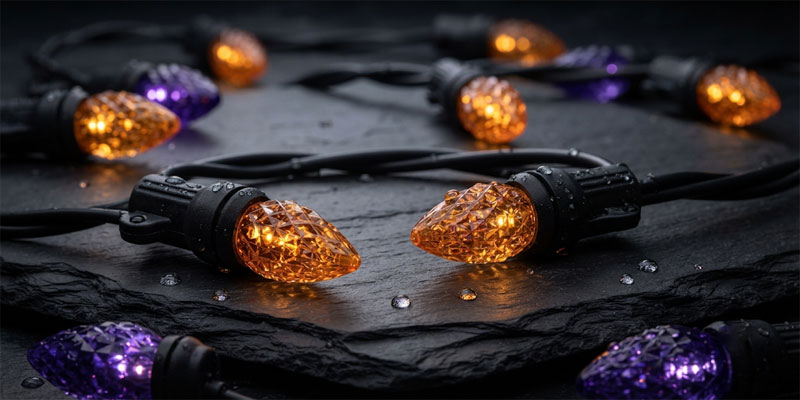
LED halloween lights represent the modern standard for safe, responsible holiday decorating, eliminating the high energy consumption, blown fuses, and severe burn hazards associated with legacy incandescent filament sets. High-output solid-state diodes run completely cool to the touch, preventing fire hazards when installed near dry autumn cornstalks, hay bales, or synthetic fabric props across front porches and indoor fireplace mantels.
Pure Color Rendering and Consistent Chromaticity
Budget seasonal light strands frequently suffer from poor chromaticity control, resulting in mismatched color temperatures where some bulbs appear faint pink while others cast deep purple. Our commercial LED arrays use precision color-binned diodes that maintain uniform color temperature across every foot of wire.
-
Calibrated wavelength selection delivers deep, saturated violets and fiery autumn ambers without color degradation over extended runtimes.
-
High Color Rendering Index (CRI 90+) accent diodes ensure painted prop finishes and natural pumpkin textures appear vivid and authentic.
-
Solid-state diodes resist vibration and impact, preventing filament breakage during windy conditions or seasonal takedown.
Advanced Internal Rectified Drivers and Optical Stability
Inexpensive LED light strings omit smoothing capacitors, causing diodes to turn on and off sixty times per second with standard alternating current. While this rapid flickering is often imperceptible to the naked eye, it produces noticeable rolling black bars on modern home security cameras, video doorbells, and smartphone video recordings.
TAKETI commercial LED strings incorporate full-wave rectified inline drivers with high-frequency filtering. This internal circuitry converts incoming AC current into a smooth, ripple-free direct-current feed, providing steady, flicker-free illumination that records cleanly across all digital media devices and security monitoring platforms.
Shatterproof Polycarbonate Optics and Thermal Durability
Traditional glass holiday bulbs easily shatter when dropped onto concrete driveways, stone patios, or hard walkway borders, leaving sharp shards that endanger children and pets. Replacing shattered bulbs in cold weather is difficult and compromises the weatherproofing of the entire strand.
Our LED strings feature molded, heavy-wall polycarbonate bulb shells that are virtually unbreakable under heavy foot traffic or impact. Polycarbonate optics resist yellowing from sunlight and remain impact-resistant in sub-freezing temperatures, protecting internal semiconductor dies for decades of seasonal use.
Sustainable Power Savings and Safe Multi-String Daisy-Chaining
Upgrading to high-efficiency solid-state diodes reduces lighting electrical consumption by over eighty percent compared to vintage filament bulbs. This substantial power reduction allows homeowners to illuminate extensive residential layouts without installing auxiliary sub-panels or running unsightly industrial extension cords across their property.
Linking Long Strands Without Voltage Drop
Connecting multiple strings of incandescent lights end-to-end creates cumulative resistance that starves distant bulbs of current, causing noticeable dimming toward the end of the run. In contrast, the low current draw of LED technology enables consistent voltage and uniform brightness across extended runs.
TAKETI low-amperage commercial strings support connecting up to twenty-five continuous sets end-to-end from a single outlet feed. Internal heavy-duty bus conductors ensure that the final bulb in a two-hundred-foot perimeter run delivers the exact same lumen output and color temperature as the very first bulb next to the power source.
Thermal Dissipation and Fire Hazard Prevention
Dry autumn displays—such as dried corn stalks, straw bales, paper lanterns, and synthetic fabric webs—are highly combustible materials. Legacy incandescent bulbs generate surface temperatures exceeding 140°F (60°C), creating severe fire risks when covered by leaves or fallen props.
Solid-state diodes convert nearly ninety percent of electrical input directly into visible light rather than waste heat, maintaining surface temperatures within a few degrees of ambient air. This cool-running operation allows you to weave lights directly through dense autumn foliage, around dry hay, and inside synthetic porch props with complete peace of mind.
Architectural Coverage Using Halloween Projector Lights
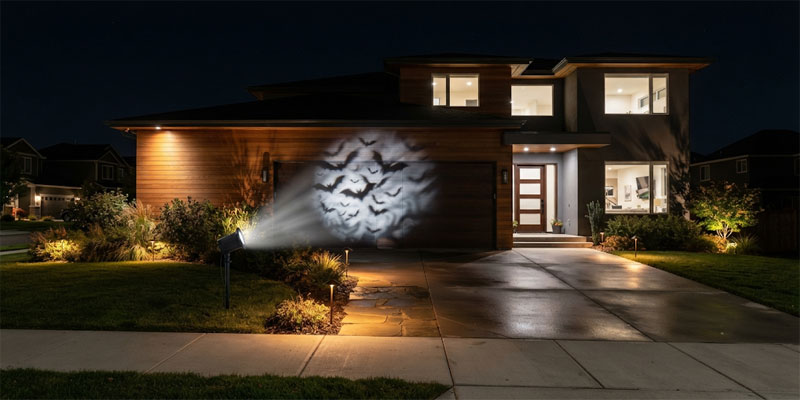
Halloween projector lights provide rapid architectural coverage, projecting moving festive visuals across expansive exterior walls, broad garage doors, and tall roof gables without the need for ladder-mounted string hardware. Featuring high-lumen optical engines and precision glass slide assemblies, these projection systems project sharp silhouettes and flowing atmospheric textures that cut through neighborhood ambient light pollution.
Optical Throw Calibration and Lens Geometry
Achieving crisp image projections across wide architectural surfaces requires balancing throw distance, lens focal length, and the physical texture of the target wall. Installing fixtures without calculating these spatial factors produces blurry, distorted shapes that break the atmospheric illusion.
TAKETI commercial outdoor projectors feature high-precision optical lenses with manual focal rings, allowing users to dial in sharp edge focus across projection distances ranging from ten to thirty-five feet. The optical assemblies preserve beam intensity, ensuring dynamic silhouettes of flying bats, dancing phantoms, and creeping bare branches remain crisp against textured siding and brick.
-
Position projectors twenty feet from primary wall surfaces to balance broad coverage with sharp pattern resolution.
-
Use adjustable elevation collars to aim beams upward, avoiding direct glare into the eyes of passing pedestrians.
-
Anchor projector ground stakes into stable soil using dual-prong steel stabilizing pins to prevent wind drift during autumn storms.
Managing Surface Variations on Siding and Masonry
Exterior residential walls feature diverse cladding materials, including vinyl lap siding, rustic board-and-batten, rough-split stone, and textured brick. Projecting fine line art across deep mortar joints or overlapping clapboard edges can break up delicate silhouette shapes.
For uneven masonry or rustic stone surfaces, deploy wide-angle fluid ripple or moving fog effects, which use surface variations to enhance three-dimensional depth. Reserve high-detail graphic slides—such as intricate gothic window traceries or fine spiderweb filigree—for flat garage doors or smooth architectural siding.
Keystone Alignment for Multi-Story Gables
Projecting imagery upward toward second-story architectural peaks introduces severe keystone distortion, causing images to flare into wide trapezoids with blurry upper edges. Advanced holiday projectors incorporate manual or digital keystone correction, squaring the image frame even when projecting from steep angles.
Adjusting vertical tilt correction maintains sharp focus across the entire architectural gable, preventing floating bats or dancing phantoms from stretching into indistinct blobs. This precise alignment preserves visual realism, giving the impression that animated spirits are haunting your home’s genuine architectural structure.
Gobo Optics Versus Digital Laser Array Technologies
Understanding the optical differences between gobo disc projectors and solid-state laser arrays ensures you deploy the right technology for your architectural canvas. Each system serves distinct decorative purposes across your front yard landscape.
High-Output Metal-Halide and LED Gobo Slides
Gobo projectors pass intense, focused light beams through etched metal or heat-resistant dichroic glass slides, projecting razor-sharp patterns with vibrant color saturation. Glass gobos deliver cinematic clarity, allowing you to cast hyper-detailed Victorian window lattices, floating phantom portraits, or intricate cobwebs across entire building walls.
These fixtures excel on light-colored residential facades where crisp edge definition and photographic clarity are paramount. Because gobo slides rely on physical optical lenses, images remain sharp even when projected across thirty or forty feet of open lawn, resisting washout from suburban streetlights.
Diffractive Laser Grids for Vast Landscape Coverage
Diffractive laser projectors split solid-state red, green, and blue laser diodes into thousands of pin-point beams, showering hundreds of square feet of landscape foliage with dancing points of light. When directed into bare tree branches or dense evergreen hedges, laser grids simulate swarms of spectral fireflies or pulsating eldritch energy fields.
Laser systems require minimal setup and draw negligible electrical wattage, making them ideal for covering broad yard areas that would require dozens of traditional string lights. Homeowners must aim laser arrays safely below rooflines, ensuring high-intensity coherent beams never angle toward overhead flight paths or into the direct sightlines of passing drivers.
Off-Grid Perimeter Illumination with Solar Halloween Lights
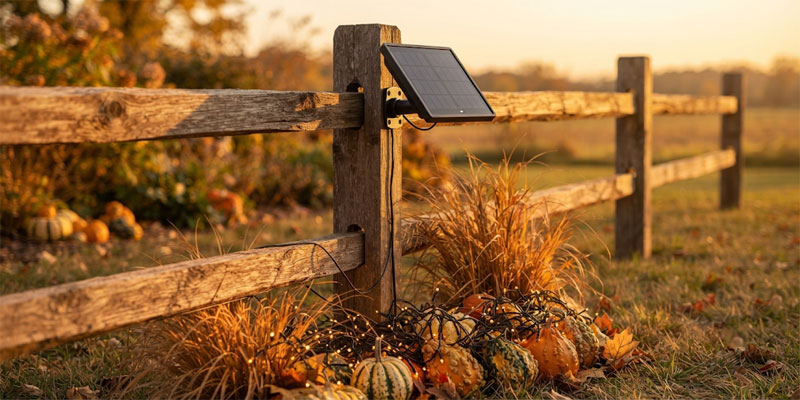
Solar halloween lights provide an elegant, wire-free solution for decorating distant yard zones, perimeter fences, and mailbox pillars where running extension cords across driveways creates tripping hazards. Self-contained photovoltaic lighting captures clean solar energy throughout the day, automatically igniting at dusk to maintain balanced illumination across your property boundaries.
Optimizing Photovoltaic Capture in Autumn Weather
Shorter daytime hours and frequent overcast skies during mid-to-late October require deliberate positioning of external solar collection cells. Placing panels under mature evergreen trees or beneath the shadow of high roof overhangs severely limits battery reserves, causing fixtures to dim prematurely after just a few hours of darkness.
Ground collectors should be angled toward the unobstructed southern horizon and elevated several inches above surrounding turf to avoid shade from tall grass or fallen autumn foliage. Outfitting remote fixtures with high-capacity lithium-iron-phosphate battery packs ensures the internal diodes maintain full, brilliant output even following gloomy, overcast afternoons.
-
Point photovoltaic panels south at a forty-five-degree tilt to harvest maximum solar radiation during lower autumn sun paths.
-
Clear solar collector surfaces weekly using a soft microfiber towel to eliminate dust, morning frost, and decayed leaf moisture.
-
Select independent solar fixtures equipped with dusk-to-dawn sensors to automate on-and-off cycles without manual switches.
Monocrystalline Versus Polycrystalline Solar Panels
Monocrystalline silicon panels offer the highest energy conversion efficiency, converting up to twenty-two percent of available sunlight into usable battery current. Their uniform, dark appearance blends discreetly into garden mulch beds while harvesting substantial energy even during gray, overcast autumn afternoons.
Polycrystalline panels feature a distinct blue-flecked hue and lower efficiency ratings around fifteen to seventeen percent. While budget-friendly, polycrystalline collectors struggle to fully replenish internal battery cells during short October daylight hours, often causing pathway lights to shut down before peak evening foot traffic concludes.
Battery Chemistry and Extreme Cold Performance
Autumn nights in northern and midwestern regions frequently dip near or below freezing, testing the chemical limits of decorative battery cells. Standard nickel-metal hydride (NiMH) batteries lose significant storage capacity in cold weather, resulting in dim diodes and shortened runtimes after sunset.
Advanced solar fixtures incorporate lithium-iron-phosphate (LiFePO4) or lithium-ion storage cells engineered for extended charge-discharge cycles in cold climates. These cells deliver steady voltage throughout chilly nights, keeping fence-line micro lights and driveway markers glowing brightly until late evening.
Remote Perimeter Strategic Staking and Cable Management
Decorating remote split-rail fences, stone retaining walls, and distant mailboxes requires keeping wiring lines protected from outdoor elements. Unsecured solar wiring invites damage from foraging wildlife, neighborhood pets, and routine autumn yard maintenance tools.
Securing Micro-Strands to Split-Rail Fences and Masonry
Thin copper micro-strands conform easily to rough wooden fence rails and jagged stone boundaries. Fastening wires with UV-resistant silicone cable clips or insulated landscape staples prevents heavy winds from pulling strands loose and breaking delicate internal copper connections.
Weaving micro-strands through dormant climbing vines or wild ornamental grasses conceals the wire during daylight hours, creating a magical floating glow at dusk. Leaving slight slack at structural joints accommodates natural wood swelling during humid autumn rainstorms without snapping wiring lines.
Concealing Battery Housings Within Organic Landscaping
Brightly colored or reflective battery casings distract from your cohesive nocturnal landscape. Tucking black or dark green collector housings behind ornamental pumpkin clusters or beneath dry cornstalk shocks hides utility components from street view.
Elevating the solar panel slightly on an independent stake positioned behind decorative straw bales keeps the collector unobstructed while masking the main housing. This technique maintains optimal solar exposure while keeping functional hardware completely invisible to approaching trick-or-treaters.
Architectural Canopy Dressing with Halloween Tree Lights
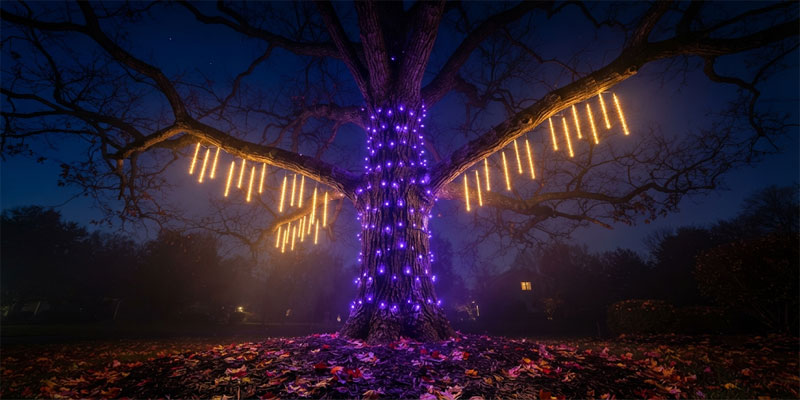
Halloween tree lights draw viewer attention upward, transforming bare autumn branches into striking vertical features that anchor your property’s overall lighting design. Wrapping mature trunks and primary branch forks creates luminous columns that contrast against dark night skies, adding structural height to your exterior display.
Professional Trunk Spiral and Canopy Dressing
Wrapping mature landscape trees requires a structured approach to maintain uniform spacing and avoid damaging delicate bark surfaces. Starting at the ground root flare and working upward establishes a solid pillar of light that grounds the display, providing a dramatic contrast against the darker night sky.
Extending the lighting strands out onto horizontal primary branches creates depth, making the entire tree canopy look alive with mysterious energy. Using specialized, flexible tree-mounting ties prevents wire constriction during severe October windstorms, allowing branches to sway naturally without pulling plugs loose or severing copper conductors.
-
Space wire spirals four inches apart up the main trunk to build an intensely saturated, solid core of illumination.
-
Terminate branch wraps at natural limbs forks to maintain clean silhouettes without unsightly, drooping wire loops.
-
Utilize UV-resistant exterior tie wraps rather than metal nails or heavy staples to secure lines safely to living tree bark.
Spacing and Density for High-Impact Trunk Illumination
Achieving an intense, professional column of light requires keeping spacing tight and consistent. Wrapping a twelve-inch diameter trunk with four inches between wire rotations creates a luminous core that commands attention from blocks away.
Wider spacing exceeding eight inches dilutes visual impact, causing the tree to look sparse and uneven from the sidewalk. Maintaining consistent tension as you wrap keeps the wire secure against the bark, preventing unsightly sagging when temperatures drop and materials contract.
Branch Wrapping Techniques and Bark Preservation
Extending lights along upper canopy limbs turns bare, twisted branches into striking natural sculptures. Wrapping out to secondary branch forks outlines the natural silhouette of your landscape trees, establishing towering height above your lawn decor.
Never drive metal staples, screws, or nails into living tree bark, as puncturing the cambium layer introduces plant pathogens and fungal decay. Use heavy-duty, reusable rubber gear ties or wide hook-and-loop straps, leaving sufficient slack to accommodate branch sway during autumn windstorms without damaging tree tissue.
Dynamic Vertical Canopy Illumination
Directing light up into the upper canopy from ground level complements trunk wraps with mysterious atmospheric shadows. High-powered wash fixtures placed near the base cast dramatic silhouettes of higher branches against the night sky, completing your vertical display.
Upward-Facing Narrow Spotlights for Bare Branches
Positioning high-output spotlights close to the trunk and aiming straight up illuminates the underside of major structural branches. Bathing the upper canopy in spectral green or blood red highlights intricate branch patterns that disappear in ambient darkness.
Using narrow fifteen-degree beams keeps light confined to the tree canopy, preventing stray beams from shining into second-story bedroom windows. The high-contrast interplay of bright illuminated wood against deep black sky creates an unforgettable gothic centerpiece for your front yard.
Cascading Dripping-Icicle and Meteor Tube Arrays
Hanging vertical meteor tubes or cascading cluster strands from lower limbs simulates dripping ectoplasm or falling embers. Suspended ten to fifteen feet above the lawn, these dynamic tubes introduce subtle downward motion that catches the eye.
Staggering cascading tubes at varied heights prevents repetitive, distracting visual pulses across your tree canopy. Pairing downward-moving lights with steady trunk wrapping creates visual rhythm that enriches your outdoor display without feeling like an aggressive carnival ride.
Advanced Layering Depth with Dual Halloween Projector Lights
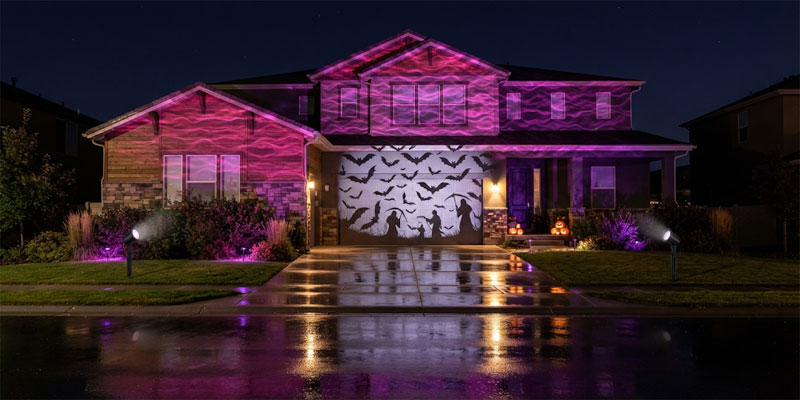
Deploying secondary halloween projector lights allows decorators to break free from flat, one-dimensional visual effects by layering multiple optical projections. Blending a moving, textured background wash with sharp, high-contrast animated silhouettes produces an optical illusion of depth that turns flat exterior walls into lifelike stages.
Harmonizing Textured Waves and Silhouettes
Combining two distinct projection systems requires thoughtful color theory and careful positioning to prevent visual clutter. Pairing a wide-angle fluid ripple projector with a high-definition gobo silhouette unit creates a stunning combination of moving water-like mists behind creeping spiders or dancing skeletons.
Setting the flood projector to an ethereal cyan, emerald, or deep indigo establishes an ambient backdrop, while the gobo projector casts dense, sharp black shadows over the brightest area of the color field. This contrast produces dimensional depth that captivates passersby, turning an ordinary garage door or side wall into a neighborhood talking point.
-
Align the background ripple projector to broadly cover the target surface in a rich, saturated wash of color.
-
Offset the secondary gobo silhouette projector by ten feet to prevent the housing units from casting overlapping physical shadows.
-
Adjust individual zoom lenses until the moving silhouettes fall crisply within the boundary of the background color wash.
Combining Water-Ripple Backgrounds with Silhouette Movement
A moving water-ripple projector breaks up static architectural surfaces, simulating swirling fog or churning supernatural portals. Projecting saturated purple or deep ocean blue ripples across broad surfaces establishes a captivating foundation.
Layering a gobo unit projecting sharp, moving silhouettes of flying witches, creeping spiders, or stalking reapers directly over the fluid ripple background creates an optical illusion of physical depth. The moving background provides color contrast that makes dark foreground silhouettes stand out with exceptional clarity.
Synchronizing Color Palettes Across Dual Units
Successful visual layering depends on selecting complementary, non-competing color profiles across both projection fixtures. Blending conflicting clashing colors results in a muddy, washed-out center that destroys fine visual details.
Pair an electric cyan water ripple with deep violet silhouette washes, or combine vibrant pumpkin amber ripples with sharp black silhouette overlays. Keeping background colors slightly desaturated ensures that high-contrast silhouette figures remain the undisputed focal point of the projection.
Optical Alignment and Ground Geometry
Achieving seamless image integration requires careful spatial positioning of both projector housings on your lawn. Placing two projectors side by side creates overlapping beam cones that can wash out fine focal details.
Offsetting Throw Angles to Prevent Keystone Interference
Placing projectors on separate ground stakes spaced eight to twelve feet apart prevents housing interference and eliminates overlapping optical glare. Angling each projector slightly inward converges the beams cleanly across the center of your display wall.
This offset geometry creates subtle parallax depth, ensuring that shadows move naturally across the textured background rather than appearing locked together. Fine-tuning keystoning on both units squares both image frames to your building’s architectural boundaries.
Concealing Projection Units from Public View
Exposing modern electronic projectors on open lawns detracts from the supernatural illusion of your display. Placing units in front of tombstones or props breaks the viewer’s suspension of disbelief, exposing the technical mechanics behind your seasonal magic.
Tuck projector units behind decorative hay bales, hollow landscape stones, or low evergreen shrubs to keep equipment hidden from the sidewalk. Using low-profile black ground stakes keeps lenses just above the lawn surface while keeping technical hardware concealed from arriving guests.
Authentic and Safe Illumination for the Traditional Jack O Lantern
The jack o lantern remains the undisputed heart of authentic American autumn tradition, carrying forward centuries of folk heritage with every carved smile and jagged grimace. While open wax candles offer historic authenticity, they pose genuine fire hazards when placed near dry porch cornstalks, hay bales, and synthetic costumes worn by small children darting up your front steps.
Modern Illumination Alternatives for Carved Pumpkins
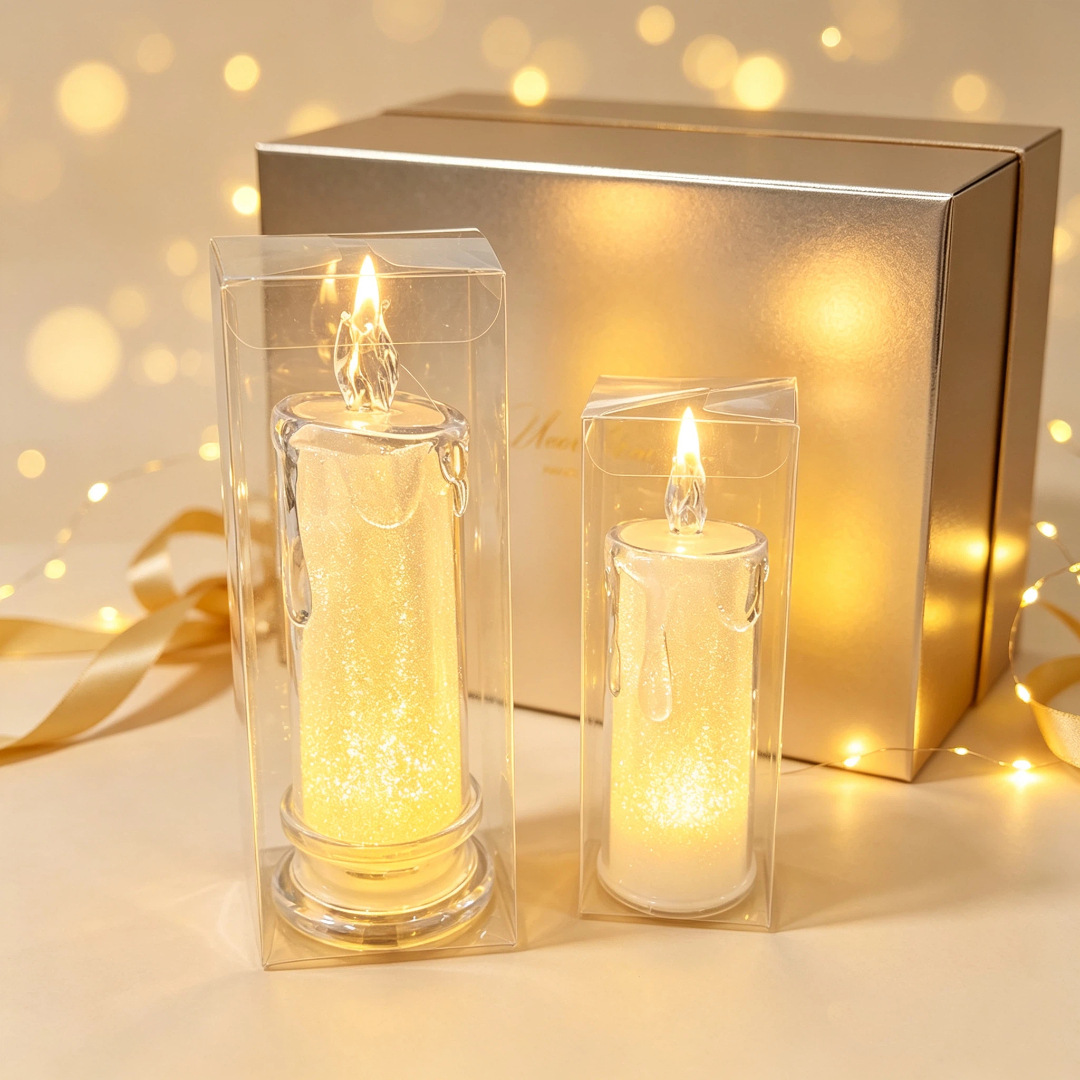
Modern electronic candles and specialized puck lights reproduce the authentic, organic flicker of natural flame without the smoke, melting wax, or wind vulnerability. High-lumen amber LEDs placed deep inside carved gourds reveal intricate relief carving details while keeping the interior flesh dry, prolonging the display life of your organic masterpieces.
-
Place heavy battery-operated LED puck lights equipped with daily auto-timers inside the pumpkin base to eliminate daily manual switching.
-
Select diodes with a warm 2200K to 2400K color temperature to perfectly emulate the organic glow of traditional beeswax candles.
-
Coat interior carved edges with a thin barrier of petroleum jelly to lock in moisture, preventing the heat of high-output internal diodes from shriveling fine expressive details.
High-Lumen Amber Puck Diodes Versus Tea Lights
Standard coin-cell tea lights lack the luminous output required to shine through thick pumpkin walls, producing weak, underwhelming glimmers that vanish beyond the porch railing. Upgrading to three-watt LED puck lights powered by triple-A or double-A cells delivers robust brilliance that projects carved facial features twenty feet across your front yard.
Selecting puck lights with warm 2200K color temperatures faithfully emulates the spectral warmth of open flame without the harsh, sterile look of cool white diodes. The high-output amber glow highlights thin relief carvings, creating beautiful depth across your organic centerpiece displays.
Electronic Candle Flicker Programming
High-end decorative LED modules incorporate microcontrollers programmed with pseudo-random pulse algorithms that mimic natural flame turbulence. The subtle modulation in luminous intensity avoids the repetitive, artificial strobing typical of budget flickering diodes.
Placing dual flickering modules inside oversized heirloom pumpkins simulates multiple dancing wicks, illuminating intricate, asymmetric carvings with authentic movement. This natural movement brings carved faces to life, adding personality to your front porch steps.
Preserving Organic Gourds and Managing Moisture
Natural carved gourds decay rapidly when exposed to fluctuating autumn temperatures and high humidity. Unventilated moisture inside carved cavities accelerates mold growth, rotting prized displays long before Halloween night arrives.
Heat Dissipation and Preventing Internal Mold Decay
Traditional wax candles generate substantial heat that cooks the interior flesh of carved pumpkins, softening walls and causing faces to cave inward within forty-eight hours. Solid-state LED puck lights emit virtually no forward infrared radiation, keeping interior flesh cool and firm.
Spraying interior cavities with a mild bleach-and-water solution after carving kills airborne mold spores and slows organic breakdown. Allowing the cavity to dry thoroughly before inserting battery-operated light modules prevents moisture damage to battery trays and wiring terminals.
Base Drainage and Weatherproofing Electronics
Autumn rain and night dew readily pool inside carved pumpkin cavities, shorting exposed electronic battery compartments. Cutting a two-inch circular opening in the base of the pumpkin provides vital drainage while offering a flat mounting surface for lighting modules.
Elevating the internal LED puck light on an inverted plastic lid protects delicate battery seals from moisture pooling along the pumpkin floor. Sealing carved exterior edges with petroleum jelly locks in essential moisture, keeping expressive facial features crisp and plump through the final days of October.
Transitioning from Festive Splendor to Everyday Table Lamps
Once the excitement of late October concludes and elaborate outdoor displays are safely packed away, residential interior design naturally turns inward toward cultivating peaceful, welcoming living spaces for the winter months ahead. Discerning homeowners who appreciate the emotional warmth and balance of layered seasonal illumination can extend that same design philosophy throughout their homes with thoughtfully selected interior fixtures. Discovering the refined collection of Table Lamps offers an effortless way to enhance living room sideboards, master bedroom nightstands, and private home office desks with balanced, glare-free illumination, timeless material craftsmanship, and soothing visual comfort that enriches your daily living environment across every season.
Frequently Asked Questions
Are TAKETI Halloween lights certified for wet outdoor locations?
Yes, all outdoor-designated fixtures carry official IP65 or UL wet-location certifications. This ensures total internal protection against rain, melting frost, and sprinkler spray when installed along pathways, lawns, and exposed rooflines.
What is the maximum number of LED light strings I can connect end-to-end?
Thanks to their low-wattage design, up to twenty-five continuous strands of our commercial-grade LED lights can be connected end-to-end on a single power tap, provided total connected load remains below 216 watts. Always check individual product tags for exact end-to-end limits.
Can solar Halloween lights charge effectively on overcast autumn days?
Yes. Our solar fixtures feature high-efficiency monocrystalline panels designed to harvest indirect ultraviolet and ambient solar radiation even during cloudy or partly shaded autumn afternoons, providing several hours of steady nighttime illumination.
How do internal LED puck lights prevent carved pumpkins from rotting?
Unlike wax candles that generate significant heat and cook pumpkin flesh from the inside out, our solid-state LED puck lights run cool. They emit zero forward infrared heat, keeping carved pumpkin walls firm and extending your display life significantly.
What color temperature produces the best contrast for autumn displays?
Combining warm 2200K to 2700K amber lights with deep saturated violet or emerald green creates a striking palette. This pairing brings out the warmth of dry autumn foliage and natural carved pumpkins while framing architecture in mysterious, shadow-rich contrast.
How do I protect extension cord connections from rain and wet snow?
Always house cord connections inside certified, rubber-gasketed water-resistant lock boxes positioned several inches off the damp lawn on brick pavers or stakes. Never leave open outlet taps resting directly on wet soil, and ensure every circuit is protected by an active Ground Fault Circuit Interrupter (GFCI).
Can indoor table lamps be used for exterior seasonal lighting?
Indoor luminaires should never be used outdoors because their wiring, sockets, and shades lack weather-resistant seals to guard against moisture, frost, and temperature swings. Exterior spaces require fixtures carrying explicit UL or IP65 wet-location ratings, while delicate indoor lamps should remain inside to provide cozy, functional lighting for interior living areas.
What is the best method for securing lighting strands along roof gutters?
Use all-in-one plastic exterior gutter and shingle clips that slide securely over metal lip edges without puncturing gutters or lifting shingle tabs. Avoid metal staples, nails, or tape, which damage roofing materials, void building warranties, and introduce moisture leaks into structural wood fascia boards.