
Architectural Linear Solutions: Integrating LED Strip Lights in Interior Design
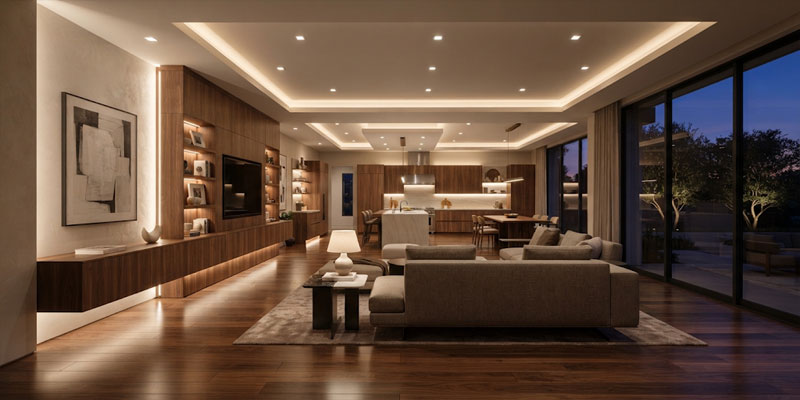
Modern architectural interiors increasingly rely on linear solid-state diodes to define structural edges, elevate millwork, and eliminate dark corners across shared family spaces. Deploying led strip lights allows designers and homeowners to conceal secondary light sources beneath cabinetry, inside ceiling coves, and behind wall-mounted media panels, washing walls in a smooth, continuous ribbon of radiance that expands the visual boundary of any room.
                  TYPICAL COVE LIGHTING PROFILE

      Ceiling Drywall ─────────────────────────────────────┐
                                                           │
                                                           │
              ┌───────── Aluminum Channel & Opal Diffuser  │
              ▼                                            │
         ┌─────────┐                                       │
         │  [LED]  │ ────► Upward / Lateral Light Wash     │
         └────┬────┘                                       │
              │                                            │
         ┌────┴──────────────────────────┐                 │
         │ Crown Molding / Floating Cove │                 │
         └───────────────────────────────┘                 │
                                                           │
      Vertical Interior Wall ──────────────────────────────┘
Structural Thermal Dissipation and Aluminum Mounting Channels
High-density flexible linear diode tapes generate concentrated heat along the printed circuit board (PCB) when operated continuously across evening hours. Affixing flexible strips directly to raw timber, porous drywall, or laminated particle board traps this thermal radiation, accelerating diode phosphor decay, shifting color profiles toward sickly green hues, and causing premature adhesive failure.
Mounting linear tapes within extruded aircraft-grade aluminum profile channels acts as a dedicated heat sink, conducting thermal energy outward and dissipating it safely into ambient room air. Furthermore, pairing these aluminum extrusions with frosted polycarbonate opal diffusers blends individual semiconductor diodes into a seamless, dot-free line of light that prevents pin-point reflections from mirroring across polished stone countertops or hardwood surfaces.
-
Utilize deep-recessed aluminum profiles to maximize diode-to-diffuser distance and completely eliminate hot-spot pixelation.
-
Choose heavy double-layer two-ounce copper PCBs to reduce internal electrical resistance across extensive continuous runs.
-
Secure channels using stainless steel mechanical spring clips rather than relying entirely on secondary pressure adhesives in high-temperature coves.
Driver Engineering and Direct-Current Voltage Stability
Extended installations of flexible diode strips often suffer from voltage drop—a physical phenomenon where electrical resistance over long copper traces lowers operating voltage as distance from the power supply increases. In twenty-four-volt direct-current systems, this drop creates noticeable dimming and chromatic shifting between the start and the tail end of a thirty-foot run.
Preventing voltage drop across open living spaces requires splitting long perimeter runs into balanced, parallel-wired segments or feeding power simultaneously into both ends of the strip run. Utilizing industrial-grade constant-voltage power supplies engineered with internal active power factor correction (PFC) guarantees that input voltage ripple remains well below one percent, protecting delicate micro-diodes from electrical surge damage.
Circadian Optimization: Dedicated LED Lights for Bedroom Environments
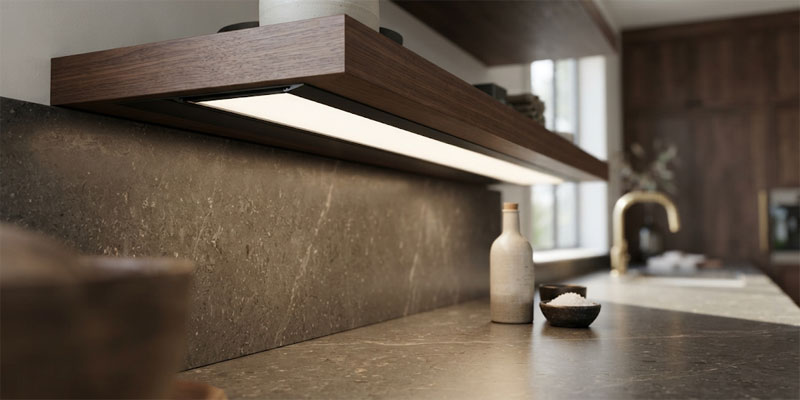
The biological environment of the master bedroom requires lighting fixtures specifically configured to protect natural melatonin production and promote deep physiological rest. Deploying standard cool commercial led lights for bedroom layouts floods evening living areas with invasive 450-nanometer blue wavelengths that stimulate cortisol production and trick the human circadian clock into perceiving late-night hours as midday sunlight.
Restorative Correlated Color Temperatures and Spectral Health
A health-focused residential lighting layout strictly specifies diodes emitting light within the warm 2200K to 2700K spectrum for sleeping quarters. This amber-shifted spectrum replicates the soothing, restorative radiance of setting twilight and open wood fires, easing the autonomic nervous system into a restful state while preserving optical visual contrast for bedtime reading rituals.
Furthermore, bedroom luminaires must deliver uncompromising color accuracy through a high Color Rendering Index (CRI 95+) and an R9 saturated red rating above 80. Mass-market commercial diodes blanched with synthetic phosphors flatten natural wood grains, distort linen fabrics, and render human skin tones in pale, grayish casts, degrading the tranquil interior design of your private sanctuary.
-
Specify warm-white 2700K fixtures for overhead bedroom ambient layers to maintain natural circadian sleep schedules.
-
Ensure spectral distributions minimize optical spikes between 440 and 480 nanometers in all fixtures used past sunset.
-
Combine low-profile cove washes with focused, low-glare accent reading luminaires to build balanced secondary visual layers.
       TYPICAL COMMERCIAL DIODE vs. TAKETI CIRCADIAN SPECTRUM

  Relative
  Intensity
     ▲
     │         Harsh 450nm Peak
     │        (Disrupts Melatonin)
     │             ┌─┐
     │             │ │                  Standard Cool LED
     │             │ │                   (3500K - 5000K)
     │             │ │    ┌──────────┐
     │             │ │    │          │
     │             │ └────┘          └─────────
     │            ─┴─────────────────────────────► Wavelength (nm)
     │             400    500   600   700
     │
     │                                  TAKETI Warm Circadian
     │                                   (2700K Equilibrium)
     │                        ┌──────────┐
     │                       ┌┘          └─┐
     │                     ┌─┘             └──┐
     │             ┌───────┘                  └──
     │            ─┴─────────────────────────────► Wavelength (nm)
     │             400    500   600   700
Zone Division and Multi-Tiered Bedside Lighting
Master suites function as versatile, multi-use pavilions where occupants transition between evening reading, wardrobe selection, and restorative sleep. Dividing bedroom lighting into separately switched electrical zones prevents a partner preparing for an early morning commute from disturbing a sleeping spouse with aggressive, ceiling-wide downlight arrays.
Integrating low-level, downward-directed night-path luminaires beneath bed frames and floating nightstands provides safe navigational foot-candles for midnight walks without activating primary overhead fixtures. These discrete ground fixtures, operating at less than one watt, guide steps safely across plush area rugs while maintaining dark-adapted optical comfort throughout the night.
Linear Flexibility: Custom Formations Using LED Light Strips
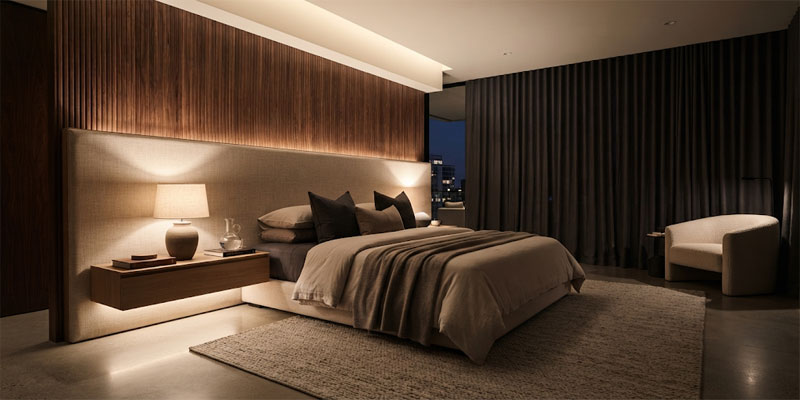
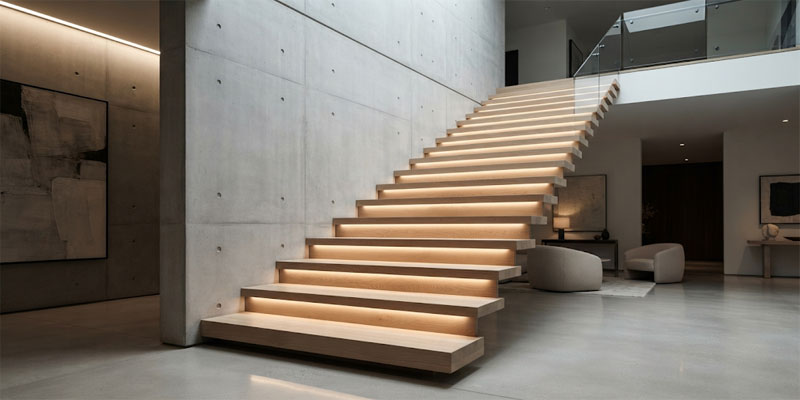
Deploying versatile led light strips grants homeowners and residential architects complete spatial freedom to turn complex millwork, floating staircase risers, and structural ceiling trusses into illuminated architectural centerpieces. Unlike rigid, pre-formed commercial luminaires, flexible semiconductor tapes navigate curved radii, narrow casework reveals, and irregular architectural transitions with ease.
Cut-Length Precision and Field Solderless Splicing
Precision architectural execution demands that linear light runs match physical casework down to the millimeter, avoiding dark unlit margins at shelf corners. Professional flexible diode tapes feature clearly designated cut lines spaced at tight intervals, allowing field installers to sever and terminate strips safely between micro-resistor banks without breaking series electrical circuits.
Field splicing requires heavy-duty terminal blocks or mechanical spring-loaded micro-connectors rather than flimsy push-in friction clips that corrode or loosen under seasonal thermal expansion. Solderless, silicone-gasketed terminal junctions preserve low electrical resistance across continuous multi-shelf bookcases, ensuring uniform current delivery across extensive vertical millwork displays.
-
Verify designated cut increments to ensure light runs align flush against vertical cabinet stiles.
-
Utilize clear silicone terminal end-caps to seal field cuts and prevent airborne moisture intrusion in humid areas.
-
Secure connector blocks with heat-shrink polyolefin tubing to protect mechanical wire joints from flexing strain.
Diffusion Densities: Dot-Free Cohesive Radiance
Low-grade commercial flexible tapes position diodes too far apart—often thirty or sixty diodes per meter—which casts distracting individual light cones across nearby surfaces. This pixelated appearance shatters architectural cohesion, creating a cheap aesthetic that distracts from fine interior finishes.
High-performance linear lighting requires high-density diode arrangements, utilizing up to two hundred and forty diodes per meter or continuous Chip-on-Board (COB) phosphor technology. COB strips coat hundreds of microscopic semiconductor dies beneath a continuous linear phosphor layer, emitting a completely uniform, dotless sheet of illumination even when installed inside ultra-shallow aluminum extrusions or placed close to reflective materials.
Comprehensive Zonal Comfort: Styling LED Lights for Room Layouts
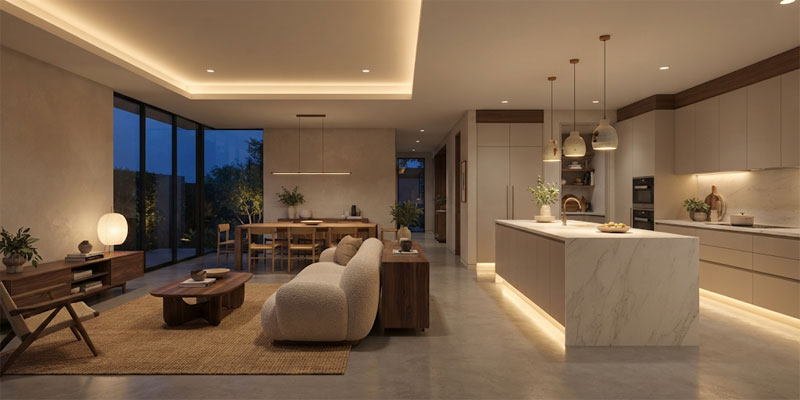
Modern open-concept floor plans integrate kitchen islands, dining banquettes, and family conversation lounges into a singular open expanse. Selecting specialized led lights for room configurations requires balancing broad general illumination with focused task accents, avoiding the cold, institutional glare caused by rows of basic downlights.
Photometric Balance Across Shared Living Spaces
An ergonomically balanced living room balances three synchronized layers: high ambient ceiling glow, focused horizontal task lighting, and subtle low-level floor accents. Flooding an entire living space from raw overhead fixtures forces eye pupils into continuous accommodation strain, casting sharp facial shadows and flattening room texture.
Secondary accent luminaires introduce comfortable mid-level foot-candles, bridging the visual gap between overhead ceiling lights and low coffee table surfaces. By dimming downlights and relying on targeted horizontal beams across seating areas, homeowners transform active family gathering spaces into intimate, tranquil conversation lounges.
-
Balance ambient foot-candles between fifteen and thirty lumens per square foot for shared living rooms.
-
Position directional downlights strictly along artwork walls or table surfaces rather than directly over seating cushions.
-
Integrate dimmable, low-glare perimeter lighting to soften room boundaries and make residential layouts feel expansive.
                  RESIDENTIAL LIGHTING HIERARCHY

     OVERHEAD LAYER : Recessed Ceiling Pots / Coves (Ambient Base)
           │
           ▼
     MID-LEVEL LAYER: Table Luminaires / Sconces (Task & Conversation)
           │
           ▼
     FLOOR LAYER    : Toe-Kick Tapes / Step Washers (Grounding & Safety)
Integrated Architectural Dimming Protocols
Modern residential lighting systems demand advanced electronic control interfaces that adapt lighting levels effortlessly across evolving domestic activities. Traditional mechanical forward-phase rotary dimmers frequently introduce audible buzzing from driver magnetic coils, high stroboscopic ripple, and sudden drop-outs at low output levels.
Modern architectural LED systems pair with advanced reverse-phase (Electronic Low Voltage) dimmers or low-voltage zero-to-ten-volt control interfaces. These electronic drivers modulate current smoothly, delivering continuous, noise-free dimming from full task clarity down to a subtle one-percent night glow without diode flicker or color shifting.
Exterior Endurance: Weatherproof Performance in Outdoor LED Lights
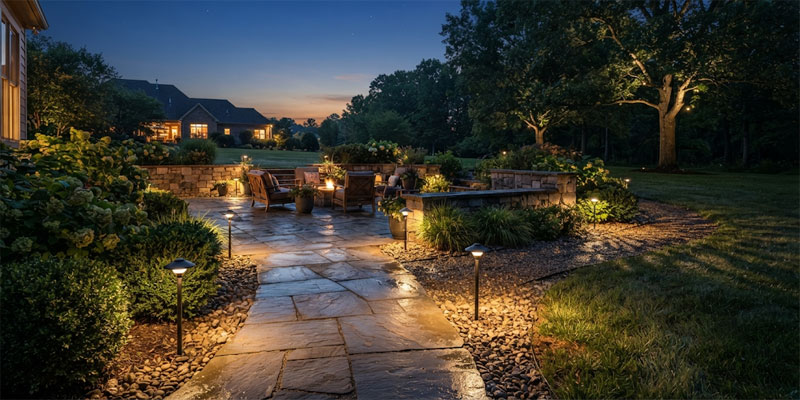
Residential facades, garden perimeters, and open entertaining patios demand specialized outdoor led lights engineered to endure relentless environmental stress. From driving rainstorms and coastal salt spray to deep sub-freezing winter frosts, exterior fixtures must deliver consistent, safe illumination while shielding internal semiconductor circuitry against moisture corrosion.
Rigorous Ingress Protection and Mechanical Sealing
Exterior luminaires operating along ground-level landscape beds or mounted upon exposed exterior siding require verified Ingress Protection (IP) ratings. Units carrying an IP65 rating withstand low-pressure water spray from garden hoses and heavy seasonal rain, making them well-suited for covered porch ceilings and soffit downlights.
Exposed pathway bollards, garden well fixtures, and open patio perimeter luminaires demand certified IP67 or IP68 construction. These heavy-duty assemblies incorporate silicone gasket seals, corrosion-resistant stainless-steel hardware, and tempered borosilicate glass lenses that withstand temporary submersion in pooling water without internal moisture leaks.
-
Select heavy cast brass or powder-coated marine-grade aluminum housings to resist harsh coastal salt corrosion.
-
Confirm driver assemblies carry independent wet-location certifications for completely unshielded installations.
-
Utilize direct-burial insulated electrical cables to prevent ground-moisture wicking into exterior junction boxes.
Low-Voltage Landscape Architectures and Safe Power Transmission
Running hazardous one-hundred-and-twenty-volt line power throughout residential turf and garden beds creates severe electrical shock risks for children, pets, and gardeners using spades or aerators. Modern residential landscape illumination relies on twelve-volt or twenty-four-volt alternating or direct-current low-voltage distribution.
Central magnetic transformers step standard household current down to safe low-voltage levels, supplying power through flexible buried cables. Low-voltage architectures simplify seasonal fixture adjustments and prevent hazardous ground-fault interruptions during wet weather cycles, keeping garden paths and architectural stone pillars safely illuminated every night.
Connected Living: The Automation Power of Smart LED Lights
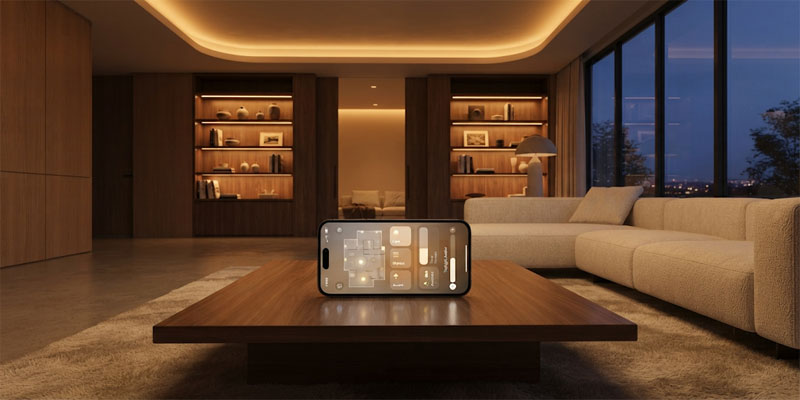
The intersection of solid-state lighting and wireless mesh networking delivers unprecedented convenience, security, and circadian personalization through smart led lights. By removing reliance on static wall toggles, modern homeowners can curate custom residential illumination profiles that adapt dynamically throughout the day.
Circadian Tracking and Autonomous Automation Schedules
True smart lighting prioritizes physiological health over gimmicky, highly saturated party hues. Advanced smart luminaires incorporate internal microprocessors programmed to track local astronomical sunrise and sunset times, automatically shifting Correlated Color Temperatures and lumen output in real time.
Morning schedules energize living areas with crisp, visual clarity, stimulating focus during work-from-home routines. As evening approaches, the system autonomously transitions down to an amber 2200K glow, suppressing blue wavelengths to encourage natural melatonin synthesis without requiring manual user intervention on mobile apps.
-
Automate lighting levels to adjust dynamically with changing natural daylight angles through integrated ambient sensors.
-
Configure vacation routines that toggle fixtures randomly across evening hours to deter unauthorized property access.
-
Group multiple living zones into unified lighting scenes, shifting from bright dining settings to cozy evening lounges with a single voice command.
Wireless Protocols: Comparing Matter, Zigbee, and Thread
Connecting dozens of smart luminaires to a single residential Wi-Fi network introduces network congestion, high latency, and frequent device drop-outs. Commercial-grade smart systems utilize specialized low-power wireless mesh protocols such as Zigbee and Thread, unified through the open-source Matter standard.
In a mesh topology, every mains-powered smart fixture acts as a signal repeater, relaying data packets outward to neighboring units. This self-healing network expands wireless range across expansive multi-story properties, delivering instant response times and reliable automation even if home internet connections experience temporary outages.
Structural Ceiling Geometry: Flush and Recessed LED Ceiling Lights
Ceiling-mounted fixtures establish the foundational foot-candle baseline for residential environments. Modern led ceiling lights have transitioned away from bulky legacy incandescent cans to slim, integrated fixtures that mount cleanly within standard drywall, preserving clean ceiling sightlines.
Integrated Thin Canless Assemblies Versus Traditional Cans
Traditional recessed pot lights required large galvanized steel housings, complex ceiling joist hangers, and significant plenum depth, complicating installations around HVAC ducts and overhead plumbing. Modern canless LED downlights integrate solid-state diodes, custom optical lenses, and remote junction boxes into a compact, ultra-slim profile under one inch thick.
Spring-loaded mounting arms snap canless units securely into precision-cut drywall openings, enabling placement directly beneath ceiling joists without structural modifications. Furthermore, integrated airtight and Insulation Contact (IC) ratings allow cellulose or fiberglass batting to rest directly against the fixture housing, eliminating conditioned air loss through ceiling penetrations.
-
Specify deep-recessed baffles to recess the light source two inches above the ceiling line, eliminating off-axis glare.
-
Ensure junction boxes feature push-in wire terminals and knockouts to speed up residential branch wiring.
-
Install canless assemblies rated IC and Airtight to maintain whole-home building envelope energy efficiency.
                  CANLESS vs. TRADITIONAL POT LIGHT

   CANLESS LED DOWNLIGHT (< 1" Deep)      TRADITIONAL RECESSED CAN (7" Deep)
  ┌─────────────────────────────────┐    ┌──────────────────────────────────┐
  │ Ceiling Insulation Over Housing │    │ Clearance Required for Heat      │
  │ [Drywall] ───► |===IC===|       │    │ [Drywall] ───► |               | │
  │ Snap-In Spring Clips            │    │ Large Metal Can Housing          │
  │ Ultra-Slim Profile (< 1 Inch)   │    │ Penetrates Ceiling Insulation    │
  └─────────────────────────────────┘    └──────────────────────────────────┘
Beam Spread Angles and Glare Reduction Optics
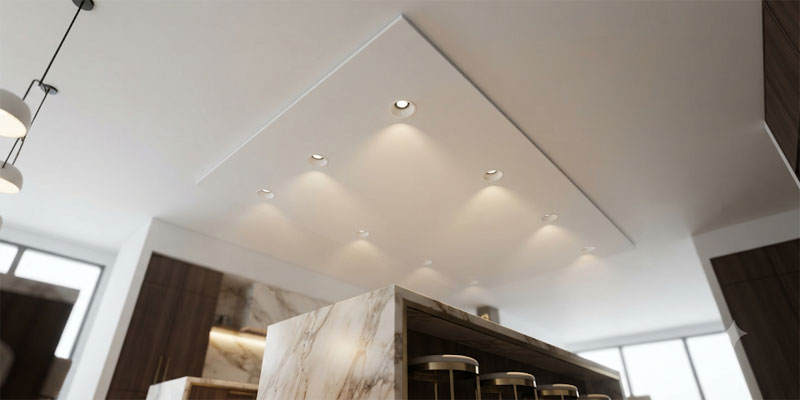
Installing general ceiling downlights without calculating beam angle coverage creates a distracting “Swiss-cheese” effect of harsh circular hotspots on floors separated by dark wall cavities. Selecting appropriate optical lenses distributes illumination smoothly across horizontal room surfaces.
Wide sixty-degree flood reflectors are ideal for shared family rooms, casting overlapping cones of soft light that provide consistent, shadow-free general visibility. In gallery halls or above kitchen islands, narrow twenty-five-degree spot reflectors direct high-intensity light pools onto work surfaces without spilling distracting glare into adjacent seating areas.
Untethered Portability: The Freedom of Rechargeable LED Lights
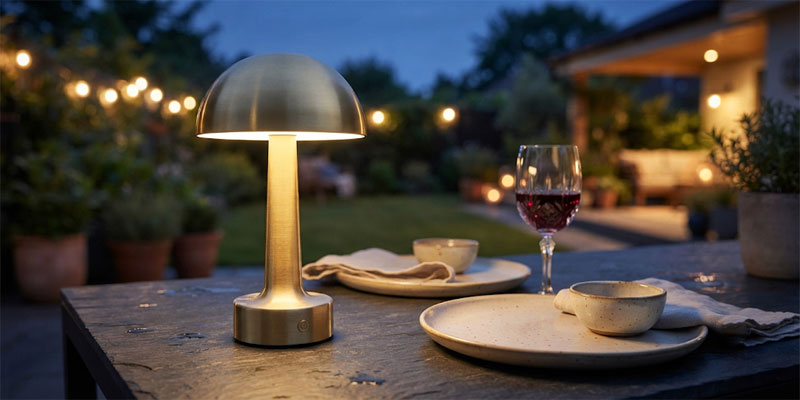
Fixed architectural wiring anchors luminaires to static perimeter walls and floor outlets, leaving central furniture groupings dependent on awkward, hazard-prone extension cords. Deploying high-capacity rechargeable led lights liberates residential living spaces, enabling homeowners to introduce warm, focused illumination anywhere across their layout.
Lithium-Ion Energy Storage and Advanced Power Management
Professional-grade portable luminaires integrate high-density lithium-ion or lithium-iron-phosphate (LiFePO4) energy cells within weighted cast-metal bases. Engineered with internal multi-stage battery management systems (BMS), these portable power reserves prevent overcharging, thermal runaway, and deep battery discharge cycles.
On a single charging cycle, high-efficiency micro-diodes deliver twelve to twenty-four hours of continuous, flicker-free 2700K illumination at standard reading brightness. Occupants can freely lift the fixture from an interior living room credenza to an outdoor al fresco dining table or a central coffee tray without worrying about battery drain or trailing cords.
-
Demand internal battery management systems that prevent diode dimming as battery voltage drops over hours of use.
-
Utilize universal USB-C power delivery ports or magnetic inductive charging pads for effortless, cable-free recharging.
-
Choose weighted cast brass, solid oak, or aluminum bases to prevent accidental tipping during animated gatherings.
       CONVENTIONAL CORDED FIXTURE vs. TAKETI RECHARGEABLE CORDLESS

    [ Wall Outlet ]                            [ Internal Li-ion Cell ]
          │ (Trip Hazard / Static)                       │ (100% Mobile)
          ▼                                              ▼
┌───────────────────┐                         ┌───────────────────┐
│ Trailing Cord on  │                         │ Cordless Freedom  │
│ Flooring or Rugs  │                         │ Across Any Zone   │
└─────────┬─────────┘                         └─────────┬─────────┘
          ▼                                             ▼
  Restricted to Room                          Effortlessly Shifted:
  Perimeter Boundaries                        End Table ➔ Coffee Tray
Capacitive Touch Modulation and Spatial Flexibility
Bulky mechanical toggles, cord-mounted thumbwheels, and dangling pull chains interrupt the clean, continuous silhouettes of minimalist portable lighting. Premium rechargeable fixtures incorporate seamless capacitive touch sensors directly into solid metal stems or base housings.
A single brief touch toggles the luminaire on and off with smooth optical ramping, avoiding the harsh shock of sudden illumination. Resting an index finger against the touch-sensitive surface activates stepless continuous dimming, allowing users to dial output down from a bright task focus to a delicate one-percent candlelight glow that sets an intimate evening mood.
Vertical Sculptural Accents: Modern Architectural LED Wall Lights
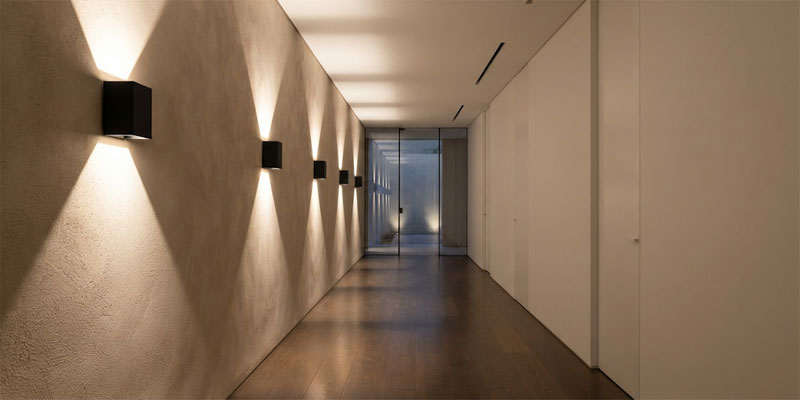
While ceiling fixtures provide baseline visibility and desk lamps focus on task zones, led wall lights define structural planes, cast sculptural silhouettes, and introduce comfortable eye-level warmth across residential hallways, staircases, and living room elevations.
Bidirectional Upward and Downward Light Washes
Architectural wall sconces commonly employ bidirectional optical assemblies that cast coordinated shafts of light both upward and downward along vertical wall planes. The upward beam washes upper drywall coves, reflecting soft indirect ambient glow across the ceiling, while the downward beam illuminates floor borders and baseboards.
This dual-axis illumination lengthens the perceived height of residential spaces, turning narrow corridors and compact entry vestibules into welcoming, visually expansive breezeways. By concealing high-CRI diodes behind opaque metal diffusers or frosted glass shields, bidirectional sconces deliver generous foot-candles while eliminating direct glare for passing family members.
-
Mount wall sconces sixty to sixty-six inches above the finished floor to align fixtures comfortably with standing eye levels.
-
Select fixtures with adjustable internal shutters to customize the beam width of upward and downward light cones.
-
Coordinate wall sconce metal finishes with adjacent door hardware and structural trim to preserve cohesive interior design.
Low-Voltage Step and Corridor Safety Illumination
Navigating open-concept staircases and split-level transitions in the dark presents real physical stumbling hazards for children and aging family members. Recessed low-profile step sconces mounted directly into stair stringers or hallway baseboards provide dedicated foot-level path guidance without activating bright overhead fixtures.
Engineered with louvered faceplates, these compact fixtures direct all luminous flux downward across stair treads, shielding upward sightlines completely. Operating at less than two watts per unit, baseboard safety luminaires provide reliable night-long pathway visibility, keeping high-traffic circulation zones safe throughout the evening.
Precision Grooming and Color Fidelity: Ergonomic LED Vanity Lights
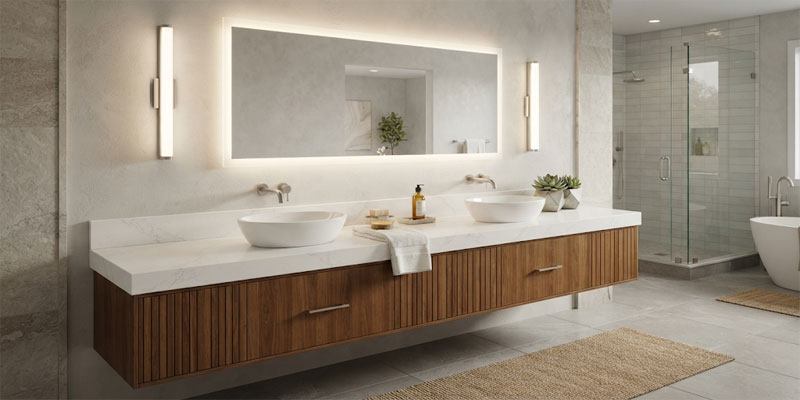
Bathroom mirrors and dressing room suites demand specialized led vanity lights engineered to deliver precise, shadow-free task illumination. Low-quality fixtures often introduce green chromatic tints, harsh downward shadows beneath the eyes and chin, and poor color rendering, frustrating morning grooming routines.
Horizontal Sconce Mounting Versus Overhead Vanity Strips
Mounting a solitary multi-bulb light fixture above an expansive bathroom mirror is a widespread design mistake. Overhead fixtures cast unyielding downward shadows across facial features, exaggerating dark under-eye circles and complicating shaving, skin care, and cosmetic application.
An ergonomic vanity layout incorporates matched vertical sconces positioned on both sides of the mirror glass at eye level, spaced twenty-eight to thirty-six inches apart. This bilateral cross-lighting arrangement washes faces in uniform, horizontal illumination, eliminating harsh shadows and providing clean visual clarity across every contour.
-
Mount vertical vanity sconces sixty to sixty-five inches above the finished floor to center illumination with seated and standing eye lines.
-
Position sconces at least twelve inches from adjacent sidewalls to prevent harsh, distracting peripheral light bounce.
-
Choose fully diffused tubular acrylic or etched glass shades to soften diode intensity and eliminate harsh glare.
CRI 95+ and Deep R9 Precision for Authentic Skin Tones
Accurate cosmetic application and personal grooming depend entirely upon light sources that reveal authentic skin pigments. Mass-market vanity LEDs regularly cut corners with low-grade diodes (CRI < 80) that impart a sickly, sallow cast to human skin and wash out natural complexions.
Professional-grade vanity fixtures deploy high-performance LED arrays with an independently verified CRI of 95+ and a minimum R9 saturated red score of 80. This optical precision ensures that foundation pigments, natural lip tones, and subtle skin hues register with authentic depth, allowing homeowners to leave the mirror completely confident in their daily appearance.
Smooth Optical Transitions: Precision Dimmable LED Lights
Residential spaces serve dynamic, evolving functions throughout the day, requiring lighting that transitions smoothly from bright morning focus to intimate late-evening relaxation. Incorporating advanced dimmable led lights ensures your home adaptively reflects domestic rituals without the annoying flickering or abrupt drop-offs common to poorly matched systems.
Pulse-Width Modulation Versus Continuous Current Reduction
Low-cost commercial dimmers lower light output by rapidly switching diodes on and off thousands of times per second—a method known as Pulse-Width Modulation (PWM). While the human eye interprets this rapid pulsing as dimmed light, the micro-stroboscopic flutter strains eye muscles, triggering visual fatigue, tension headaches, and migraines during prolonged evening leisure.
Architectural luminaires rely on Continuous Current Reduction (CCR), also known as analog dimming. CCR drivers adjust the constant electrical amperage supplied directly to the semiconductor dies, reducing light output smoothly without high-frequency cycling. Delivering a steady, uninterrupted stream of light protects visual comfort, ensuring family members decompress in complete optical relaxation.
-
Insist on analog CCR dimming drivers to eliminate subconscious stroboscopic flutter and headache triggers.
-
Confirm dimmer switch and fixture driver compatibility charts to avoid electrical impedance mismatches and buzzing coils.
-
Select drivers equipped with micro-trim dials to calibrate the lowest dimming threshold and prevent sudden drop-outs below ten percent.
       PULSE-WIDTH MODULATION (PWM) vs. CONTINUOUS CURRENT (CCR)

  VOLTAGE / CURRENT
     ▲
     │  PWM FLICKER (Rapid Full-On / Full-Off Cycles)
     │  ┌─┐   ┌─┐   ┌─┐   ┌─┐   ┌─┐   ┌─┐
     │  │ │   │ │   │ │   │ │   │ │   │ │  ◄── Micro-Stroboscopic Flutter
     │  │ │   │ │   │ │   │ │   │ │   │ │      (Triggers Migraines & Eye Strain)
     │──┘ └───┘ └───┘ └───┘ └───┘ └───┘ └───► TIME
     │
     │  CCR ANALOG (Smooth, Continuous Current Reduction)
     │  ───────────────────────────────────
     │  ═══════════════════════════════════  ◄── Steady, Uninterrupted Direct Current
     │                                           (Zero Flicker / Pure Optical Calm)
     │─────────────────────────────────────► TIME
Dim-to-Warm Technologies Replicating Incandescent Calibrated Glowing
Traditional incandescent filaments possessed a charming optical quality: as their wattage was dimmed, the filament cooled, shifting its color temperature naturally from a bright yellow-white down to a deep, glowing candle-amber. Basic LEDs, by contrast, maintain their static cool color temperature even when dimmed, resulting in a dull, uninviting grayish light at low outputs.
Modern architectural fixtures incorporate Dim-to-Warm semiconductor technology. As current drops, internal micro-circuitry smoothly blends output across warm auxiliary chips, transitioning Correlated Color Temperatures from a crisp 3000K down to a rich 1800K candle glow at one percent output. This dynamic chromatic shift replicates the cozy, nostalgic warmth of vintage filaments while maintaining solid-state electrical efficiency.
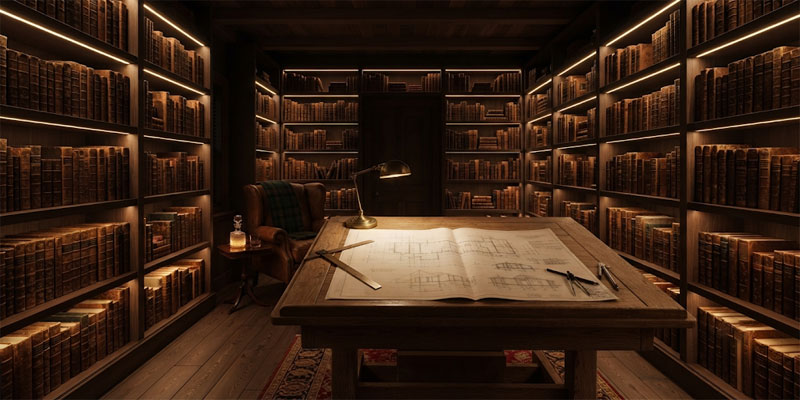
Ergonomic Workstation Clarity: The Precision LED Desk Lamp
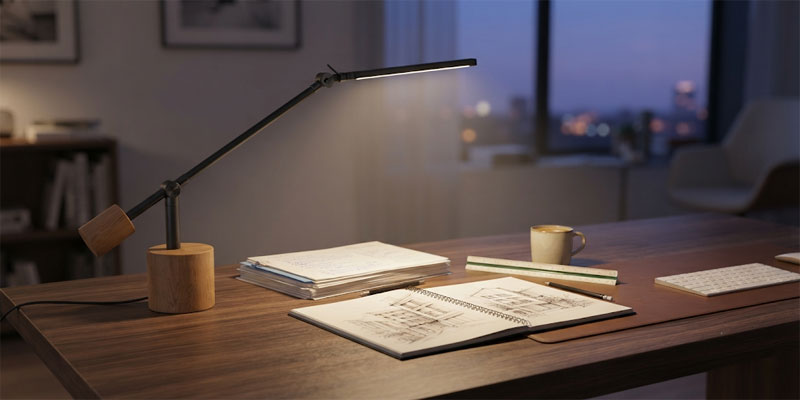
Dedicated work-from-home offices, technical drafting tables, and children’s study zones demand focused, high-contrast task illumination that preserves eye health during demanding workdays. Integrating a dedicated led desk lamp delivers targeted foot-candles right where work happens, preventing ocular fatigue caused by working under mismatched general ceiling lights.
Asymmetric Optical Beam Casting and Glare-Free Workspace Geometries
Standard symmetrical task lights cast conical light pools directly beneath their heads, bouncing intense specular reflections off glossy desktop monitors, tablet glass, and technical documents straight into the user’s eyes. This indirect glare forces eyes into continuous strain, resulting in dry eyes and afternoon headaches.
Professional task luminaires utilize asymmetric optical reflectors and micro-prismatic lenses. These precision optics cast light across the desk at an oblique angle, washing documents and keyboards in uniform foot-candles while directing reflected glare away from the user’s line of sight.
-
Position task lamps on the side opposite your dominant writing hand to keep hand movements from casting shadows across work surfaces.
-
Choose articulated counterbalanced arms with multiple friction joints to adjust focal height smoothly without spring bounce.
-
Combine focused task lights with subtle room background illumination to avoid high-contrast eye fatigue between dark rooms and bright papers.
Circadian Task Switching and Blue-Spectrum Management
Demanding administrative analysis, financial review, and technical sketching benefit from neutral 4000K light, which sharpens contrast and supports daytime concentration. However, working under that same blue-enriched spectrum late into the evening disrupts natural circadian rhythms, delaying restorative sleep.
Ergonomic task lamps incorporate dual-diode arrays that allow users to modulate color temperatures freely throughout the day. With a light touch on an integrated base touchpad, users can switch from a crisp 4000K focus setting during morning zoom meetings to a warm, gentle 2700K setting for evening reading, balancing productivity with physiological rest.
Transitioning from Architectural Diodes to Artisanal Living Room Luminaires
Once structural LED linear tapes, ceiling downlights, and task-specific workspace luminaires are seamlessly integrated into your home’s layout, the final layer of sophisticated residential design focuses on personal touchpoints. While hidden architectural fixtures provide smooth background illumination, standalone accent luminaires ground shared seating areas, serving as tactile design centerpieces during quiet evening rituals. Discovering our curated collection of Table Lamps provides an effortless avenue to elevate living room end tables, credenzas, and bedroom nightstands with sustainable solid hardwoods, precision aerospace alloys, and circadian-supportive 2700K illumination that brings enduring warmth, refined balance, and timeless material craftsmanship to everyday domestic life.
Frequently Asked Questions
What is the difference between CRI and R9 values in high-performance LED lighting?
The general Color Rendering Index (CRI, Ra) measures how accurately an artificial light source reveals physical pigments compared to daylight, calculated across eight pastels (R1–R8). However, this standard rating completely ignores saturated red tones. The R9 metric specifically measures deep saturated reds, which are vital for rendering natural skin tones, hardwood grains, and fine art. Standard commercial diodes often score CRI 80 with an R9 near zero, producing a sickly, washed-out cast. High-performance luminaires provide CRI 95+ paired with an R9 score above 80, revealing interior surfaces in authentic richness.
How do aluminum mounting extrusions extend the operational lifespan of LED strip lights?
Flexible linear tapes generate concentrated thermal energy along their copper printed circuit boards. Affixing them directly to insulating materials traps heat within the diode die, causing phosphors to degrade, color temperatures to shift green, and light output to drop prematurely. Extruded aluminum channels act as structural heat sinks, drawing thermal radiation away from semiconductor dies and dispersing it into room air. This efficient cooling keeps operating temperatures well below 140°F (60°C), preserving the diode’s original brightness and color purity for over 50,000 continuous hours.
Why do some dimmable LED lights buzz or flicker when dimmed to low outputs?
Buzzing and flickering stem from electrical impedance mismatches between the wall switch and the fixture’s power driver. Traditional incandescent switches use forward-phase triac dimming, which slices the electrical waveform abruptly and causes magnetic components in LED drivers to vibrate loudly and drop out. Eliminating noise and flicker requires pairing electronic drivers with compatible reverse-phase (ELV) switches or zero-to-ten-volt analog controllers. These modern systems lower electrical current smoothly, delivering silent, continuous dimming down to one percent output without sudden drops.
Can high-density linear LED tape lights be safely installed in bathrooms and exterior soffits?
Standard non-waterproof flexible tapes (rated IP20) feature exposed copper solder points that quickly oxidize and short-circuit when exposed to steam, moisture, or condensation. Wet-location installations demand linear tapes rated IP65 or IP67, encased in clear, non-yellowing UV-resistant silicone sleeves. When paired with silicone-gasketed waterproof end caps and moisture-sealed aluminum channels, these protected strips operate reliably through humid master bathroom showers, outdoor patio coves, and exterior roof eaves without moisture failure.
How does an asymmetric beam angle in a desk lamp protect eyes from strain?
Standard symmetrical task lamps cast light cones straight down, reflecting specular glare off computer monitors, tablet glass, and glossy documents directly into the user’s eyes. This reflected glare forces eyes to constantly adjust, triggering ocular strain, fatigue, and dry eyes. Precision task lamps feature asymmetric optical reflectors that cast light across work surfaces at an oblique angle, directing reflections away from the user’s line of sight while illuminating keyboards and documents with uniform clarity.