
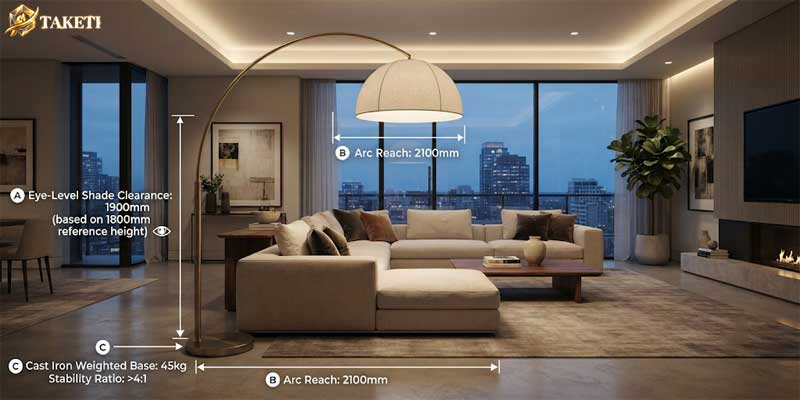
Transforming a shadowy living room corner or establishing an inviting reading retreat starts with selecting the right Floor lamp. Unlike fixed ceiling downlights that wash across a room with flat, uniform glare, a freestanding standing luminaire introduces vertical height, sculptural artistry, and deliberate directional pools of illumination. In contemporary home design, an adjustable floor lamp bridges the spatial gap between ceiling architecture and seated eye levels. Yet, shoppers routinely encounter aggravating ownership hurdles: top-heavy poles wobbling dangerously on carpet, harsh exposed bulbs glaring into seated eyes, inconvenient switch placements behind heavy couches, or outdated fixtures driving up monthly electricity statements.
Selecting an ideal freestanding fixture requires analyzing practical room ergonomics, structural base mechanics, and thermal electrical consumption. Layering vertical fixtures with tabletop luminaires such as handcrafted Table Lamps For Living Room brings multidimensional warmth to sprawling open floor plans. By breaking down fixture categories, comparing real-world energy expenditures, evaluating child-safe tip thresholds, and testing switch ergonomics, you can invest in a durable floor lamp that anchors your living area safely for years.
Choosing the Best Floor Lamp: Four Essential Styles Explained
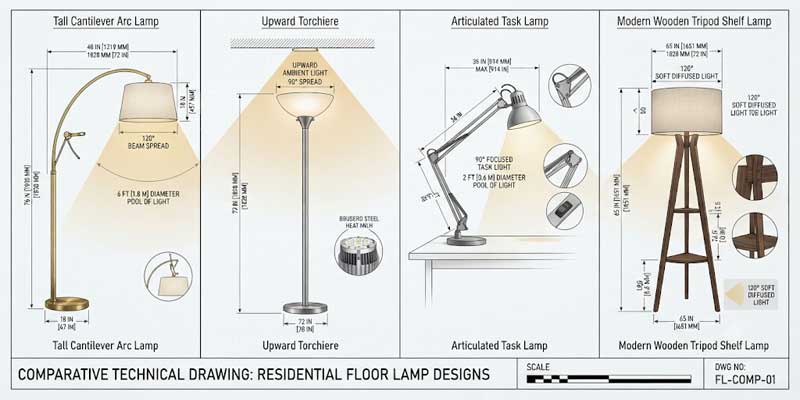
Navigating the lighting aisle can feel overwhelming without matching specific fixture geometries to functional daily routines. The market centers around four proven structural configurations:
1. Arc Floor Lamps (Overhead Cantilever Reach)
An arc floor lamp features a sweeping, curved metal neck anchored to a heavy counterweight base. Its defining structural advantage is horizontal reach: the base tucks discreetly behind an accent chair or sofa corner while the lampshade cantilevers 3 to 6 feet forward into the center of the seating group. This overhead arch delivers focused downward illumination directly onto coffee tables or sectional lounges without cutting drywall to install hardwired pendant boxes. However, due to their wide physical footprint, arc fixtures demand rooms with ceiling heights of at least 8.5 feet to prevent their curved necks from crowding ceiling sightlines.
2. Torchiere Floor Lamps (Indirect Upward Wash)
A torchiere floor lamp utilizes an upward-facing bowl shade that casts light directly against the ceiling plane, allowing soft bounced illumination to diffuse downward throughout the entire room. Because the light source is shielded from horizontal eye levels, torchieres eliminate direct glare completely. They represent an exceptional choice for compact bedrooms and apartments lacking overhead recessed cans, brightening dark ceiling corners and creating the optical illusion of taller, more expansive walls.
3. Reading and Task Floor Lamps (Focused Directional Beams)
Engineered for high visual acuity, a reading floor lamp features a slender vertical pole paired with an articulated counterbalanced boom arm or a flexible silicone gooseneck. These compact fixtures direct a narrow, shielded beam downward onto books, craft desks, or tablet screens without spilling harsh light across the room. Positioning a task floor lamp directly adjacent to a reading lounger provides adjustable, glare-free clarity that eases evening eye fatigue.
4. Tripod and Integrated Shelf Floor Lamps (Architectural Accent Furniture)
Tripod fixtures utilize three splayed timber or metal legs to establish a bold Mid-Century or industrial architectural statement. Similarly, shelf fixtures incorporate horizontal open-tier surfaces built into the frame, doubling as functional end tables for resting books, remote controls, or smartphones. While tripod designs require a generous 20-to-24-inch floor radius, they provide unmatched decorative presence in expansive master suites alongside intimate Bedroom Table Lamps.
| Fixture Configuration | Light Direction | Floor Space Required | Primary Room Application |
|---|---|---|---|
| Cantilevered Arc | Downward direct pool | Large (needs 3-6 ft overhead span) | Sectional sofas, central coffee tables |
| Upward Torchiere | Indirect ceiling bounce | Minimal (10-12 inch base diameter) | Dark room corners, low-profile apartments |
| Adjustable Task / Reading | Focused narrow cone | Compact (tight footprint) | Armchairs, home office desks, sewing nooks |
| Tripod & Etagere Shelf | Omnidirectional ambient | Moderate (18-24 inch leg splay) | Foyer entryways, bedroom sitting corners |
Ease of Use: Switch Ergonomics and Smart Home Integration
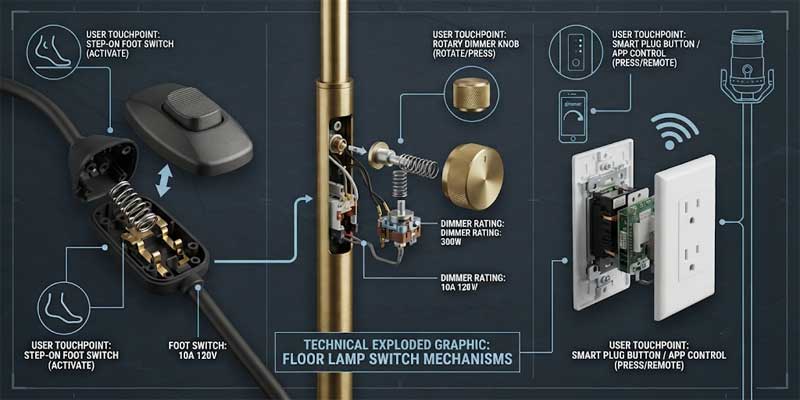
An exceptional floor lamp should integrate effortlessly into daily routines. If controlling your luminaire demands crouching down to fish for an inline wire switch behind heavy upholstery, convenience quickly turns into annoyance.
1. Step-On Foot Switches
Positioned along the main floor power cord roughly 12 to 18 inches from the lamp base, step-on push-button switches allow you to tap the fixture on or off with your shoe. This hands-free mechanism is extraordinarily practical when entering a dark living room with grocery bags or armfuls of laundry, completely eliminating the need to bend down or stretch around furniture.
2. Rotary Dials, Pull Chains, and Touch Dimming
Fixtures placed directly alongside comfortable seating benefit from switches located on the upper pole or socket collar. Three-way rotary switches and classic beaded brass pull chains allow seated users to switch between brightness levels without standing up. Modern architectural fixtures increasingly feature capacitive touch sensors integrated into the stem, allowing seamless finger-tap dimming across 10%, 50%, and 100% brightness levels.
3. Smart Plugs and Wall Switch Compatibility
Homeowners building automated smart lighting networks should verify switch architecture prior to purchase. Fixtures with mechanical toggle, rocker, or step-on switches can remain permanently switched on and plugged into a Zigbee, Z-Wave, or Wi-Fi smart outlet plug. This allows your floor lamp to trigger automatically at sunset, activate via voice commands, or integrate into whole-home vacation security scenes.
Energy Consumption: Modern LED vs. Legacy 300W Halogen
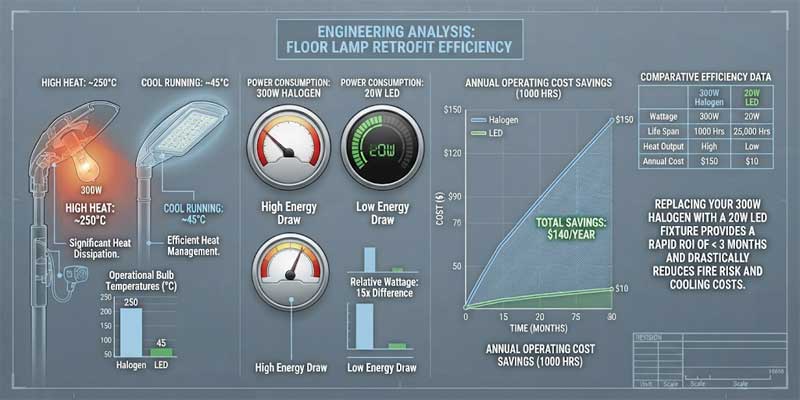
Many homeowners fondly remember vintage torchiere fixtures but dread their notorious electrical appetite. Legacy halogen torchieres relied on 300-watt to 500-watt tubular bulbs that operated at blistering surface temperatures exceeding 900°F (480°C). These units functioned like electric space heaters, posing severe fire hazards near drapery while driving up household utility expenses.
1. Real-World Electrical Cost Breakdown
Modern LED floor lamp fixtures consume a fraction of the wattage while producing equivalent or superior lumen output. A high-efficiency 18-watt to 24-watt LED array generates the same 2,000 lumens of room-filling illumination that once demanded a power-hungry 300-watt halogen element. Over daily usage of five hours, a legacy halogen unit consumes 1.5 kilowatt-hours per day, costing approximately $8 to $12 monthly per fixture. By contrast, an efficient LED floor lamp consumes less than $0.70 of electricity per month under identical operating hours.
2. Thermal Safety and Extended Lifespan
Beyond electrical efficiency, LED technology generates minimal forward radiant heat. Lower operating temperatures protect synthetic lampshade fabrics from yellowing, prevent brittleness in internal socket wiring, and eliminate thermal loads on your home air conditioning system. With operational ratings between 25,000 and 50,000 hours, a quality LED floor lamp runs reliably for over a decade of evening use without requiring bulb replacements.
Safety and Stability: Base Weights and Child-Safe Anti-Tip Engineering
Because a tall floor lamp elevates considerable mechanical mass 58 to 72 inches into the air, stability is a paramount domestic safety concern. Homes with active toddlers, large dogs, or thick carpet padding require careful structural evaluation.
1. Heavy Counterweight Bases
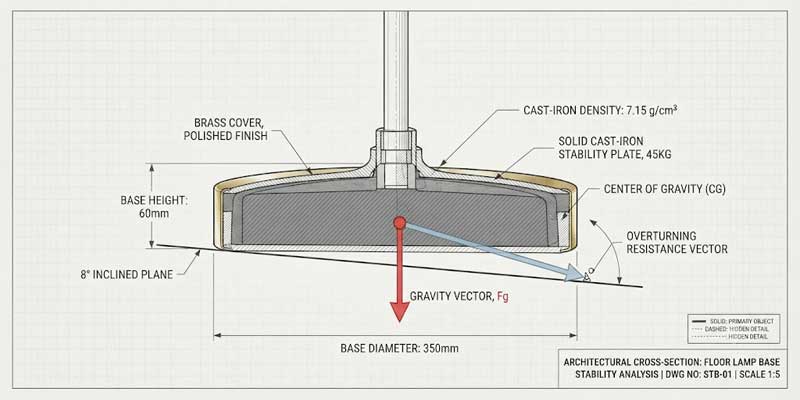
Underwriters Laboratories (UL 153 standard) mandates rigorous mechanical tip-over testing for portable electric luminaires. A compliant floor lamp must maintain stability when tilted at an angle of 8 degrees on an inclined plane. Inexpensive models frequently cut shipping costs by using hollow plastic base covers filled with lightweight plaster. By contrast, premium fixtures anchor their vertical stiles with solid cast-iron plates or dense marble slabs weighing 12 to 25 pounds, establishing a low center of gravity that resists accidental bumps.
2. Cord Management and Pet Protection
Trailing floor cords present trip hazards and attract teething pets. Premium standing lamps feature internal cord channeling that drops the electrical cable straight through the bottom center of the weighted plate. When positioning fixtures along open walkways, secure excess power cord length beneath nearby baseboards using adhesive silicone clips to prevent household snagging.
Proportion and Glare Prevention: The Eye-Level Rule
A frequent styling error involves choosing fixtures that expose bare, blinding bulbs to seated guests. To achieve comfortable illumination, the bottom rim of a floor lamp shade should align approximately with average seated eye height—typically 40 to 48 inches above the finished floor when relaxing on a standard sofa. For standing conversational areas, tall 60-to-68-inch poles conceal bulb hardware while bathing the surrounding space in flattering, diffused radiance.
Pairing tall perimeter fixtures with curated accent lighting from an artisanal Table Lamp on an adjacent credenza introduces depth, balance, and visual sophistication across your entire residential floor plan.
By balancing fixture geometry with room dimensions, demanding solid cast-iron base weights, and utilizing modern cool-running LED modules, your new floor lamp delivers reliable convenience, verified structural safety, and gorgeous architectural ambiance for decades.
