
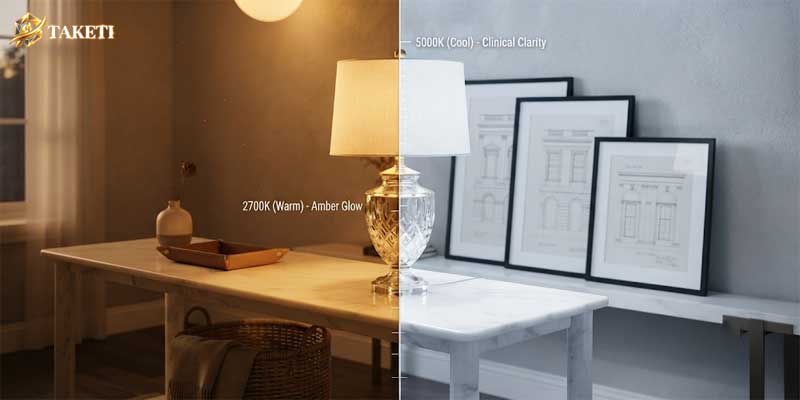
Stepping down the retail lighting aisle can easily turn into an exercise in frustration when trying to decipher the critical visual differences between soft white vs daylight bulbs. Manufacturers routinely slap deceptive marketing labels on retail packaging, leading many homeowners to assume that “Daylight” mimics the soft, golden radiance of an early morning sunrise. In reality, screwing in a daylight bulb often bathes a cozy living space in an uncomfortably sterile, blue-tinted glare reminiscent of a commercial parking garage or hospital triage room.
Selecting the wrong color temperature does far more than spoil interior aesthetics. It directly alters your neurological circadian rhythms, changes how paint pigments and fabric textures appear, and can turn relaxing evening retreats into visually fatiguing environments. Whether you are re-lamping existing fixtures or choosing modern LED Lights, understanding the architectural engineering behind soft white vs daylight is essential for crafting balanced residential illumination.
The Kelvin Scale: Soft White vs Daylight Decoded
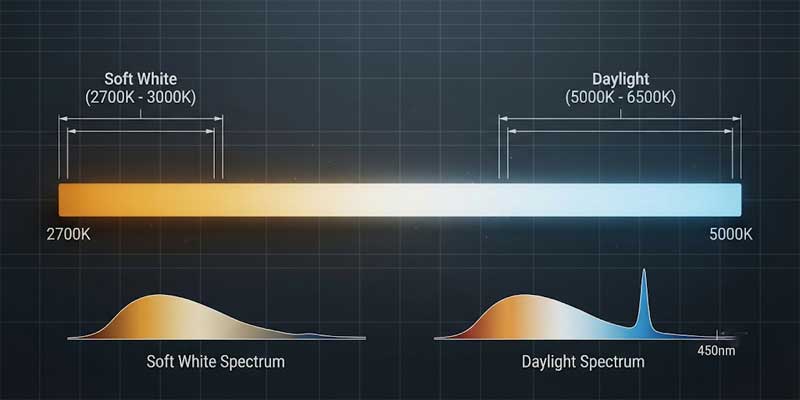
To cut through misleading commercial branding, interior designers and electrical engineers rely exclusively on Correlated Color Temperature (CCT), measured in degrees Kelvin (K). The Kelvin rating defines the absolute hue and warmth or coolness emitted by an illuminated filament or LED diode array. Understanding where each classification sits along this thermal spectrum reveals why comparing soft white vs daylight is a study in extreme lighting opposites.
1. Soft White (2700K to 3000K)
Soft white bulbs occupy the lower end of the household visual spectrum, typically calibrated between 2700K and 3000K. This lighting range produces a rich, golden-yellow undertone identical to the gentle incandescence of historic tungsten filaments and burning candlelight. Because lower Kelvin values contain negligible blue-wavelength energy, soft white induces psychological sensations of relaxation, emotional safety, and physical warmth. It softens facial features, flatters complexions, and highlights the deep, organic tones of natural hardwoods, brass hardware, and warm earthy textiles.
2. Daylight (5000K to 6500K)
Daylight bulbs sit at the opposite extreme, ranging from 5000K up to a piercing 6500K. Despite its pastoral title, daylight illumination does not replicate warm natural sunshine. Instead, it matches the harsh, high-contrast, blue-sky glare observed outdoors at high noon. This light spectrum emits a crisp, icy-white beam with distinct blue undertones. Diodes engineered at 5000K maximize visual acuity, sharpen edge definition, and amplify contrast, making tiny details immediately discernible at the expense of cozy ambiance.
| Technical Attribute | Soft White Spectrum | Daylight Spectrum |
|---|---|---|
| Kelvin Rating (CCT) | 2700K – 3000K | 5000K – 6500K |
| Visual Color Cast | Warm amber, golden-yellow | Cool, crisp bluish-white |
| Blue Light Concentration | Extremely Low (<10%) | High Peak (~450nm spike) |
| Psychological Effect | Calming, restful, intimate | Alert, hyper-focused, energetic |
| Contrast & Edge Acuity | Moderate, soft shadow diffusion | Maximum, sharp high contrast |
| Ideal Applications | Living rooms, bedrooms, lounges | Garages, display workshops, task counters |
Circadian Rhythms: How Bulb Spectrum Governs Sleep & Focus
The debate between soft white vs daylight extends beyond decorative style into fundamental neurobiology. Human retinas house specialized intrinsically photosensitive retinal ganglion cells (ipRGCs). These photoreceptors do not contribute to conscious image formation; instead, they measure ambient blue wavelengths (specifically around 460 to 490 nanometers) to regulate your central suprachiasmatic nucleus, the body’s internal master clock.
When exposed to daylight bulbs in the evening, your brain receives a false photochemical signal that it is still midday. This exposure suppresses the natural secretion of melatonin, elevating cortisol levels and delaying sleep onset latency. Conversely, utilizing soft white light fixtures after dusk eliminates the harsh blue spectrum spike, signaling the endocrine system to unwind naturally. For dedicated evening relaxation, installing low-Kelvin fixtures such as dedicated Bedroom Table Lamps equipped with 2700K diodes safeguards your natural circadian biology.
Room-by-Room Guide: Where to Deploy Each Light Temperature
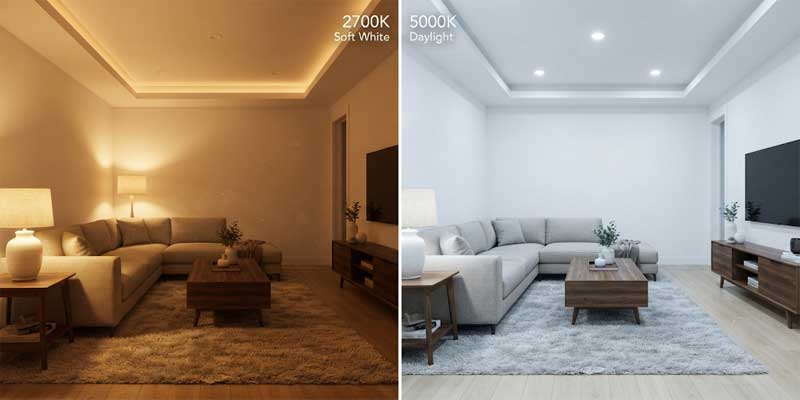
Achieving a cohesive lighting scheme requires matching bulb temperature to the specific tasks performed in each living zone. Inappropriate bulb allocation can make workspaces sluggish or gathering zones uninviting.
1. Bedrooms and Rest Zones
Bedrooms demand lower color temperatures without exception. Soft white (2700K) creates the tranquil, low-stimulation environment necessary for emotional decompression before sleep. Incorporating daylight lamps on a bedside nightstand will create severe visual glare and inhibit relaxation. Reserve cooler lamps strictly for enclosed closet storage where verifying true clothing fabric hues is critical.
2. Living and Gathering Spaces
Family rooms, parlors, and dens serve as conversational environments where welcoming warmth takes precedence. Outfitting accent fixtures and Table Lamps For Living Room seating layouts with 2700K to 3000K soft white maintains inviting tones that complement plush upholstery, timber architectural beams, and deep leather seating.
3. Kitchens: Ambient Comfort vs. Task Precision
The modern kitchen presents a common battleground in the soft white vs daylight conundrum. Kitchens require layered illumination. Use warm white or soft white (3000K) for overhead recessed cans and decorative island pendants to keep open-concept living zones harmonious. Then, install dedicated high-output, neutral or daylight task lighting directly beneath upper cabinetry where food preparation, butchery, and recipe reading demand pinpoint clarity.
4. Bathrooms and Make-up Vanities
Bathrooms require careful balance. Pure 5000K daylight flanking a vanity mirror reveals true cosmetic coloration, but can accentuate blemishes and wrinkles unmercifully. Most residential designers favor a neutral white compromise (3500K to 4000K) with a high Color Rendering Index (CRI 90+) over raw 5000K daylight, preserving flattering natural skin tones while preventing cosmetic over-application.
5. Home Offices, Basements, and Utility Garages
Utility spaces, workshops, tool benches, and dark basements benefit immensely from daylight bulbs. High Kelvin lighting stimulates cognitive concentration, combats seasonal sluggishness, and illuminates fine details during mechanical repairs, sewing, or crafting projects.
Lampshade and Fixture Synergy: Preventing Visual Clashing
A frequent error occurs when homeowners install high-Kelvin daylight bulbs behind traditional translucent fabric coverings. A warm cream, beige, or pleated linen shade is physically engineered to pass golden wavelengths. Forcing a 5000K daylight beam through a warm linen weave creates a murky, muddy greenish-gray wash that ruins the fixture’s aesthetic.
For translucent linen, paper, or stained glass fixtures found in curated collections like Table Lamp, consistently specify soft white bulbs (2700K). The amber wavelengths permeate translucent weave cleanly, producing a radiant, inviting glow that elevates surrounding decor.

3 Critical Mistakes to Avoid with Soft White vs Daylight
To ensure your residential lighting project succeeds, steer clear of these standard homeowner pitfalls:
- Mixing Kelvins within the Same Visual Plane: Never install soft white and daylight bulbs within the same multi-socket chandelier, track rail, or open sightline. The chromatic clash creates jarring focal disunity and visual fatigue.
- Ignoring the Color Rendering Index (CRI): High Kelvin does not automatically guarantee accurate color rendering. A cheap 5000K daylight bulb with an 80 CRI rating will make colorful artwork look flat and lifeless compared to a 2700K soft white bulb boasting a 95+ CRI.
- Over-lighting with Excessive Lumens: Many confuse brightness (lumens) with color temperature (Kelvin). A 5000K bulb is not inherently brighter than a 2700K bulb of equal wattage; its cooler spectrum merely increases visual contrast. Avoid over-saturating living areas with blinding high-Kelvin lumens when warm ambient layering is what the room truly needs.
Mastering the tactical deployment of soft white vs daylight transforms your home from an incoherent patchwork of conflicting diode glows into a thoughtfully balanced, functional sanctuary that harmonizes biological health with interior design.
