
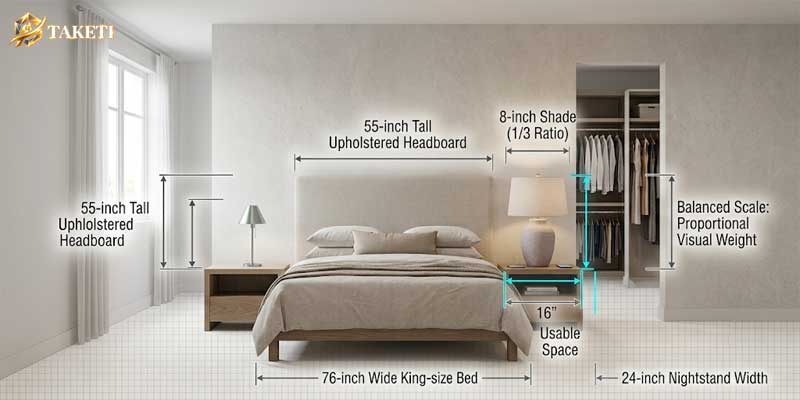
Determining the right lamp size for nightstand setups is not merely an aesthetic preference—it is a functional geometry problem involving surface area, shade clearance, base stability, and visual mass. Homeowners often purchase bedside lighting based solely on aesthetic appeal or vertical height, only to discover that the lampshade encroaches across the tabletop, leaving virtually no room for nighttime necessities like smartphones, water carafes, eyeglasses, or books. Conversely, selecting an undersized accent light creates an awkward visual disconnect against a grand King-size upholstered bed frame. Achieving flawless bedside proportion requires calculating the relationship between your tabletop footprint, lampshade diameter, and bed scale as a unified architectural system.
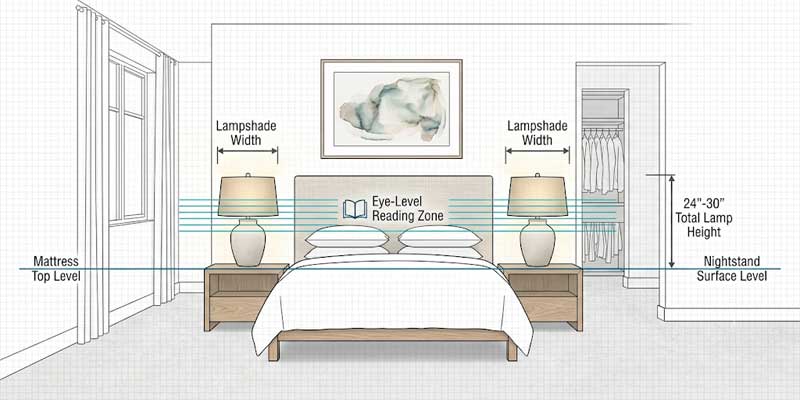
1. The 1/3 Surface Area Rule: Preserving Usable Tabletop Real Estate
The primary complaint among homeowners after installing new bedside lighting is tabletop crowding. A nightstand must serve practical functions beyond holding a lighting fixture; it is an active staging ground for resting your arms, setting down hydration, docking smart devices, and placing reading material within arm’s reach.
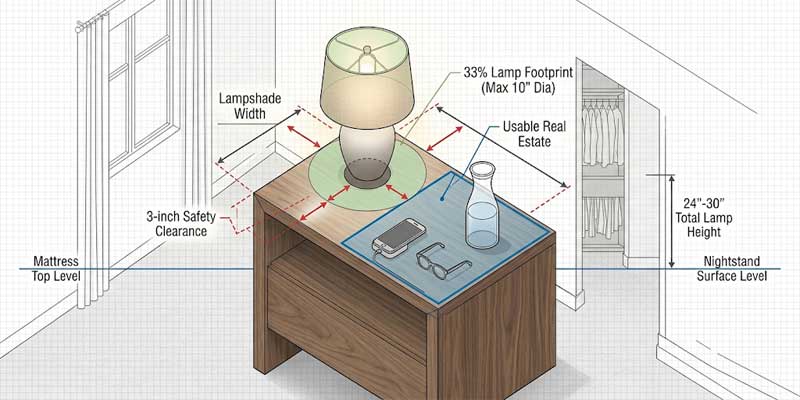
To preserve essential functionality, the widest diameter of your lampshade should never exceed one-third (approximately 33%) of the total width of the nightstand surface. For example, if you place a fixture onto a standard 24-inch wide bedside table, the absolute maximum diameter of your shade should range between 8 and 10 inches. Placing a 14-inch drum shade onto a compact 20-inch table consumes 70% of the surface volume, leaving less than 6 inches of practical clearance. When browsing through dedicated collections of Bedroom Table Lamps, you must cross-reference both base footprint and upper shade diameter against your physical furniture dimensions before making a purchase.
Base Footprint vs. Lampshade Diameter: The Overhang Factor
A frequent sizing error is evaluating only the physical base footprint when estimating table space. While an elegant brass rod, slender marble spindle, or thin column base might occupy a modest 4-inch footprint on the tabletop, the lampshade flaring out above it dominates physical airspace. If the shade boundary extends within 2 inches of the nightstand edge, you will constantly bump into the fabric when reaching blindly for an alarm clock, water glass, or light switch in the dark. Always measure table depth alongside table width to maintain a minimum safety perimeter of 3 to 4 inches between the shade circumference and every table edge.
Surface Clearance Zones for Essential Nightstand Items
A well-proportioned bedside arrangement maintains distinct spatial zones on the tabletop. Allocate 33% of the surface area to the lighting footprint, positioned toward the rear corner closest to the headboard. This leaves 67% of unobstructed surface area across the front and adjacent side for functional staging: 15% for bedtime hydration, 20% for active electronics, and the remaining surface for reading accessories. Adhering to this spatial layout eliminates clutter and keeps your nightstand looking curated rather than disorganized.
2. Nightstand Size to Lamp Proportion Matrix
Use the dimensional benchmarks below to calculate the ideal fixture proportions based on your specific bedside furniture category:
| NIGHTSTAND CATEGORY | TYPICAL TABLE WIDTH | MAX SHADE DIAMETER | IDEAL BASE FOOTPRINT | RECOMMENDED LAMP BASE STYLE |
|---|---|---|---|---|
| Floating Shelf / Narrow Tab | 12″ – 16″ | 6″ – 8″ | 3″ – 4″ | Slender metal rod, stick base, or minimalist cylinder |
| Standard Bedside Chest | 20″ – 26″ | 10″ – 12″ | 5″ – 7″ | Tapered ceramic urn, fluted glass, or turned wood |
| Substantial Bachelor Chest | 28″ – 36″ | 14″ – 16″ | 8″ – 10″ | Sculptural stoneware block, heavy marble, or textured earthenware |
3. Balancing Lamp Visual Weight Against Bed Frame Proportions
Physical surface measurements account for only half of the proportion formula. The remaining component is visual weight—how dense, heavy, or delicate the lamp appears when viewed alongside your bed frame, mattress thickness, and headboard height.
Twin and Full Bed Frames
Twin mattresses measure 38 inches wide, and Full beds measure 54 inches wide. These setups have slender horizontal lines and work best with lower-profile headboards. Placing a massive, solid ceramic or heavy concrete lamp on an accompanying nightstand introduces excessive optical gravity, making the mattress appear fragile by comparison. In guest bedrooms, dorm suites, and compact spaces, select fixtures with airy, open-metal geometric frames, clear mouth-blown glass bodies, or slender candlestick stems. These silhouettes allow sightlines to pass straight through the base, keeping the overall bedroom decor balanced and uncluttered.
Queen and King Master Suites
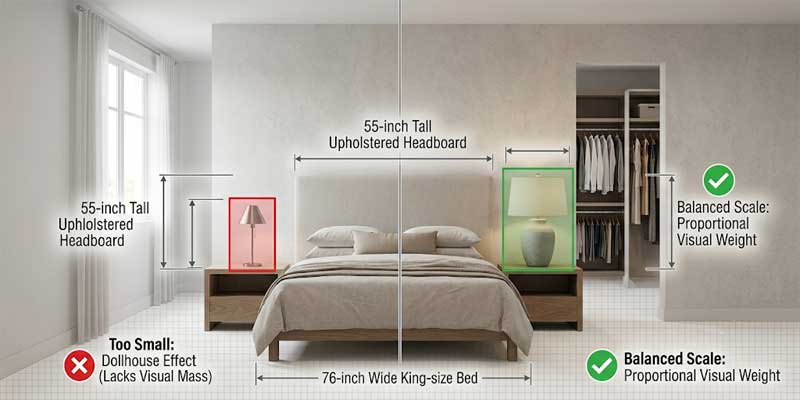
A standard King-size bed spans 76 inches wide, and a California King spans 72 inches, often anchored by substantial tufted, paneled, or upholstered headboards measuring 50 to 60 inches tall. Pairing an expansive master suite bed with delicate, spindly bedside lights causes what interior designers call “dollhouse syndrome,” where the fixtures look miniature and insignificant. King beds require lamps with bold silhouettes, thick ceramic vessels, or substantial stone pedestals. Anchoring the room with an artisan Table Lamp featuring a textured terracotta or heavy glazed stoneware body provides the visual presence necessary to balance wide master bedroom furniture.
4. Lampshade Geometry and Wall Clearance Dynamics
The geometric profile of your lampshade dictates how closely your nightstand can sit against bedroom drywall without causing scuffs, awkward tilt, or cramped hand clearance.
Cylindrical Drum Shades
Drum shades feature identical top and bottom diameters with straight vertical walls. They offer a tailored, modern appearance and cast even pools of task light both upward toward the ceiling and downward onto the table. However, because their diameter remains consistent throughout their entire vertical profile, they demand generous clearance on all sides. On shallow nightstands under 16 inches deep, a wide drum shade often hits the back drywall, forcing the table away from the wall and leaving an unsightly gap.
Tapered Empire and Cone Shades
Empire shades feature a narrow upper ring that widens toward the lower rim. This classic angled architecture offers significant practical benefits for bedside use: the sloped sides leave open airspace around the upper socket, allowing your hand to reach the power switch without brushing against the fabric. Furthermore, the wider bottom rim directs a broad illumination cone down over books and tablets while shielding your line of sight from direct bulb glare.
Rectangular and Oval Space-Saver Profiles
In narrow urban bedrooms where walking clearance around the bed is limited, rectangular or racetrack-oval lampshades are ideal. These specialized shapes provide broad front-facing coverage while keeping their depth between 6 and 8 inches. This allows the fixture to sit completely flush against the drywall behind the nightstand without hanging over the front edge of the furniture.
5. Living Room Fixture Crossover: Can You Repurpose Accent Lamps?
Homeowners often try to repurpose extra lighting fixtures from common living areas into the bedroom. While this seems economical, lamps designed for end tables and credenzas are engineered for entirely different functional tasks than bedside reading lights.
Fixtures designed as Table Lamps For Living Room seating areas typically feature wide bases and broad, flaring shades engineered to cast expansive ambient light across sofas and armchairs. Moving these wider fixtures into the bedroom often creates immediate clearance issues, overcrowding nightstands and causing harsh side-glare across your pillows. Bedside lighting requires targeted downward task illumination rather than wide horizontal diffusion.
Additionally, selecting energy-efficient LED Lights calibrated at 2700K ensures your bedside lamp produces gentle, warm illumination that protects natural melatonin production without generating uncomfortable heat right next to your head.
6. Base Stability and Weight: Preventing Nighttime Tipping Accidents
A frequently overlooked factor in lamp proportion is base weight and stability. A bedside lamp must withstand groggy morning reach, midnight alarm snoozing, and accidental contact without tipping over.
Tall, top-heavy lamps with narrow, lightweight bases are accidents waiting to happen on a nightstand. As a general safety rule, the base footprint should weigh enough to anchor the entire vertical height of the fixture. If a lamp stands 26 inches tall, its base should have a solid foundation measuring at least 5 to 6 inches in diameter, constructed from dense materials such as solid brass, weighted cast iron, solid ceramic, or natural stone. Test your lamp: nudge the top of the shade gently with one finger. If the base lifts or wobbles easily, the lamp lacks the stability required for bedside use.
7. Step-by-Step Nightstand Proportion Checklist Before You Buy
Before ordering your next bedside lighting fixture, run through this practical checklist to ensure perfect proportion and placement:
- Verify the 1/3 Width Rule: Measure your tabletop width and confirm the lampshade diameter occupies no more than one-third of that dimension.
- Measure Table Depth and Wall Gap: Ensure there is at least 2 to 3 inches of open clearance between the shade rim and the back wall.
- Evaluate Headboard Alignment: Ensure the total height of the table and lamp reaches between one-half and two-thirds of your headboard height for balanced visual symmetry.
- Check Switch Reach: Confirm that the power switch or inline cord switch is accessible from a resting position in bed without awkward stretching.
- Confirm Base Stability: Choose heavy ceramic, stone, or weighted metal bases to prevent tipping accidents during midnight use.
