
ake out your contact lenses as soon as pink eye symptoms start, and wear glasses until an eye doctor says it is safe to resume. This pink eye contact lenses rule matters because lens wear raises the risk of a more serious infection called keratitis.
Key takeaways
- Stop wearing contact lenses at the first sign of redness, discharge, or irritation, and switch to glasses.
- Throw away the lenses you wore while your eye was red, along with your lens case.
- Contact lens wearers have a higher risk of keratitis, a serious corneal infection that can look like pink eye.
- Eye pain, light sensitivity, or blurry vision need an eye doctor the same day.
- Do not wear contacts again until your symptoms are gone and your eye doctor says it is safe, and start with a fresh pair and case.
A red, irritated eye is annoying for anyone, but it is a bigger deal if you wear contacts. A lens sits directly on the front surface of your eye, so germs and irritants can get trapped against it. That is why eye doctors treat a red eye in a lens wearer more cautiously than the same red eye in someone who wears glasses.
This guide explains what to do about pink eye contact lenses questions, how to tell pink eye from a lens-related infection, what to do with your lenses and case, and when you can wear contacts again. For general background, read our guide on what is pink eye.
Should You Wear Contact Lenses With Pink Eye?
Quick answer: No. Remove your contact lenses as soon as pink eye symptoms start and wear glasses until your eye is fully healed and your eye doctor says it is safe to wear lenses again.
Wearing lenses over an irritated or infected eye can trap germs against the eye, slow healing, and cause re-infection. A lens can also hide the early signs of a more serious problem. The CDC notes that wearing contact lenses is the main risk factor for keratitis, an infection of the cornea that can threaten vision.
Is It Pink Eye or a Contact Lens Infection?
Quick answer: Ordinary pink eye mostly causes redness, tearing, and discharge. A contact lens infection called keratitis is more likely to cause pain, light sensitivity, and blurry vision, and it needs urgent care.
|
Condition |
Typical signs |
How urgent |
|---|---|---|
|
Pink eye (conjunctivitis) |
Red or pink eye, tearing, discharge, gritty feeling, usually little or no pain |
Often mild. See a provider if not improving |
|
Keratitis (corneal infection) |
Eye pain, intense redness, light sensitivity, blurry vision, watery or pus-like discharge, feeling that something is in the eye |
Urgent. See an eye doctor the same day |
|
Lens-related allergy or irritation |
Itching, mild redness, discomfort or lens awareness, sometimes stringy mucus |
See your eye doctor, who may adjust your lenses or care routine |
Because these can look alike, do not try to decide on your own. If you have any pain, light sensitivity, or blurred vision, treat it as an emergency until a professional says otherwise. Our guide to pink eye symptoms lists the usual signs.
What Should You Do First? 5 Steps for Pink Eye Contact Lenses
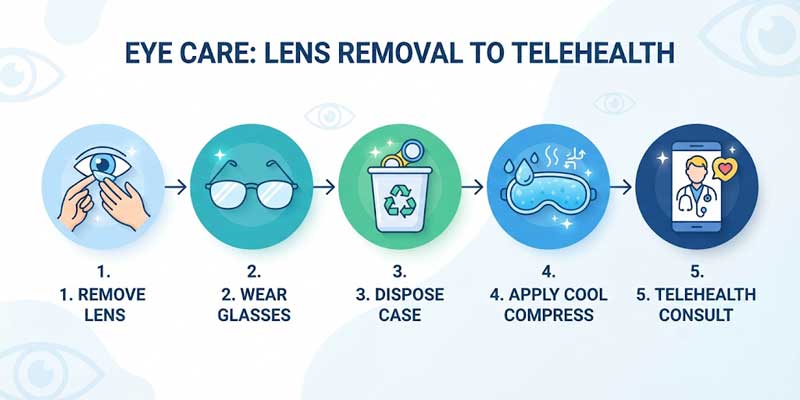
Quick answer: Remove your lenses, switch to glasses, throw away the lenses and case you used, care for your eye gently, and contact an eye doctor if you have pain or vision changes or are not improving.
- Take your lenses out now. Wash your hands with soap and water first, then remove the lenses.
- Switch to glasses. Wear them until your eye doctor says you can use lenses again.
- Throw away what you wore. Discard the lenses you had in while your eye was red, and replace your lens case.
- Care for your eye gently. Use a clean cool or warm compress and artificial tears for comfort, avoid eye makeup, and do not use redness-relief drops. See pink eye home remedies.
- Call an eye doctor. Do this the same day for pain, light sensitivity, or blurry vision, and soon if your eye is not improving. Our guide on when to see a pink eye doctor explains where to go.
What Should You Do With Your Lenses, Case, and Solution?
Quick answer: Discard the lenses you wore while your eye was red, replace your lens case, and do not reuse the solution that was in the case. Ask your eye doctor about anything else you are unsure of.
|
Item |
What to do |
|---|---|
|
Lenses worn while your eye was red |
Throw them away. Do not put them back in after you recover |
|
Lens case |
Throw it away and use a new one |
|
Solution left in the case |
Pour it out. Never reuse or top off lens solution |
|
Unopened new lenses |
Keep them for after you are cleared to wear lenses again |
|
Eye makeup used while infected |
Replace it to avoid re-infection |
|
Glasses |
Wear them until your eye doctor says you can wear lenses again |
When Is It Safe to Wear Contact Lenses Again?
Quick answer: Only after your symptoms are completely gone and your eye doctor says it is safe. Restart with a fresh pair of lenses and a new case.
Your eye should be white and comfortable, with no tearing, discharge, or irritation, and you should have finished any prescribed medicine. Your eye doctor may want to recheck your eye first, especially if you had pain, light sensitivity, or a bacterial infection. If your symptoms return when you start wearing lenses again, take them out and call your eye doctor.
Why Do Contact Lens Wearers Face a Higher Risk?
Quick answer: Lenses can trap germs against the eye, and common habits such as sleeping in lenses or exposing them to water raise the risk of infection. The CDC says contact lens wear is the main risk factor for keratitis.
The CDC reports that nearly all contact lens wearers surveyed admitted to at least one risky lens habit, and about one third had experienced a lens-related red or painful eye that needed a doctor’s visit. The CDC estimates that keratitis and contact lens disorders cause roughly one million clinic visits and tens of thousands of emergency department visits each year in the US. The CDC also reports that sleeping in lenses raises the risk of infection about six to eight times. Mayo Clinic adds that wearing lenses while swimming and improper disinfection also raise the risk of keratitis.
Common risky habits include:
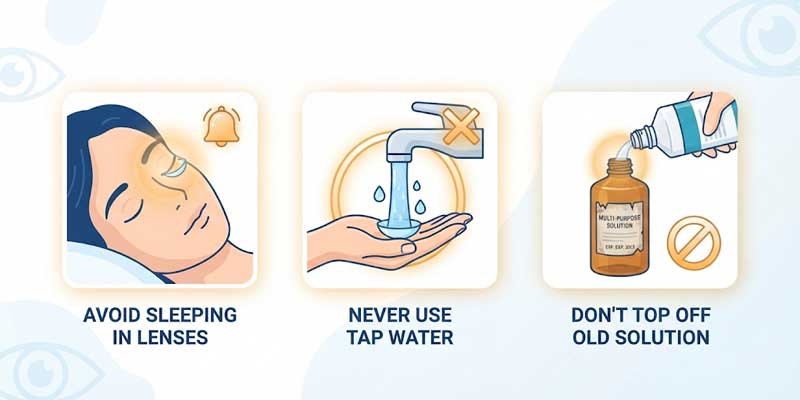
- Sleeping or napping in lenses
- Wearing lenses longer than recommended
- Rinsing or storing lenses in tap water, or wearing them while swimming or showering
- Topping off old solution instead of using fresh solution
- Using a case for too long without replacing it
- Touching lenses with unwashed hands
How Can You Prevent Pink Eye if You Wear Contacts?
Quick answer: Wash your hands before touching lenses, never sleep or swim in them, use fresh solution every time, replace your case about every three months, and follow your lens replacement schedule.
- Wash and dry your hands before handling your lenses or touching your eyes.
- Follow the wearing and replacement schedule your eye doctor gave you.
- Use fresh disinfecting solution every time, and never top off old solution.
- Keep lenses and your case away from water, including tap water.
- Take lenses out before sleeping, swimming, or showering.
- Replace your lens case regularly, about every three months according to the CDC.
- Stop wearing lenses at the first sign of redness, discomfort, or discharge.
- Get regular eye exams.
For more habits, read our guide on how to prevent pink eye. If someone in your home has infectious pink eye, see is pink eye contagious to avoid spreading it.
When Should You See an Eye Doctor?
Quick answer: See an eye doctor the same day if you wear contacts and have eye pain, light sensitivity, blurry vision, intense redness, or a feeling that something is stuck in your eye. See one soon for any pink eye that is not improving.
The CDC also advises seeing a provider for pink eye with moderate to severe pain, intense redness, light sensitivity, blurred vision that does not clear when you blink, a weakened immune system, or symptoms that worsen. Contact lens wearers should not wait on these signs. Learn more about options in pink eye treatment.
Frequently Asked Questions
Can I wear contacts with pink eye? No. Take your lenses out as soon as you notice pink eye symptoms and wear glasses until your eye is fully healed and your eye doctor says it is safe. Lenses can trap germs, slow healing, and hide a more serious infection.
Can contact lenses cause pink eye? Lenses do not usually cause infectious pink eye by themselves, but touching your eyes or lenses with unwashed hands, wearing them too long, and poor lens care can lead to infections. Some lens wearers also develop an allergic type of conjunctivitis related to lens wear.
How long after pink eye can I wear contacts again? Wait until all symptoms are gone and your eye doctor says it is safe. Your eye should be white, comfortable, and free of tearing or discharge, and any prescribed medicine should be finished. Restart with a new pair of lenses and a new case.
Do I need to throw away my contacts after pink eye? Yes, discard the lenses you wore while your eye was red, and replace your lens case. Reusing them can put the germs back in your eye. Ask your eye doctor about any lenses you are unsure about.
Can I wear daily disposable lenses with pink eye? No. Even daily disposables should stay out while your eye is red, irritated, or infected. Throw away the pair you wore, wear glasses, and start a fresh pair only when your eye doctor says you are healed.
Can pink eye turn into a more serious infection? Pink eye itself usually stays mild, but a red eye in a lens wearer can be keratitis, a more serious corneal infection that looks similar at first. Pain, light sensitivity, and blurry vision are warning signs that need an eye doctor the same day.
Is pink eye with contact lenses contagious? The lenses are not what spreads it, but viral and bacterial pink eye are contagious whether or not you wear lenses. Wash your hands often, do not share towels or makeup, and see our guide on is pink eye contagious.
The Bottom Line
If you wear contacts and get a red eye, take the lenses out, switch to glasses, throw away the lenses and case you used, and call an eye doctor for any pain, light sensitivity, or vision changes. Restart with fresh lenses only when your doctor says it is safe, and follow strict lens hygiene to lower your risk. For more on symptoms, see pink eye symptoms.
This article is for general information only and is not a substitute for professional medical advice, diagnosis, or treatment. Always seek the advice of a qualified eye care provider about your specific condition.
Sources
- CDC: Healthy Contact Lens Wear and Care
- CDC: About Pink Eye (Conjunctivitis)
- CDC: Clinical Overview of Pink Eye (Conjunctivitis)
- Mayo Clinic: Keratitis, symptoms and causes
