
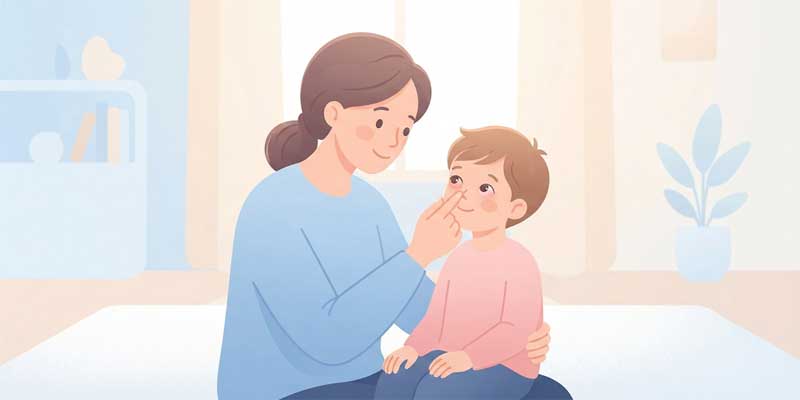
Pink eye in kids is common and usually mild, causing a red or pink eye, tearing, and discharge or crusting. Most cases are viral or bacterial and improve within about a week or two. Newborns are different: any red or sticky eye in a baby under one month old needs a doctor right away.
Key takeaways
- Pink eye in kids is usually mild, and most cases improve on their own within about 7 to 14 days.
- Viral and bacterial pink eye are contagious, so handwashing and separate towels matter.
- Antibiotics do not help viral pink eye and are not needed for every bacterial case, so ask your pediatrician.
- School and daycare rules vary. Many ask for symptoms to improve, and some ask for about 24 hours of antibiotic drops.
- Call a doctor right away for a newborn with a red or sticky eye, or for a child with eye pain, vision changes, or swelling around the eye.
A child who wakes up with a red eye and crusty lashes can turn a normal morning upside down. Pink eye in kids is one of the most common childhood eye problems, and it is a frequent reason for missed school and daycare days. The good news is that most cases are mild and easy to manage at home.
This parent’s guide explains how to recognize pink eye in kids, how it is treated, how to give eye drops, when your child can return to school, and when to call the doctor. For general background, read our guide on what is pink eye.
What Is Pink Eye in Kids?
Quick answer: Pink eye in kids is inflammation of the conjunctiva, the thin clear layer over the white of the eye. It is usually caused by a virus or bacteria, and sometimes by allergies or irritants.
Kids get pink eye often because they touch their faces, rub their eyes, and share toys, towels, and close space at school or daycare. Infectious types spread easily in those settings. Allergic and irritant pink eye can also affect children, but they are not contagious.
What Are the Signs of Pink Eye in Kids?
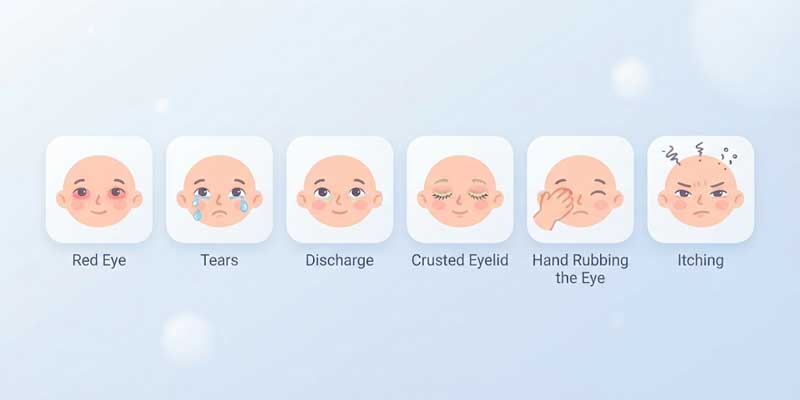
Quick answer: The main signs of pink eye in kids are a red or pink eye, watery eyes, discharge, crusty eyelids after sleep, rubbing, and itching or irritation. Symptoms can affect one or both eyes.
Watch for these six signs:
- A pink or red color in the white of the eye
- Watery eyes or extra tearing
- White, yellow, or green discharge
- Crusty lashes, or eyelids stuck together after sleep
- Rubbing or pawing at the eye
- Complaints of itching, burning, or a gritty feeling, like something is in the eye
Younger children cannot always say what is wrong, so look for rubbing, fussiness, and squinting. Our guide to pink eye symptoms explains how the signs differ by cause.
Is It Pink Eye or Something Else?
Quick answer: Not every red or watery eye in a child is pink eye. Allergies, a blocked tear duct, a stye, or irritation can look similar.
|
Condition |
What it looks like |
Clue |
|---|---|---|
|
Viral or bacterial pink eye |
Red eye, discharge, crusting |
May follow a cold, can spread to the other eye |
|
Allergic pink eye |
Itchy, watery, puffy eyes in both eyes |
Sneezing or runny nose, no fever, not contagious |
|
Blocked tear duct (babies) |
Constant tearing and sticky eye, often without much redness |
Common in newborns and infants, and often improves on its own |
|
Stye |
A tender red bump on the eyelid |
Localized lump rather than a red white-of-the-eye |
|
Irritation |
Red, watery eye after smoke, chlorine, or a foreign object |
Starts soon after exposure |
If you are unsure, see your child’s doctor. Our guide to viral vs. bacterial vs. allergic pink eye can help you sort out the usual differences.
How Is Pink Eye in Kids Treated?
Quick answer: Treatment depends on the cause. Viral pink eye gets comfort care while it clears, bacterial pink eye may be treated with antibiotic drops or ointment, and allergic pink eye improves when you remove the trigger and use allergy eye drops.
The CDC notes that antibiotics do not help viral pink eye, and many mild bacterial cases improve without them. Your pediatrician can tell you what your child needs. Our guide to pink eye treatment covers each type in detail.
For comfort at home:
- Wipe away discharge gently with a clean, damp cotton pad or cloth, from the inner corner outward, and use a fresh one each time.
- Offer a clean cool or warm compress for a few minutes, using a separate cloth for each eye.
- Use artificial tears only if the doctor agrees.
- Keep fingernails short and remind your child not to rub. See pink eye home remedies for safe options and what to avoid.
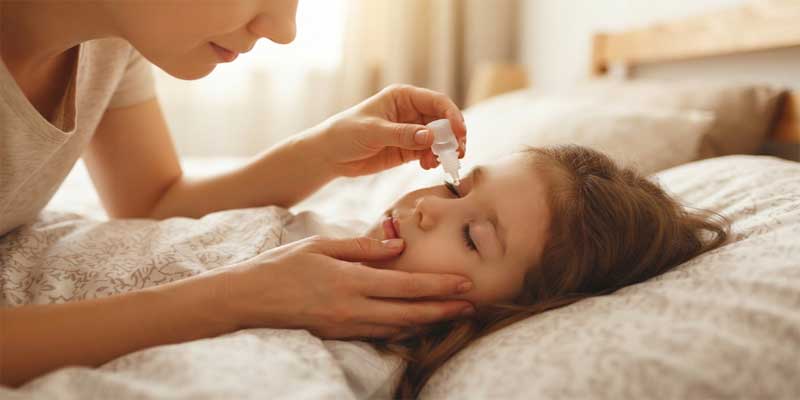
How to give eye drops to a child
Eye drops can be a struggle. These steps make it easier:
- Wash your hands, then check the label and the dose.
- Have your child lie down on their back with their eyes closed.
- Put one drop in the inner corner of the closed eye, next to the nose.
- Ask your child to open their eyes slowly, so the drop slides in.
- Wipe away extra liquid with a clean tissue, and wash your hands again.
- Never let the tip touch the eye or lashes, and do not share the bottle.
When Can a Child With Pink Eye Go Back to School or Daycare?
Quick answer: It depends on your school or daycare, but many allow a return once symptoms improve and the child has no fever. Some ask for about 24 hours of antibiotic drops for bacterial pink eye. Always check the policy and ask your pediatrician.
Mayo Clinic says a child may return when there is no fever, they can practice good hygiene, and they can avoid close contact. Children who cannot do those things, such as very young children, should stay home until symptoms clear. A South Carolina health department handout for schools says to keep a child home if pink eye comes with fever, severe eye pain, or being too sick to take part in activities. Many schools and child care centers also ask for treatment before return, and some require a doctor’s note.
Before sending your child back:
- Ask the school or daycare for its pink eye policy.
- Check that discharge and tearing have settled enough to manage with tissues.
- Pack their own tissues, and remind them to wash their hands.
- Tell the teacher or school nurse so they can help.
For contagious periods by type, read our guide on is pink eye contagious.

How Can You Stop Pink Eye From Spreading Among Kids?
Quick answer: Handwashing, not rubbing eyes, and not sharing towels, tissues, or toys are the best ways to stop infectious pink eye from spreading at home and school.
- Wash hands with soap and water, especially after touching the eyes and before meals.
- Give each child their own towel and washcloth, and wash pillowcases and bedding in hot water.
- Throw away used tissues and cotton pads right away.
- Wipe down frequently touched surfaces and shared toys.
- Keep the sick child’s drops and care items separate.
For more, read our guide on how to prevent pink eye.
What About Pink Eye in Newborns and Babies?
Quick answer: A red, swollen, or sticky eye in a baby under one month old needs a doctor right away, because newborn eye infections can be serious. In older babies, a constantly watery, sticky eye is often a blocked tear duct.
The CDC says newborns with symptoms of pink eye should see a doctor right away. Newborn eye infections, sometimes called neonatal conjunctivitis, can be caused by bacteria or viruses passed during birth, by irritation, or by a blocked tear duct. A provider decides which it is.
In older infants, a blocked tear duct is a common cause of tearing and sticky discharge, and most improve on their own with time. Gentle tear duct massage may be recommended by your pediatrician. See a doctor if the eye becomes red, swollen, or produces thick discharge.

When Should You Call the Pediatrician?
Quick answer: Call the pediatrician if your child has eye pain, intense redness, light sensitivity, blurry vision, swelling around the eye, fever, or symptoms that get worse or do not improve. Call right away for any newborn with eye symptoms.
The CDC advises seeing a provider for pink eye with moderate to severe pain, intense redness, light sensitivity, blurred vision that does not clear when blinking, a weakened immune system, or symptoms that worsen or do not improve. Also call if the skin around the eye becomes swollen, red, or warm, especially with fever. Not sure where to go? Read when to see a pink eye doctor.
Frequently Asked Questions
Can my child go to school with pink eye? It depends on your school’s rules and your child’s symptoms. Many schools allow a return once symptoms improve and there is no fever, while some ask for about 24 hours of antibiotic drops or a doctor’s note. Check the policy and ask your pediatrician.
How long is pink eye contagious in kids? Viral and bacterial pink eye are generally contagious for as long as the eyes are tearing or producing discharge, often a few days up to about two weeks. Allergic pink eye is not contagious. Washing hands and not sharing towels helps prevent spread.
Does my child need antibiotics for pink eye? Not always. Antibiotics do not work for viral or allergic pink eye, and many mild bacterial cases improve without them. Your pediatrician may prescribe drops or ointment for some bacterial cases, so ask what is best for your child.
How do I clean my child’s eye with pink eye? Wash your hands, then wipe away discharge with a clean, damp cotton pad or soft cloth from the inner corner outward. Use a fresh pad for each wipe and each eye, throw it away, and wash your hands again.
Can babies get pink eye? Yes. Babies can get pink eye from infections, irritation, or a blocked tear duct. A newborn under one month with a red, swollen, or discharging eye needs a doctor right away, because newborn infections can be serious.
Is pink eye in kids an emergency? Usually not, since most cases are mild. Seek care right away for eye pain, vision changes, light sensitivity, swelling and redness around the eye, a chemical splash, or any newborn with eye symptoms.
Can pink eye affect my child’s vision? Pink eye rarely affects vision. A little blurriness from tears or discharge often clears after wiping or blinking. Blurry vision that does not clear, or real eye pain, is not typical and should be checked by a doctor.
The Bottom Line
Pink eye in kids is usually mild, and most children recover within about one to two weeks with comfort care and good hygiene. Check your school’s return policy, wash hands often, and keep towels separate. See a doctor for pain, vision changes, light sensitivity, or swelling around the eye, and call right away for any newborn with a red or sticky eye.
This article is for general information only and is not a substitute for professional medical advice, diagnosis, or treatment. Always seek the advice of a qualified health care provider about your child’s specific condition.
Sources
- CDC: About Pink Eye (Conjunctivitis)
- CDC: How to Treat Pink Eye
- Mayo Clinic: Pink eye: How long is it contagious?
- South Carolina Department of Public Health: Conjunctivitis (Pink Eye), School Age Children
- WebMD: What to Know About Conjunctivitis in Newborns

Pingback: Types of Pink Eye: 4 Causes, Key Differences & Treatment
Pingback: How to Prevent Pink Eye: 9 Easy Daily Habits That Work