
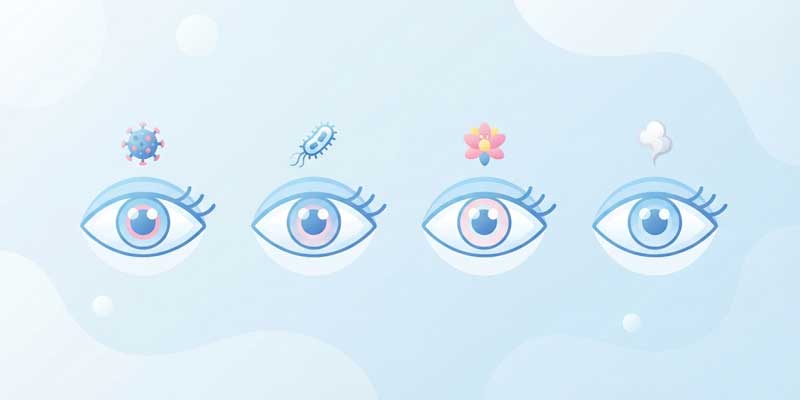
The main types of pink eye are viral, bacterial, allergic, and irritant. Viral and bacterial pink eye are contagious, while allergic and irritant pink eye are not. Watery discharge with a cold points to a virus, thick sticky discharge points to bacteria, and intense itching in both eyes points to allergies.
Key takeaways
- There are four main types of pink eye: viral, bacterial, allergic, and irritant.
- Viruses, bacteria, and allergens are the most common causes, according to the CDC.
- Viral and bacterial pink eye are very contagious. Allergic and irritant pink eye are not.
- The types look alike, so symptoms are clues rather than proof. An eye exam gives the most reliable answer.
- Treatment depends on the type, and antibiotics only help bacterial pink eye.
A red eye is a red eye, until you try to treat it. Pink eye is not one disease but a group of conditions that inflame the same thin layer over the white of the eye, and each one needs a different approach. Knowing the types of pink eye helps you decide what to do, whether you can spread it, and when to see a doctor.
This guide compares the four main types side by side, explains how to tell them apart, and shows how each is treated. If you are new to the topic, start with our overview of what is pink eye.
What Are the Main Types of Pink Eye?
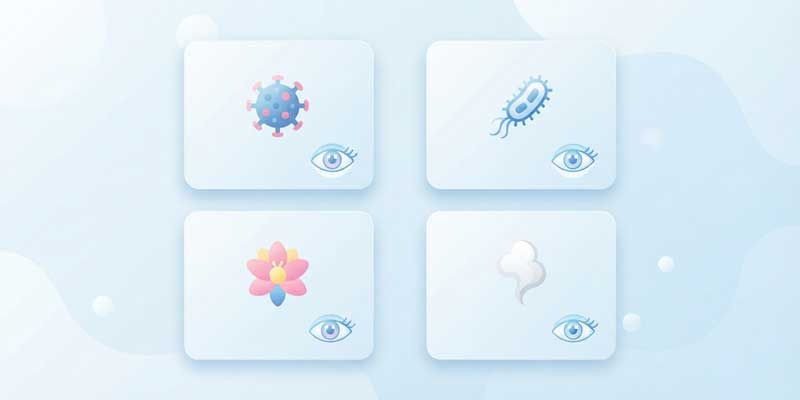
Quick answer: The four main types of pink eye are viral, bacterial, allergic, and irritant conjunctivitis. The CDC lists viruses, bacteria, and allergens as the most common causes, with chemicals, smoke, foreign bodies, and contact lens wear among the others.
|
Type |
Cause |
Typical discharge |
Itching |
Contagious? |
Usual approach |
|---|---|---|---|---|---|
|
Viral |
Viruses such as adenovirus, often with a cold |
Watery |
Mild |
Yes |
Comfort care while it clears |
|
Bacterial |
Bacteria |
Thick white, yellow, or green |
Mild |
Yes |
May clear alone, antibiotic drops sometimes used |
|
Allergic |
Pollen, dust mites, mold, pet dander |
Watery, stringy |
Strong |
No |
Avoid triggers, allergy drops |
|
Irritant |
Smoke, chemicals, fumes, foreign body |
Watery |
Variable |
No |
Rinse, remove the irritant |
What Is Viral Pink Eye?
Quick answer: Viral pink eye is an eye infection caused by a virus, most often an adenovirus. It is very contagious, usually causes watery discharge, and typically clears on its own in about 7 to 14 days.
The CDC notes that many different viruses can cause pink eye, including adenoviruses, and that it often happens along with a cold or respiratory infection. Other viruses, such as the one that causes chickenpox and shingles and the one that causes mononucleosis, can also be responsible. Viral pink eye mostly spreads through hand-to-eye contact with contaminated hands or objects.
What it usually looks like:
- Pink or red eye with watery discharge and a gritty feeling
- Often starts in one eye and can spread to the other within days
- May come with a sore throat, runny nose, or other cold symptoms
Antibiotics do not work against viruses, so care focuses on comfort. A few viral forms are more serious. Herpes simplex and a severe adenovirus form called epidemic keratoconjunctivitis can involve the cornea, and in some cases affect vision, so pain, light sensitivity, or blurred vision needs prompt evaluation. See pink eye treatment for details.
What Is Bacterial Pink Eye?
Quick answer: Bacterial pink eye is an eye infection caused by bacteria. It is very contagious, usually causes thick white, yellow, or green discharge, and may clear without antibiotics, though drops are sometimes prescribed.
According to the CDC, bacterial pink eye spreads easily with certain bacteria and in certain settings, is more common in children than adults, and is seen more often from December through April. The CDC also notes that children with pink eye who have no fever or behavior changes can usually continue going to school.
What it usually looks like:
- Red or pink eye with thick, sticky discharge
- Eyelids that are matted or stuck together, especially after sleep
- Crusting on the lashes
Mild cases often get better on their own. Your provider may prescribe antibiotic drops or ointment if symptoms are severe, you have a weakened immune system or wear contact lenses, or the infection is not improving.
What Is Allergic Pink Eye?
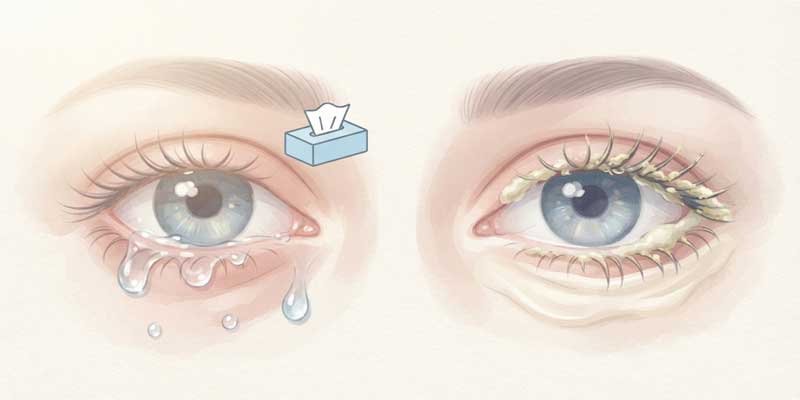
Quick answer: Allergic pink eye is an immune reaction to substances such as pollen, dust mites, mold, or pet dander. It causes itching, redness, and tearing, usually in both eyes, and it is not contagious.
The CDC explains that allergic pink eye can happen seasonally, when pollen counts are high, or year-round because of indoor allergens such as dust mites and animal dander. Medicines and cosmetics can also trigger it. Itching is the key clue, and it often comes with sneezing, a runny nose, or a scratchy throat.
Treatment centers on avoiding the trigger, using cool compresses and artificial tears, and using allergy eye drops, which your provider or pharmacist can recommend.
What Is Irritant Pink Eye?
Quick answer: Irritant pink eye is inflammation caused by something that bothers the eye, such as smoke, dust, fumes, chemicals, or a foreign body like a loose eyelash. It is not contagious and often improves once the irritant is removed.
Rinse the eye with clean water or sterile saline, and use artificial tears for comfort. If a chemical splashes into your eye, flush it with water for at least 15 minutes and get emergency care right away. Contact lens wear is another possible trigger, and lens wearers should take lenses out and read our guide on pink eye and contact lenses.
Are There Other Types of Pink Eye?
Quick answer: Yes. Less common types include newborn conjunctivitis, lens-related conjunctivitis, and rare infections from fungi or parasites. These usually need a doctor’s evaluation.
- Newborn conjunctivitis: a red, swollen, or discharging eye in a baby in the first month of life can be serious and needs a doctor right away. See pink eye in kids.
- Lens-related conjunctivitis: irritation or allergy linked to wearing contact lenses.
- Fungal or parasitic conjunctivitis: rare causes that the CDC lists among the less common ones.
How Can You Tell Which Type of Pink Eye You Have?
Quick answer: Use symptoms as clues: watery discharge with a cold suggests a virus, thick sticky discharge suggests bacteria, intense itching in both eyes suggests allergies, and symptoms right after exposure suggest an irritant. An eye exam is the only reliable way to know.
|
Clue |
Points toward |
|---|---|
|
Watery discharge, starts in one eye, sore throat or cold |
Viral |
|
Thick sticky discharge, eyelids matted after sleep |
Bacterial |
|
Intense itching in both eyes, sneezing, runny nose |
Allergic |
|
Symptoms soon after smoke, chlorine, fumes, or a splash |
Irritant |
The CDC notes that it can be difficult to determine the exact cause because some symptoms overlap. A doctor can often tell the type from your history, symptoms, and an eye exam. Our guide to pink eye symptoms goes deeper on discharge and timelines.
Which Types of Pink Eye Are Contagious?
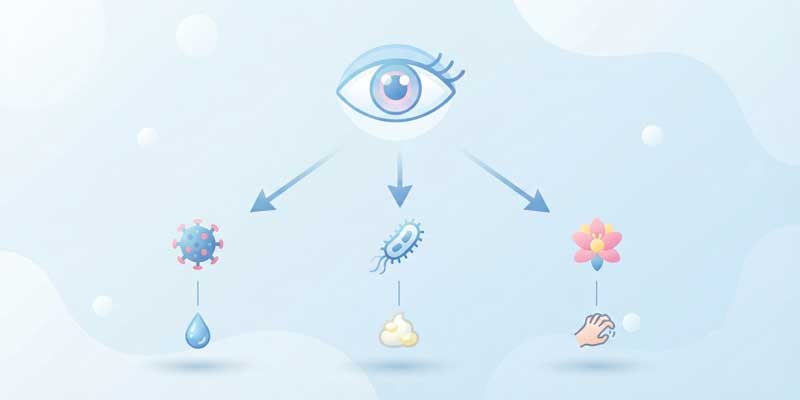
Quick answer: Viral and bacterial pink eye are very contagious. Allergic and irritant pink eye are not. Infectious pink eye spreads through hands, shared towels or makeup, and contaminated surfaces.
Wash your hands often, avoid touching your eyes, and do not share towels or eye makeup. For how long you can spread it and when to return to school or work, read our guide on is pink eye contagious.

How Is Each Type of Pink Eye Treated?
Quick answer: Viral pink eye gets comfort care, bacterial pink eye may get antibiotic drops or ointment, allergic pink eye is treated with trigger avoidance and allergy drops, and irritant pink eye improves when the irritant is removed.
- Viral: cool compresses and artificial tears while it clears, usually in 7 to 14 days.
- Bacterial: often clears on its own, and your provider may prescribe antibiotic drops or ointment.
- Allergic: avoid triggers, use cool compresses, artificial tears, and allergy eye drops.
- Irritant: rinse the eye and remove the cause. Chemical splashes need emergency care.
See our guides to pink eye treatment and pink eye home remedies for step-by-step help.
When Should You See a Doctor?
Quick answer: See a doctor if you have eye pain, intense redness, light sensitivity, blurred vision, a weakened immune system, or symptoms that worsen or do not improve. Newborns with any eye symptoms need a doctor right away.
Because the types are hard to tell apart, an exam is worthwhile if you are unsure. Our guide on when to see a pink eye doctor explains where to go.
Frequently Asked Questions
What are the four types of pink eye? The four main types are viral, bacterial, allergic, and irritant pink eye. Viruses, bacteria, and allergens are the most common causes. Irritants such as smoke, chlorine, fumes, or a foreign body cause the fourth type.
Which type of pink eye is most common? The CDC lists viruses, bacteria, and allergens as the most common causes of pink eye, and adenoviruses are among the most common viral causes. The most common type depends on age and season, so only an exam can tell which one you have.
How can I tell viral from bacterial pink eye? Viral pink eye usually causes watery discharge and often comes with a cold, while bacterial pink eye tends to cause thick, sticky discharge that mats the eyelids. The signs overlap, so an eye exam is the most reliable way to tell them apart.
Which types of pink eye are contagious? Viral and bacterial pink eye are very contagious and spread through hands, shared towels, makeup, and contaminated surfaces. Allergic and irritant pink eye are not contagious, because they are caused by a reaction or irritation rather than an infection.
Which type of pink eye needs antibiotics? Only some cases of bacterial pink eye. Antibiotics do not work on viral, allergic, or irritant pink eye, and many mild bacterial cases improve without them. Your provider can tell you whether drops are appropriate.
Can you have more than one type of pink eye at once? It is possible. For example, a person with allergies can also catch a viral or bacterial infection, and the symptoms can overlap. That is one reason an eye exam is useful when symptoms are unusual or do not improve.
Is one type of pink eye more serious than others? Most types are mild, but some viral forms, such as herpes simplex or severe adenovirus infections, can affect the cornea and vision. Eye pain, light sensitivity, or blurred vision are warning signs that need an eye exam.
The Bottom Line
The four types of pink eye differ in cause, symptoms, and treatment. Viral and bacterial pink eye are contagious, while allergic and irritant pink eye are not. Use the symptoms as clues, and see a doctor if you are unsure, if symptoms are severe, or if the patient is a newborn.
This article is for general information only and is not a substitute for professional medical advice, diagnosis, or treatment. Always seek the advice of a qualified eye care provider about your specific condition.
Sources
- CDC: Causes of Pink Eye (Conjunctivitis)
- CDC: Pink Eye: Causes and How It Spreads
- CDC: Clinical Overview of Pink Eye (Conjunctivitis)
- CDC: How to Treat Pink Eye

Pingback: Pink Eye in Kids: 6 Signs, Safe Care & School Return Rules