

Yes, viral and bacterial pink eye are contagious and can spread for as long as your eyes are tearing or producing discharge. Allergic and irritant pink eye are not contagious. Return-to-school and work rules vary, but many schools and clinics use about 24 hours after starting antibiotic drops for bacterial pink eye.
Key takeaways
- Pink eye is contagious only when a virus or bacteria causes it. Allergies and irritants do not spread from person to person.
- Most spread happens through hand-to-eye contact, shared towels or makeup, and contaminated surfaces.
- Pink eye generally stays contagious while the eyes are tearing and matted, and most cases improve within a few days to two weeks.
- Check your school or employer’s policy. Many ask for clear eyes or about 24 hours of antibiotic drops for bacterial pink eye.
- Handwashing, your own towel, and not touching your eyes are the best ways to stop it from spreading.
Few things worry parents and coworkers faster than a red, watery eye. If you or your child has pink eye, the first questions are usually the same. Can it spread to others? How long am I contagious? When can we go back to school or work?
The answer depends on the cause. In this guide, we explain which types of pink eye are contagious, how the infection spreads, how long you can pass it on, and what to do about school, work, and home. If you want a broader overview first, start with our guide on what is pink eye.
Which Types of Pink Eye Are Contagious?
Pink eye (conjunctivitis) is contagious only when an infection causes it. According to the CDC, viral and bacterial pink eye are very contagious, while pink eye caused by allergies or irritants is not.
| Type | Contagious? | Why |
|---|---|---|
| Viral | Yes | A virus, often an adenovirus and sometimes with a cold, passes through hands, objects, or respiratory droplets |
| Bacterial | Yes | Bacteria in eye discharge pass to hands, towels, and surfaces |
| Allergic | No | An immune reaction to pollen, dust mites, pet dander, or mold |
| Irritant or chemical | No | Smoke, chlorine, or fumes inflame the eye |
Because the types look alike, it is hard to know which one you have without an exam. Until you know, treat any red, discharging eye as contagious. Our guide to viral vs. bacterial vs. allergic pink eye shows how to tell them apart.
How Does Pink Eye Spread?
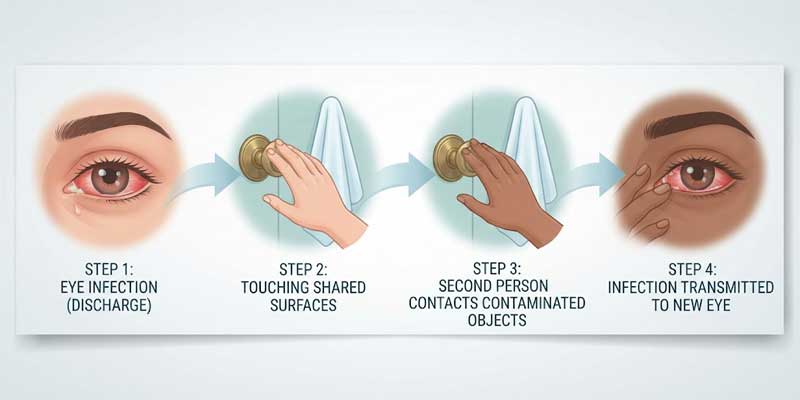
Infectious pink eye spreads when germs from an infected eye, or from the nose and throat in viral cases, reach someone else’s eyes. The CDC notes that viral pink eye mostly spreads through hand-to-eye contact with contaminated hands or objects, while bacterial pink eye can spread from person to person in many ways. Common routes include:
- Touching an infected eye, then touching your own eyes, other people, or shared surfaces
- Sharing towels, washcloths, or pillowcases
- Sharing eye makeup, brushes, contact lenses, or lens cases
- Letting an eye drop bottle tip touch an infected eye, then using it on someone else
- Close contact with a sick child, such as hugging or sharing toys
- Respiratory droplets from coughing or sneezing when pink eye comes with a cold
Germs can also linger on surfaces such as doorknobs, phones, and desks, so you can pick them up without ever touching a sick person.
How Long Is Pink Eye Contagious?
The contagious period depends on the cause. Mayo Clinic explains that pink eye generally stays contagious as long as there is tearing and matted eyes, and that symptoms usually improve within a few days to two weeks depending on the cause.
|
Type |
How long it can spread |
Typical time to improve |
|---|---|---|
|
Viral |
While the eyes are tearing or have discharge |
About 7 to 14 days, sometimes longer |
|
Bacterial, untreated |
While discharge and matting are present |
Often within about a week |
|
Bacterial, treated |
Many schools and clinics use about 24 hours after starting antibiotic drops |
Often a few days after starting treatment |
|
Allergic |
Not contagious |
Lasts as long as exposure to the trigger |
|
Irritant or chemical |
Not contagious |
Usually improves once the irritant is gone |
Viral pink eye
Viral pink eye is the most common infectious type, and it can spread for as long as the eyes keep tearing or producing discharge. It often travels with a cold or sore throat. Antibiotics do not help, so the virus has to run its course, usually in about 7 to 14 days.
Bacterial pink eye
Bacterial pink eye is contagious while there is thick discharge and crusting. Many cases clear on their own, but your provider may prescribe antibiotic drops or ointment. Many schools, daycares, and clinics treat a person as much less likely to spread it after about 24 hours of antibiotics. Policies differ, so ask your provider.
Allergic and irritant pink eye
These types are not contagious, so there is no need to stay home just because of an allergy flare. You should still avoid rubbing your eyes and see a provider if you are not sure which type you have.
How soon do symptoms start after exposure?
The South Dakota Department of Health notes that symptoms of bacterial pink eye usually appear 24 to 72 hours after exposure, and viral pink eye usually appears 5 to 12 days after exposure.

When Can Kids Go Back to School or Daycare?
Rules vary by state, school district, and daycare, so check your school’s policy first. As general guidance, Mayo Clinic says a child may be able to return if they have no fever, can practice good hygiene, and can avoid close contact with others. Children who cannot do those things, such as very young children, should stay home until symptoms clear up.
The CDC also advises staying home with viral or bacterial pink eye when there are signs of illness throughout the body, especially if close contact with others cannot be avoided.
Some schools and daycares ask for one or more of the following:
- No more tearing, discharge, or crusting
- About 24 hours of antibiotic drops for bacterial pink eye
- A note from a health care provider
To make a return easier, teach your child not to rub their eyes, send their own tissues, and remind them to wash their hands. For more parent tips, see our guide to pink eye in kids.

When Can Adults Go Back to Work?
Adults with mild pink eye can often return once the discharge has cleared and they can wash their hands often and avoid touching their eyes. Jobs in health care, food service, child care, and other close-contact settings often have stricter rules, and some employers ask for a provider’s note. If you can work from home while your eyes are tearing or crusting over, that is the safest choice for everyone around you.
How to Avoid Spreading Pink Eye at Home
A few simple habits make a big difference, especially in a household with kids:
- Wash your hands with soap and water for at least 20 seconds, especially after touching your eyes or applying drops.
- Do not touch or rub your eyes.
- Use your own towel and washcloth, and do not share them.
- Wash pillowcases, sheets, and towels in hot water.
- Wipe away discharge with a clean tissue or cotton pad, use a fresh one for each eye, and throw it away right away.
- Do not share eye makeup, brushes, or eye drops, and replace eye makeup used while you were infected.
- Stop wearing contact lenses until your provider says it is safe, and replace the case and lenses as advised (see pink eye and contact lenses).
- Clean frequently touched surfaces such as doorknobs, phones, and remotes.
- Stay home when your symptoms or your school or employer’s rules call for it.
For more everyday strategies, read our guide on how to prevent pink eye.

Can You Catch Pink Eye Just by Looking at Someone?
No. Eye contact does not spread pink eye. The germs need to reach your eyes, usually through your hands, shared items, or respiratory droplets.
Can Pink Eye Spread From One Eye to the Other?
Yes. Viral and bacterial pink eye often start in one eye and move to the other, usually when you touch the infected eye and then the healthy one. Wash your hands after every touch, and use a separate clean tissue for each eye.
When to See a Doctor
Contact an eye care provider if you have pink eye along with moderate to severe eye pain, intense redness, sensitivity to light, blurred vision, or a weakened immune system. Also call if symptoms get worse or do not improve, including bacterial pink eye that is not better after 24 hours of antibiotics. Newborns with any red or watery eye need to be seen right away. Our guides on pink eye treatment and when to see a pink eye doctor explain your options.
Frequently Asked Questions
How long is pink eye contagious? Viral and bacterial pink eye are generally contagious for as long as the eyes are tearing and have discharge, which is often a few days up to about two weeks. Treated bacterial pink eye is considered much less likely to spread after about 24 hours of antibiotic drops.
Can I go to work or school with pink eye? It depends on the cause, how you feel, and the rules of your school or employer. Many people can return once discharge clears, as long as they wash their hands often and avoid close contact. Check local policies and ask your provider if you are unsure.
Is pink eye still contagious after starting antibiotics? Many schools and clinics consider bacterial pink eye much less likely to spread about 24 hours after antibiotic drops begin, as long as symptoms are improving. Keep washing your hands and follow your provider’s directions.
Is allergic pink eye contagious? No. Allergic pink eye is an immune reaction, not an infection, so it cannot spread from person to person.
Can pink eye spread through the air? Viral pink eye that comes with a cold can spread through respiratory droplets from coughing and sneezing, but most spread happens through hand-to-eye contact. Wash your hands often and avoid close contact while symptoms last.
Can you get pink eye more than once? Yes. Having pink eye once does not protect you from getting it again, and you can catch different types at different times.
The Bottom Line
Viral and bacterial pink eye spread easily, usually for as long as your eyes are tearing or producing discharge, while allergic and irritant pink eye do not spread at all. Good hand hygiene, separate towels, and following your school or workplace rules keep the people around you safe. For the full picture of causes, symptoms, and treatment, read our guide on what is pink eye.
This article is for general information only and is not a substitute for professional medical advice, diagnosis, or treatment. Always seek the advice of a qualified eye care provider about your specific condition.
Sources
- CDC: About Pink Eye (Conjunctivitis)
- CDC: Clinical Overview of Pink Eye (Conjunctivitis)
- Mayo Clinic: Pink eye: How long is it contagious?
- South Dakota Department of Health: Conjunctivitis

Pingback: What Is Pink Eye? Causes, Symptoms & Treatment
Pingback: Pink Eye Symptoms: Signs, Discharge & Timeline
Pingback: Pink Eye Treatment: What Works & When to See a Doctor
Pingback: Pink Eye Home Remedies: What Helps and What to Avoid
Pingback: Pink Eye in Kids: 6 Signs, Safe Care & School Return Rules
Pingback: How to Prevent Pink Eye: 9 Easy Daily Habits That Work