

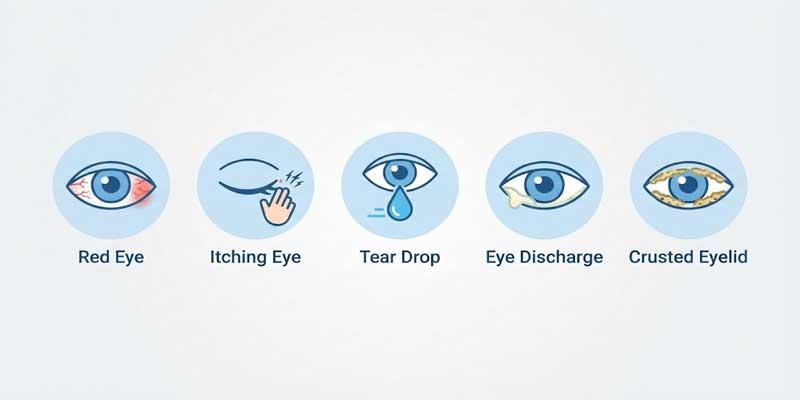
The main symptoms of pink eye are a pink or red eye, irritation or a gritty feeling, tearing or discharge, and crusty eyelids after sleep. Symptoms vary by cause and can affect one or both eyes. Significant pain, light sensitivity, or blurred vision are not typical and need prompt care.
Key takeaways
- The classic sign is a pink or red color in the white of the eye, often with irritation, tearing, or discharge.
- Viral pink eye usually causes watery discharge, bacterial pink eye usually causes thick, sticky discharge, and allergic pink eye causes intense itching.
- Discharge color alone cannot tell you the cause, so an exam is the most reliable way to know.
- Most cases improve within a few days to two weeks.
- Severe eye pain, light sensitivity, or vision changes are warning signs and need prompt care.
A red or irritated eye can show up overnight, and it is not always easy to tell whether it is pink eye, an allergy, or something else. Knowing the usual symptoms, and how they differ by cause, helps you decide what to do next.
This guide covers the common symptoms of pink eye, what different kinds of discharge may mean, a typical timeline, and the warning signs that are not part of ordinary pink eye. For a full overview of the condition, see our guide on what is pink eye.
Common Pink Eye Symptoms
Pink eye (conjunctivitis) inflames the thin layer over the white of the eye. According to the CDC, common signs in one or both eyes include:
- A pink or red color in the white of the eye, caused by visible blood vessels
- Eye discharge (pus or mucus) that may be clear, white, yellow, or green
- Itching, irritation, or burning
- A feeling like something is in the eye, or an urge to rub it
- Contact lenses that feel uncomfortable or do not stay in place
Symptoms often start in one eye and, with infectious types, can spread to the other. Many people notice crusting around the lashes in the morning, because discharge dries overnight.
Pink Eye Symptoms by Type
The cause of pink eye shapes which symptoms stand out. The table below summarizes the usual differences, based on CDC guidance. Our guide to viral vs. bacterial vs. allergic pink eye goes deeper.
|
Type |
Discharge |
Other typical symptoms |
|---|---|---|
|
Viral |
Usually watery, not thick |
Often starts in one eye and spreads to the other within days; may come with a cold or sore throat |
|
Bacterial |
Usually thick, pus-like; eyelids may stick together |
Crusting on the lashes, usually without cold symptoms |
|
Allergic |
Watery, sometimes with mucus |
Intense itching in both eyes, puffy lids, plus sneezing, itchy nose, or a scratchy throat |
|
Irritant or chemical |
Watery, sometimes mucus |
Starts after exposure to smoke, chlorine, fumes, or a foreign body |
The symptoms overlap a lot, which is why it is hard to diagnose pink eye by sight alone. Intense itching in both eyes with other allergy symptoms points toward allergy, while a gritty eye and watery discharge with a cold points toward a virus.
What Does Eye Discharge Mean in Pink Eye?
Discharge is one of the most noticeable symptoms, but its color is not a reliable way to tell the cause. The CDC notes that discharge may be clear, white, yellow, or green. Here is how it is generally described:
Clear and watery
Thin, watery discharge and extra tearing are typical of viral and allergic pink eye, and of irritants.
White and stringy
A white, mucus-like discharge can occur with allergic pink eye and with irritants.
Thick yellow or green
Thick, sticky yellow or green discharge that crusts the lashes or glues the eyelids shut after sleep is more typical of bacterial pink eye. If it keeps coming back all day, see a provider.
Pink Eye Symptom Timeline
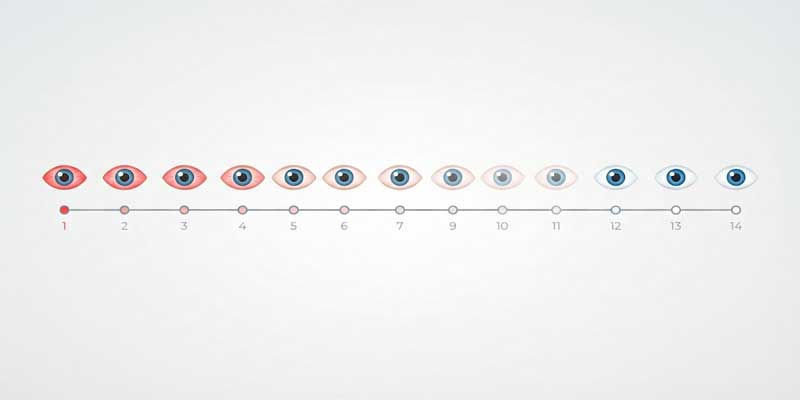
Every case is different, but a typical viral case often looks like this:
- Days 1 to 3: grittiness or irritation, a pink or red eye, and watery discharge. It often starts in one eye and can spread to the other within days.
- Days 3 to 7: symptoms are often at their worst, and may come with a cold or sore throat.
- Days 7 to 14: redness, tearing, and discharge gradually fade, although some cases take longer.
A mild bacterial case follows a similar arc, with thicker discharge and crusting. Mild cases often improve within a few days to about a week, and your provider may prescribe antibiotic drops in some situations. Allergic pink eye can start soon after exposure to a trigger and lasts as long as you are exposed. Mayo Clinic notes that, depending on the cause, symptoms usually improve within a few days to two weeks.
How Soon Do Symptoms Start After Exposure?
The South Dakota Department of Health notes that symptoms of bacterial pink eye usually appear 24 to 72 hours after exposure, and viral pink eye usually appears 5 to 12 days after exposure. Because infectious types spread easily, read our guide on is pink eye contagious if you or your child has symptoms.
Does Pink Eye Hurt or Affect Your Vision?
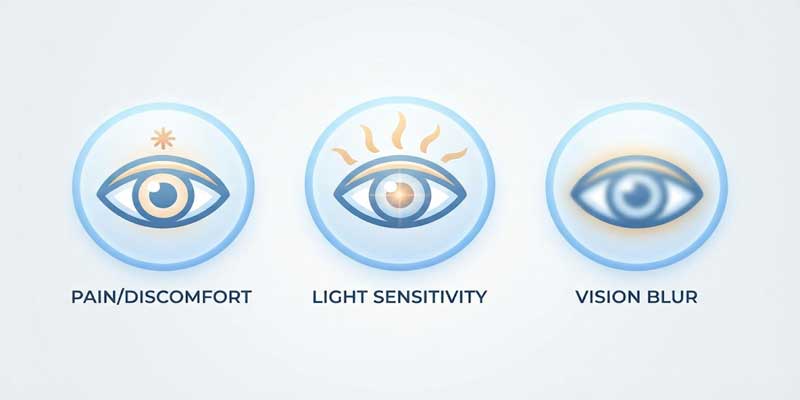
Pink eye is usually more annoying than painful. You may feel burning, itching, or grittiness, but severe pain is not typical. Vision is usually normal, although a little blurriness from tears or discharge can clear after you blink or wipe the eye. If your vision stays blurry, or you have real pain, something else may be going on.
Red Flag Symptoms That Need Prompt Care
Contact an eye care provider right away if you have a red eye along with any of the following:
- Moderate to severe eye pain
- Intense redness
- Sensitivity to light
- Blurred vision that does not clear when you blink
- Headache, nausea, or halos around lights
- A recent eye injury, or a chemical splash (flush with water for at least 15 minutes and get emergency care)
- A weakened immune system
- Symptoms that get worse or do not improve
These signs can point to more serious problems such as a corneal infection, uveitis, or acute angle-closure glaucoma. If you wear contacts, remove them and read our guide on pink eye and contact lenses. Not sure where to go? See when to see a pink eye doctor.
Pink Eye Symptoms in Babies and Children
Children often cannot tell you what hurts, so watch for rubbing, redness, crusting on the eyelids, watery eyes, and fussiness. Pink eye is common in kids and usually mild. Newborns are different: a baby with a red, swollen, or discharging eye should see a doctor right away, because infections at that age can be serious. For more, read our parent’s guide to pink eye in kids.
Is It Pink Eye or Something Else?
Not every red eye is pink eye. Dry eye, blepharitis, a stye, a harmless broken blood vessel on the white of the eye, and allergies can all look similar, as can more serious problems such as keratitis and uveitis. If you are unsure, an eye exam is the best way to know. For a broader overview, see our guide on what is pink eye.
If you already suspect pink eye, our guide to pink eye treatment explains what helps for each type.
Frequently Asked Questions
How can I tell if I have pink eye? Look for a pink or red eye with irritation, tearing, or discharge, sometimes with crusting after sleep. Because other conditions look similar, an eye care provider can confirm the cause.
Can pink eye affect just one eye? Yes. Pink eye often begins in one eye, and viral and bacterial types can spread to the other eye within days.
Does pink eye cause pain? Usually only mild discomfort, such as burning or grittiness. Moderate to severe pain is not typical and needs prompt attention.
Can pink eye cause blurry vision? Slight blurriness can happen because of tears or discharge and often clears when you blink. Blurry vision that does not clear is a warning sign.
What color is pink eye discharge? It can be clear, white, yellow, or green. Watery discharge is more typical of viral or allergic pink eye, and thick yellow or green discharge is more typical of bacterial pink eye, but color alone is not a reliable test.
How long do pink eye symptoms last? Most cases improve within a few days to two weeks, depending on the cause. Allergic pink eye lasts as long as you are exposed to the trigger.
The Bottom Line
Pink eye usually shows up as a pink or red eye with irritation, tearing, or discharge, and the details point to the cause. Mild cases often settle on their own, but pain, light sensitivity, vision changes, and any red eye in a newborn deserve prompt care. If you are unsure what you are dealing with, have your eyes checked.
This article is for general information only and is not a substitute for professional medical advice, diagnosis, or treatment. Always seek the advice of a qualified eye care provider about your specific condition.
Sources

Pingback: Pink Eye Treatment: What Works & When to See a Doctor
Pingback: Pink Eye in Kids: 6 Signs, Safe Care & School Return Rules
Pingback: Pink Eye Contact Lenses: 5 Steps to Take Right Away
Pingback: Pink Eye Doctor: 4 Places to Get Care Fast & When to Go