
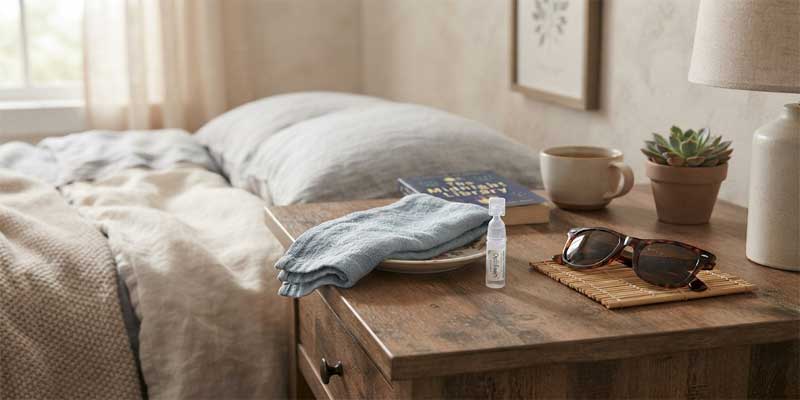
Safe home remedies for pink eye ease symptoms but do not cure an infection. Clean cool or warm compresses, artificial tears, gentle eyelid cleaning, and good hygiene help most people. Avoid putting breast milk, honey, tea, or redness-relief drops in your eyes, and see a provider if symptoms get worse.
Key takeaways
- Home care can make pink eye more comfortable, but it does not replace treatment for the underlying cause.
- The most useful remedies are clean cool or warm compresses, artificial tears, and gentle eyelid cleaning.
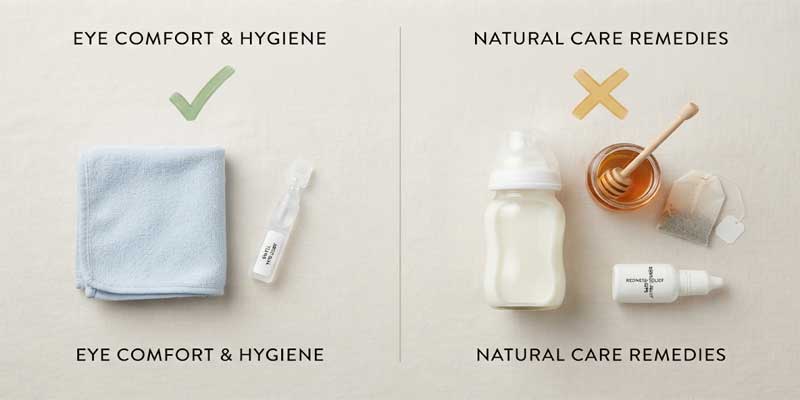
- Skip breast milk, honey, tea bags, homemade rinses, and redness-relief eye drops.
- Always stop wearing contact lenses and eye makeup while your eyes heal.
- See a provider for pain, vision changes, light sensitivity, or symptoms that get worse or do not improve.
When your eye is red and gritty, it is tempting to try whatever the internet suggests. Some home care really does help you feel better, while other popular remedies are unproven and can make things worse. The main point is that home remedies relieve symptoms but do not treat the underlying cause, so they work best alongside the right care for your type of pink eye.
Below we cover what helps, what to skip, how to match home care to your type, and when to see a provider. For background, read our guide on what is pink eye.
Can You Treat Pink Eye at Home?
Often, yes, for mild cases. Many cases of pink eye, especially viral and allergic ones, improve on their own, and comfort measures make the wait easier. The American Academy of Ophthalmology cautions against trying unproven remedies from untrustworthy sources, because some can cause harm.
If you are not sure which type you have, wear contact lenses, have a weakened immune system, or the patient is a newborn, see a provider before relying on home care. Our guide to pink eye treatment explains the medical options for each type.
Home Remedies That Help
1. Cool compress
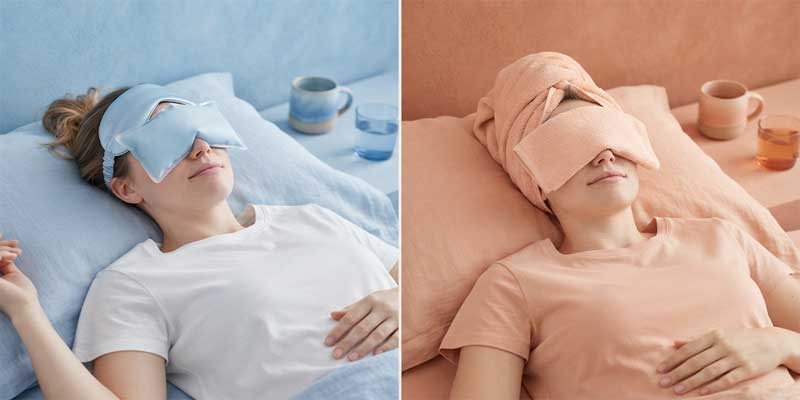
A cool compress soothes itching, burning, and swelling, and it is a good choice for viral and allergic pink eye.
- Soak a clean washcloth in cool water and wring it out.
- Place it over closed eyes for a few minutes, several times a day.
- Use a fresh, clean cloth each time, and a separate one for each eye if both are affected.
- Wash used cloths in hot water.
2. Warm compress
A warm compress helps loosen crusting that makes eyelids stick together, which is common with bacterial pink eye.
- Soak a clean washcloth in warm water that is comfortable to the touch, never hot, and wring it out.
- Rest it on closed eyelids for a few minutes, then gently wipe away loosened crusts.
- Re-warm the cloth as needed, and use a clean one for each session.
3. Artificial tears
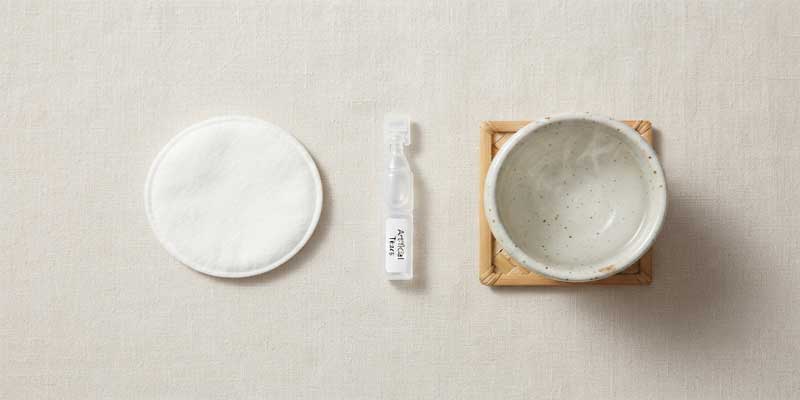
Over-the-counter lubricating drops, called artificial tears, moisten the eye and help rinse away irritants. Preservative-free single-use vials are gentler if you use them often. Do not let the tip touch your eye, do not share the bottle, and avoid products marketed for “redness relief.”
4. Gentle eyelid cleaning
If you have discharge or crusting, clean it away carefully:
- Wash your hands first.
- Moisten a clean cotton pad or soft cloth with warm water or sterile saline.
- Wipe from the inner corner of the eye toward the outer corner.
- Use a fresh pad for each wipe and each eye, and throw it away right after.
5. Trigger control for allergic pink eye
If allergies are behind your symptoms, avoiding the trigger is the most effective step. Rinse pollen from your face, keep windows closed on high-pollen days, wash bedding often, and use a cool compress for itching. Ask a pharmacist or provider about allergy eye drops. Allergic pink eye is not contagious.
6. Rest and comfort
Give your eyes a break from screens and make-up, and wear sunglasses if bright light is uncomfortable. Strong light sensitivity is not typical of simple pink eye, so get checked if it is more than mild.
Home Remedies to Skip
Some popular remedies have no reliable evidence behind them, and a few can hurt your eye. Because the eye is delicate, anything that goes in it should be sterile.
|
Remedy |
Verdict |
Why |
|---|---|---|
|
Breast milk |
Skip |
The AAO notes that a study found it did not cure the most common causes of pink eye, and it can introduce new bacteria into the eye |
|
Honey or honey water |
Skip |
No reliable evidence it treats pink eye, and it is not sterile |
|
Tea bags or chamomile |
Skip |
No proven benefit, and they can carry germs or leave bits of leaf that scratch the eye |
|
Homemade saltwater or tap-water rinses |
Skip |
Not sterile. Use sterile saline or artificial tears instead |
|
Essential oils, apple cider vinegar, other “natural” liquids |
Skip |
They can burn or injure the eye |
|
Redness-relief drops (such as Visine) |
Skip |
The AAO advises against them for any type of pink eye, because they hide redness without treating the cause |
|
Leftover antibiotic drops or someone else’s drops |
Skip |
They may be the wrong medicine, expired, or contaminated |
|
Steroid drops without an exam |
Skip |
They can make some infections worse |
|
Contact lenses and eye makeup |
Skip |
They can slow healing and re-infect your eyes |
Home Care by Type of Pink Eye
|
Type |
What helps at home |
Good to know |
|---|---|---|
|
Viral |
Cool compress, artificial tears, handwashing |
Usually clears in about 7 to 14 days. Antibiotics do not help |
|
Bacterial |
Warm compress for crusting, gentle eyelid cleaning, artificial tears |
See a provider if symptoms are severe or not improving. You may need antibiotic drops |
|
Allergic |
Trigger control, cool compress, artificial tears, allergy drops |
Not contagious. May return with each exposure |
|
Irritant or chemical |
Rinse with clean water or sterile saline, remove lenses, artificial tears |
After a chemical splash, flush for at least 15 minutes and get emergency care |
Not sure which row fits you? Our guide to viral vs. bacterial vs. allergic pink eye can help you tell them apart.
Hygiene While You Recover
Good habits protect your other eye and the people around you. Wash your hands often, do not touch or rub your eyes, use your own towel and washcloth, and wash pillowcases in hot water. Viral and bacterial pink eye spread easily, so read our guide on is pink eye contagious and our tips on how to prevent pink eye. If you wear lenses, see pink eye and contact lenses.
When Home Care Is Not Enough
See an eye care provider if you have pink eye along with any of the following:
- Moderate to severe eye pain
- Intense redness
- Sensitivity to light or blurred vision that does not clear when you blink
- A weakened immune system, or you wear contact lenses
- Symptoms that get worse or do not improve after about a week
- Bacterial pink eye that is not better after 24 hours of antibiotics
Newborns with any red or watery eye need to be seen right away. Our guide on when to see a pink eye doctor explains where to go, and our parent’s guide to pink eye in kids covers children.
Frequently Asked Questions
Can pink eye go away on its own? Often, yes. Most mild cases, especially viral ones, clear up in about 7 to 14 days, and home care can make the wait more comfortable. Some bacterial cases need antibiotic drops.
Is a warm or cool compress better for pink eye? Either can help. Use a cool compress for itching, burning, and swelling, and a warm one to loosen crusting. Use a clean cloth every time.
Can I use breast milk for pink eye? No. The AAO notes that breast milk did not cure the most common causes of pink eye in a study, and it can introduce new bacteria into the eye.
Can I use Visine or redness-relief drops for pink eye? No. They only hide redness and do not treat the cause. Use plain artificial tears instead.
Can I use tea bags or honey for pink eye? It is best to skip them. There is no reliable evidence they work, they are not sterile, and they can irritate or scratch the eye.
How long should I try home care before seeing a doctor? If you are not clearly improving after about a week, or sooner if symptoms get worse or you develop pain, vision changes, or light sensitivity, see a provider. Contact your provider if bacterial pink eye is not better after 24 hours of antibiotics.
The Bottom Line
The safest pink eye home remedies are simple: clean compresses, artificial tears, gentle eyelid cleaning, and careful hygiene. Skip breast milk, honey, tea, homemade rinses, and redness-relief drops, and do not wear contact lenses or eye makeup while you heal. If pain, vision changes, or worsening symptoms appear, get your eyes checked.
This article is for general information only and is not a substitute for professional medical advice, diagnosis, or treatment. Always seek the advice of a qualified eye care provider about your specific condition.
Sources
- American Academy of Ophthalmology: Pink Eye Home Remedies
- Cleveland Clinic: Home Remedies for Pink Eye
- Medical News Today: Home remedies for pink eye
- CDC: How to Treat Pink Eye

Pingback: Types of Pink Eye: 4 Causes, Key Differences & Treatment
Pingback: Pink Eye Contact Lenses: 5 Steps to Take Right Away