
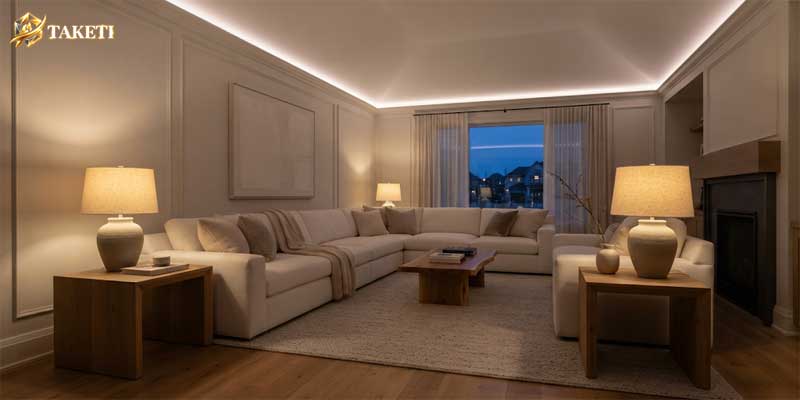
Walking into a well-designed communal living space should instantly evoke warmth, hospitality, and visual harmony. Yet, many homeowners struggle with harsh ceiling glare or unflattering dark corners because they treat lighting as an afterthought. Mastering the placement and sizing of living room lamps bridges the gap between cold architectural utility and tactile, human-scale comfort. Rather than flooding the entire floor plan with undifferentiated overhead lumens, tactical lamp placement introduces deliberate contrast, depth, and sculptural interest to your primary social zone.
A living room is fundamentally multi-functional: it accommodates lively family conversations, focused evening reading, casual entertainment, and quiet relaxation. Achieving this fluid versatility requires departing from single-switch ceiling arrays. By anchoring your perimeter with dedicated Table Lamps For Living Room configurations and accentuating key focal points, you construct a dynamic visual landscape. Understanding the precise mathematical interplay between furniture scale, eye levels, and color temperature ensures your living room lamps feel curated rather than cluttered.
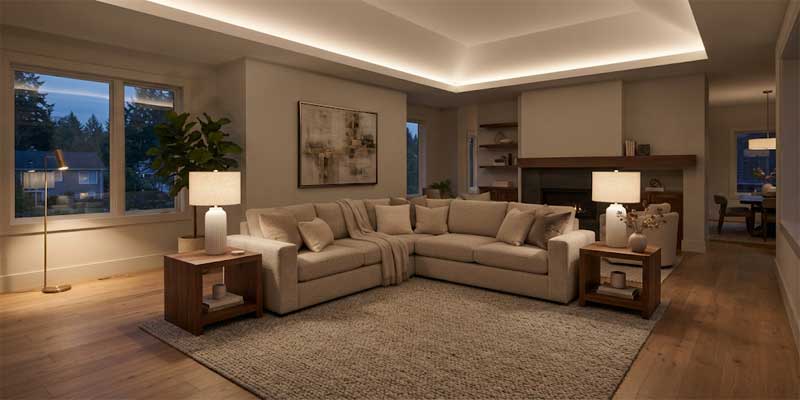
The Functional Anatomy of Balanced Living Room Lamps
Every luminaire in a shared living environment performs distinct optical labor. Understanding the physical components of modern fixtures enables you to evaluate how illumination behaves when arranging living room lamps within your seating zones:
- The Shade Profile: The geometry and density of the lampshade dictate light dispersion. Tapered empire shades cast tight, concentrated downward task pools, making them ideal for reading perches. Broad cylindrical drum shades on living room lamps disperse balanced light upward toward the ceiling and downward across tabletop surfaces simultaneously, boosting overall ambient diffusion.
- The Socket and Switching Architecture: Modern living zones demand variable output. Sockets featuring 3-way rotary switches (typically supporting 50W/100W/150W equivalent LED bulbs) or integrated in-line cord dimmers provide effortless transitions from vibrant daytime hosting to intimate late-evening film screenings.
- The Base Mass and Footprint: The physical weight and footprint diameter of the lamp base establish structural stability. In high-traffic living rooms with active pets or young children, ceramic, cast iron, or solid terrazzo bases measuring at least 7 to 9 inches across provide crucial anti-tip stability for premium living room lamps.
| Lamp Style / Type | Ideal Room Location | Optimum Height Range | Primary Optical Function |
|---|---|---|---|
| End Table Console Lamp | Side tables flanking sofas & loveseats | 28 – 32 inches | Seated reading task & mid-level ambient glow |
| Sofa Console / Buffet Lamp | Long tables positioned behind floating sofas | 32 – 36 inches | Vertical height bridging & architectural silhouette |
| Sculptural Accent Lamp | Bookshelves, credenzas, and fireplace mantels | 18 – 24 inches | Atmospheric low-lumen perimeter depth |
| Articulating Pharmacy Lamp | Beside dedicated wingback reading armchairs | 24 – 30 inches (adjustable) | High-contrast, zero-spill directional task light |
Precision Mathematics: Sizing and Positioning Living Room Lamps
One of the most persistent errors in interior styling is selecting tabletop fixtures based entirely on surface aesthetics without calculating spatial proportions. An undersized unit looks insignificant next to a deep sectional, while improperly sized living room lamps can easily blind anyone sitting nearby.
The Eye-Level Shade Rule
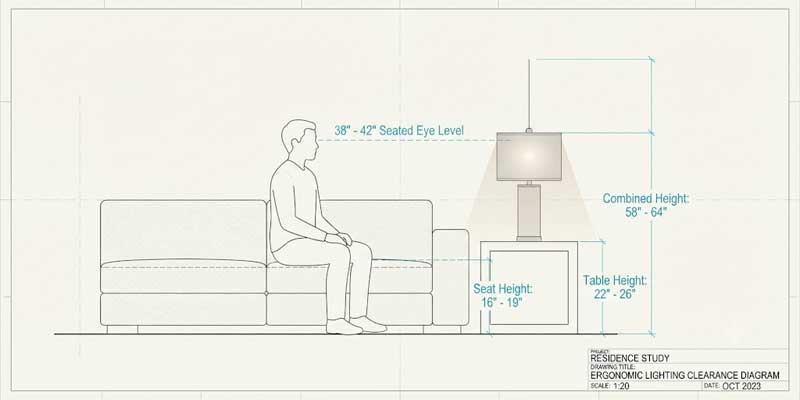
To establish absolute optical comfort with your living room lamps, take a seat on your living room sofa in your standard posture. Measure the vertical distance from the floor to the bridge of your nose (this baseline typically registers between 38 and 42 inches from the finished floor on standard sofa cushions). The bottom rim of your lampshade must sit exactly at or slightly below this eye level. When the shade rim sits level with your gaze, the physical fabric completely conceals the bare LED bulb and metal harp assembly, directing light strictly downward toward your lap without shining directly into your eyes.
The Table-to-Lamp Height Formula
The total height of the lamp base and shade combined must relate proportionally to the height of the supporting side table when arranging living room lamps:
- The Unified Height Constant: The combined height of your side table plus your living room lamps should equal 58 to 64 inches from the finished floor. If your sofa armrest rests alongside a low 22-inch side table, select a taller 36-inch lamp. If your side table measures a tall 26 inches, pair it with a 30-inch or 32-inch lamp to keep the overall visual horizon steady.
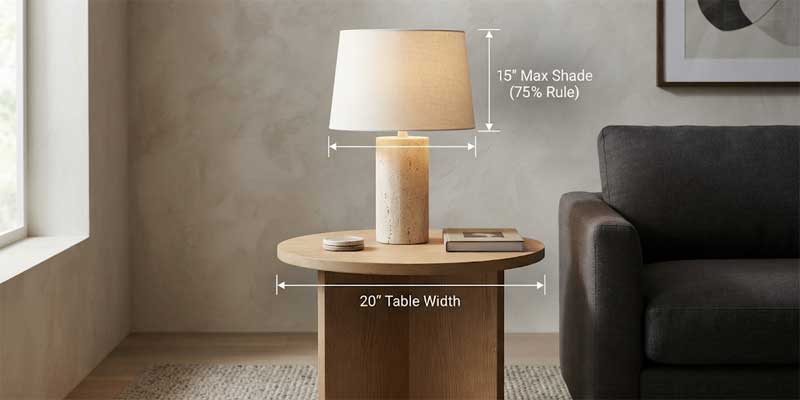
- The Footprint Clearance Ratio: The widest point of your lampshade should never exceed 75% of the side table width. For an end table measuring 20 inches across, limit the lampshade diameter to 15 inches. This preserves ample surface space for drink coasters, books, and decorative trays without creating accidental collision risks.
7 Professional Rules for Styling Living Room Lamps
Executing a designer-grade living area requires deliberate planning around furniture orientation, room scale, and sightlines. Implement these seven field-tested layout strategies to position your living room lamps effectively:
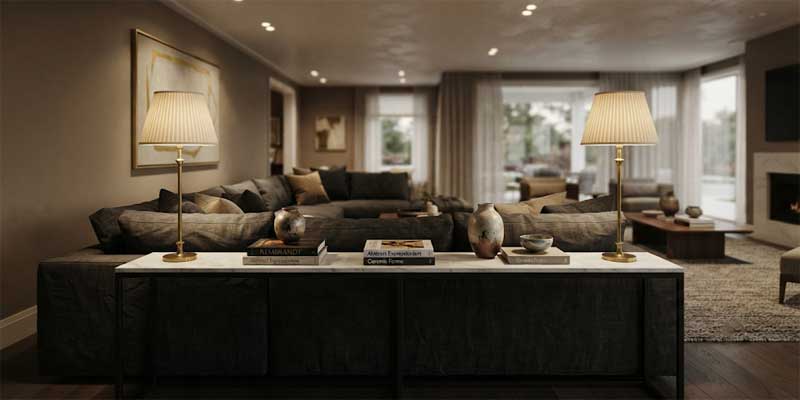
1. Ground Floating Furniture with a Back Console Array
In spacious open-concept American floor plans, sectionals and sofas frequently float in the middle of the room away from perimeter walls. Anchor this floating island by positioning a slender console table directly behind the sofa back. Placing a matching pair of tall, slim-profile living room lamps on this surface provides soft, mid-level ambient illumination throughout the central conversation zone while establishing a crisp architectural boundary between the living room and adjacent hallways.
2. Balance Visual Weight with Asymmetrical Anchors
While symmetrical table lamps create formal elegance, modern living rooms thrive on curated balance. If one end of your sofa features an substantial end table supporting a broad ceramic Table Lamp, counter it on the opposite side with a slender, arched metal floor lamp or a sleek swing-arm wall fixture. This establishes dynamic visual balance without repeating identical living room lamps across the entire room.
3. Incorporate Dedicated Accent Layers on Vertical Storage
Lighting should not be confined solely to sofa seating perimeters. Position low-profile accent living room lamps or rechargeable luminaires inside open bookcase cubbies, media consoles, or atop a fireplace mantel. Pairing these focal points with subtle LED Lights placed along architectural shelving edges pulls the viewer’s eye outward, creating the illusion of expanded square footage.
4. Harmonize Color Temperature Across All Sockets
The most visually jarring mistake in residential illumination is combining divergent color spectrums within the same room. A 4000K daylight bulb in an overhead ceiling fixture clashing with warm living room lamps makes the space feel fragmented and chaotic. Standardize every fixture in your primary relaxation areas to a warm 2700K baseline. Reserve 3000K solely for contemporary minimalist rooms with stark white plaster and cool marble finishes.
5. Tame Electrical Cords with Architectural Routing
Exposed, dangling power cords instantly degrade the aesthetic value of high-end living room lamps. When styling fixtures on floating tables, run power cords straight down the interior leg of the table using clear silicone cable clips. Tuck flat extension cords underneath area rugs or install flush floor receptacle boxes directly beneath furniture footprints to eliminate tripping hazards.
6. Utilize Linen and Textured Fabric Shades for Ambient Softness
Metal and dark paper shades focus illumination into rigid vertical columns, leaving adjacent living room walls dim. For balanced ambient diffusion that softens conversation seating, choose high-thread-count linen, woven cotton, or silk shades for your living room lamps. These fibrous materials gently scatter light horizontally through their weaves, eliminating harsh shadows on faces while maintaining bright downward reading task clarity.
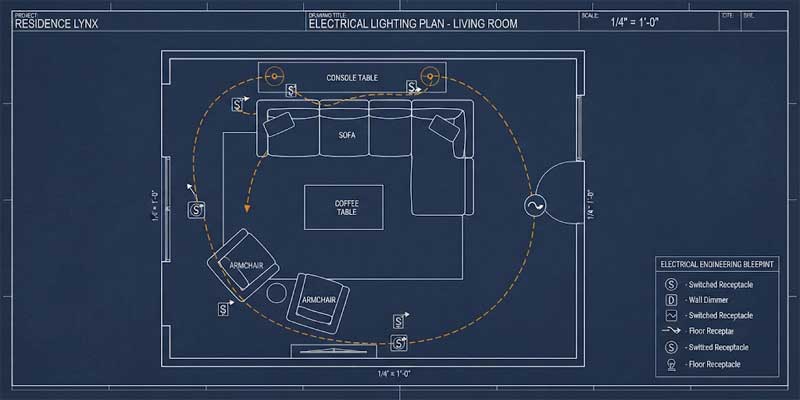
7. Implement Multi-Zone Wall Switching and Smart Dimmers
Manually walking around a large living room to click off five separate switches is inconvenient. Plug your accent fixtures and living room lamps into switched wall outlets controlled by a single master wall dimmer near the entryway. Alternatively, integrate smart dimming plugs that allow you to program synchronized evening presets—lowering living room output from daytime brightness down to a relaxing 20% evening glow with a single tap.
A living room requires sufficient foot-candles for entertaining, balanced with calming warmth that prepares family members for restful sleep. Calculating your aggregate lumen load prevents under-lighting or optical fatigue when selecting living room lamps.
For comfortable living rooms, aim for an aggregate output of 15 to 20 lumens per square foot across all combined fixtures. In a standard 15 × 20 foot living room (300 square feet), your target baseline is 4,500 to 6,000 total combined lumens.
- Ambient Ceiling Wash / Recessed: 1,500 – 2,000 lumens (dimmed to 30% after dark).
- Primary Living Room Lamps (Pair): 800 lumens each (totaling 1,600 lumens).
- Secondary Reading / Accent Lamps: 450 lumens each (totaling 900 to 1,350 lumens).
Maintain a Color Rendering Index (CRI) of 90 or higher across all living room lamps. High CRI values ensure natural skin tones during conversations and render rich upholstery textiles, hardwood floors, and wall art with vivid, lifelike fidelity.
Troubleshooting Common Living Room Lighting Pitfalls
Before purchasing your next lighting ensemble, inspect your space to prevent recurring errors with living room lamps:
- The Direct Television Reflection: Positioning living room lamps directly opposite television screens produces distracting optical hot-spots on glass displays. Ensure lamp shades remain outside the direct sightline axis between viewer seating and media monitors.
- The Top-Heavy Tipping Hazard: Placing tall, narrow-based spindle living room lamps on small drink tables creates instability. Restrict tall fixtures (30+ inches) to heavy, wide-surface end tables or console counters.
- The High-Contrast Shadow Trap: Relying exclusively on two intense living room lamps in an otherwise pitch-black room creates excessive ocular contrast, causing headaches and visual fatigue. Soften the room by washing background perimeter walls with dim accent lighting.
Frequently Asked Questions About Living Room Lamps
Should all table lamps in a living room match exactly?
No. While identical pairs work well on formal sofa console tables or balanced credenzas, modern interior design favors coordinated harmony over rigid matching. You can mix ceramic living room lamps with an antiqued brass fixture, provided both share similar shade proportions, drum silhouettes, and identical 2700K warm bulb temperatures.
What is the best lamp shade shape for small living rooms?
Square or rectangular lampshades are ideal for space-constrained layouts. Because their straight edges sit flush against walls or sofa sides, living room lamps with rectangular shades consume significantly less clearance than round drum shades of equivalent diameter.
How bright should a living room reading lamp be?
For dedicated book reading and tablet use, aim for living room lamps delivering 450 to 800 lumens (the equivalent of a traditional 40W to 60W incandescent bulb) with an opaque or semi-translucent shade that directs light downward without peripheral glare.
