
Dialing in the correct table lamp height marks the dividing line between an inviting living space and an irritating, glare-ridden room layout. Many homeowners spend substantial time sourcing designer accent pieces, evaluating sculptural ceramic textures, hand-spun linen shades, and antique brass neck hardware. Yet upon unboxing and placing the piece beside the couch, disappointment sets in. The light bulb filament shines directly into their eyes while they attempt to watch television or read, or the shade towers awkwardly over an intimate side table like an oversized beacon.
Lighting a functional living area involves clear optical mechanics, vertical sightline discipline, and furniture geometry rather than arbitrary aesthetic choices. When curating ambient layers using our collection of table lamps for living room side tables, the fixture must harmonize directly with adjacent seat cushions, tabletop perimeters, and occupant posture. Understanding how human eye level interacts with light dispersion enables you to build a living room that feels cohesive, architecturally balanced, and free from harsh glare.
The Optical Mechanics of Table Lamp Height and Seated Eye Level
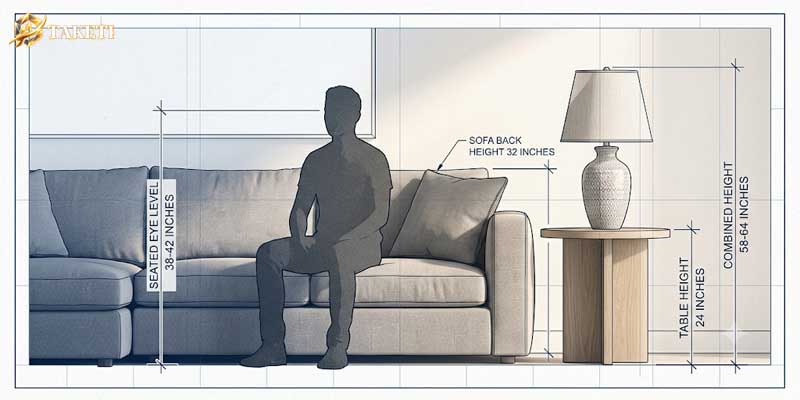
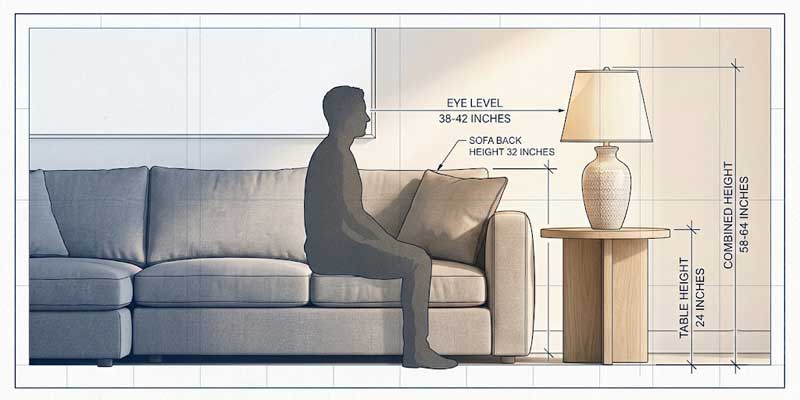
The foundational benchmark governing every residential accent light is seated eye level. When an adult sits down on a standard residential sofa, armchair, or deep sectional, their horizontal line of sight rests consistently between 38 and 42 inches above the finished flooring. This biological parameter dictates the vertical placement of every component of your fixture, especially when calculating your target table lamp height and the bottom rim of the lampshade.
A lampshade serves two primary structural duties: casting diffuse ambient warmth across living areas and directing a concentrated cone of task illumination downward over tabletop surfaces. However, its most critical optical task is shielding the raw, brilliant light source from direct visual contact. If your table lamp height positions the bottom edge of the shade higher than 42 inches above the floor, anyone seated beside the end table will look directly upward into the hot bulb filament, socket cluster, and metallic harp bracket. This produces immediate eye fatigue, visual glare, and head discomfort within minutes.
Conversely, selecting an undersized fixture that positions the shade below 36 inches off the floor generates opposite problems. When the shade sits too low relative to your shoulders and eyes, the physical cone of usable downward light shrinks to a tiny circle directly around the lamp base. Task illumination cannot reach your lap, reading materials remain cast in dark shadows, and tabletop accessories like books, beverage coasters, and remote controls sit obscured in dimness.
Measuring Real-World Sofa Cushion Compression
Many homeowners encounter frustrating errors because they calculate elevations using rigid tape measures against an empty sofa. Furniture upholstery behaves dynamically under human body weight. Standing beside an unweighted cushion produces false data because different internal cushion fillings compress unevenly under normal daily use.
Standard high-resilience foam cushions compress between 1 and 1.5 inches when occupied. Feather and down-blend cushions, prized for luxurious residential seating, frequently compress 3 to 4 inches beneath body weight. Innerspring and pocket-coil core cushions compress approximately 2 inches before stabilizing. To discover your actual functional seated eye level, sit down in your natural resting posture, allow the cushion to compress completely, and have a second person measure vertically from the floor to the bridge of your nose. That specific measurement establishes your true seated eye line and serves as the baseline to calibrate your living room table lamp height.
The Combined 58 to 64 Inch Formula for Table Lamp Height
Professional interior designers rarely shop for fixtures by looking solely at manufacturer specifications. Instead, they calculate the table and the lamp as a single architectural system. Across standard residential living rooms, the combined total of your end table plus your overall table lamp height should equal between 58 and 64 inches from the floor.
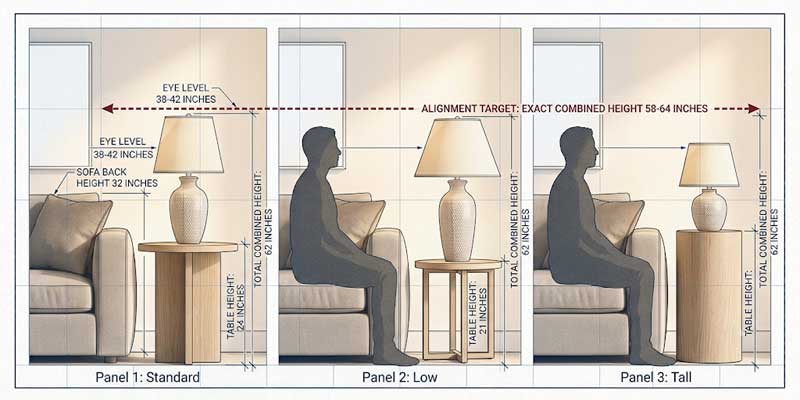
This combined formula ensures visual consistency across open-concept layouts. Whether your eyes travel across a conversational seating cluster or view the room from an adjoining entryway, all shade perimeters maintain an aligned horizontal profile. Because end table heights vary substantially depending on design styles, your target table lamp height must counterbalance the specific elevation of the furniture beneath it:
| End Table Height | Target Table Lamp Height | Combined Elevation Sum | Target Furniture Configuration |
|---|---|---|---|
| 20 to 22 inches (Low Profile) | 30 to 32 inches | 58 to 62 inches | Low modern sectionals, track-arm couches, platform designs |
| 23 to 25 inches (Standard Height) | 26 to 29 inches | 59 to 63 inches | Transitional sofas, rolled-arm couches, traditional living sets |
| 26 to 28 inches (Substantial Frame) | 24 to 26 inches | 60 to 64 inches | Deep tufted Chesterfields, oversized club armchairs |
| 29 to 30 inches (Tall Accent Table) | 22 to 24 inches | 61 to 64 inches | Narrow architectural pedestals, high console flankers |
Evaluating Low Modern Tables Versus Tall Transitional Stands
Modern Scandinavian and minimalist living rooms frequently utilize low-slung accent tables sitting only 20 to 22 inches off the ground. Placing a petite 24-inch lamp on a low table produces a total height of barely 45 inches, forcing the illumination far below eye level and creating awkward visual voids. Low tables demand substantial fixtures to reach a balanced table lamp height of 30 to 32 inches and elevate the light source into usable zones.
Conversely, traditional living rooms often incorporate substantial accent stands standing 28 inches tall. Topping a high table with a 32-inch architectural column produces a towering 60-plus inch structure where seated family members stare directly upward into the light bulb. High tables require a more compact table lamp height measuring 22 to 25 inches to keep visual weight balanced and prevent shade rims from towering overhead.
Balancing Surface Area and Diameter Proportions
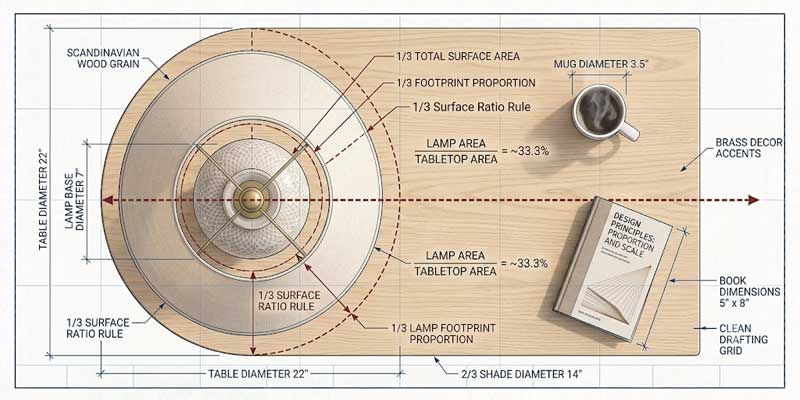
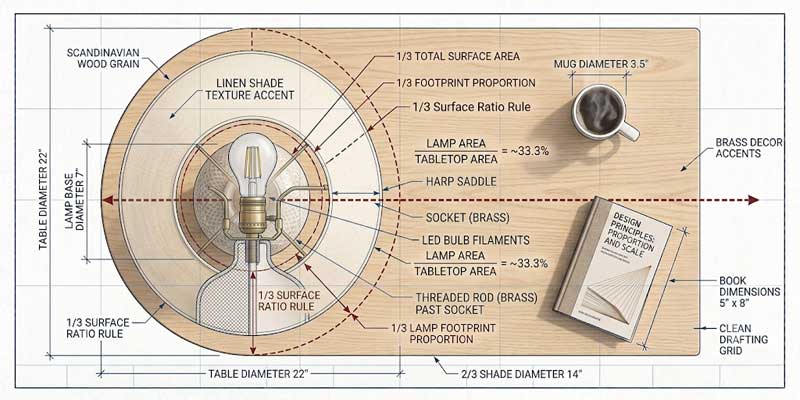
Dialing in the correct table lamp height cannot function successfully without horizontal balance across your tabletop. A frequent design blunder involves selecting an appropriately tall lamp that possesses a bloated ceramic base or an excessively wide drum shade, consuming the entire usable surface of the end table. When a fixture crowds out resting space for a cup of coffee, reading glasses, or a book, the piece becomes a daily nuisance.
Follow the strict one-third footprint rule when pairing pieces. The widest point of your lamp—whether measuring the circumference of the ceramic body or the bottom diameter of the shade—should never occupy more than one-third of the total width of the tabletop surface. For example, if you place a lamp on a round 24-inch side table, the shade diameter should not exceed 16 inches, and the base diameter should sit within an 8-inch boundary, preserving plenty of practical space.
The Golden Ratio: Shade Elevation Versus Base Height
Proper vertical balance relies on standard optical proportions: the lampshade should represent roughly one-third of the total table lamp height, leaving the base and decorative neck to occupy the remaining two-thirds. If your complete fixture stands 27 inches tall from its felt base pad to the tip of its finial, the shade itself should measure approximately 9 inches in vertical height.
Violating this classical ratio creates awkward visual tension. A shade that measures half the height of the lamp produces a top-heavy, cartoonish appearance that looks structurally unstable. Conversely, an undersized shade looks like an accidental factory mismatch, exposing functional metal stems and destroying architectural balance.
Aligning Side Table Surfaces with Sofa Armrests
Your side table serves as the physical bridge between your couch and your lighting fixture. The tabletop surface should sit flush with, or no more than two inches below, the armrest of the adjacent sofa. When the accent table surface aligns cleanly with sofa armrests, managing both the light switch and overall table lamp height becomes effortless in daily living room routines.
When an end table stands taller than the couch armrest, reaching sideways to operate a twist-switch or touch sensor requires an awkward upward arm lift, increasing the risk of knocking over glassware. Aligning the table within zero to two inches below the armrest enables natural, horizontal forearm extension. Visually, this continuity keeps horizontal lines calm and uncluttered, grounding the lamp base cleanly against the arm profile.
Managing Room Sightlines and Flanking Symmetry
In living rooms featuring balanced layouts—such as twin table lamps flanking a central three-cushion couch, or dual lamps resting on a long sofa console table—symmetry dictates visual tranquility. When fixtures on opposite ends of a sofa sit at mismatched elevations due to uneven table designs or uneven floor rugs, the entire room feels disoriented.
Step back ten feet from your sofa and examine the decorative finials capping both shades. They should form an unbroken, perfectly parallel horizontal line across the room. If one side table sits slightly lower due to flooring variations, correct the discrepancy cleanly by placing subtle hardwood risers or dense felt glides beneath the legs of the shorter table rather than altering your selected table lamp height or lamp hardware.
Selecting Shade Geometry for Constrained Living Spaces
Lampshade silhouettes dictate light distribution pathways while determining how closely furniture can nestle against structural walls or high-traffic pathways. Understanding shade geometry helps solve footprint problems in compact layouts:
- Straight Drum and Cylinder Shades: Feature identical top and bottom diameters. They project equal volumes of vertical light upward toward the ceiling and downward onto tabletops while maintaining a slim lateral footprint ideal for narrow side tables.
- Rectangular and Oval Shades: Provide expansive front-to-back clearance. When placed on narrow rectangular console tables resting against sofa backs, these shallow profiles fit neatly without rubbing against walls or cushions.
- Flared Empire Shades: Feature narrow top openings and wide, angled bases. They cast exceptionally wide downward pools of ambient lighting, making them wonderful choices for large corner tables where ample boundary space prevents accidental bumps.
Calibrating Harp Sizing to Prevent Socket Glare
Even when your overall table lamp height matches your mathematical target, an incorrectly sized lamp harp can ruin optical comfort. The harp is the U-shaped wire bracket that straddles the light bulb socket and anchors the lampshade with a decorative finial screw. Mass-manufactured fixtures frequently ship with standardized seven-inch or eight-inch harps that fail to align properly with custom replacement shades.
Sit down on your couch and evaluate your lamp from a normal resting position. The bottom rim of the lampshade must hang approximately one-half inch below the lowest edge of the electrical brass or nickel socket. If the socket shell, rotary turn knob, or raw bulb neck is visible beneath the shade rim while seated, your harp is too tall. Replacing the stock harp with a bracket that is one-half to one inch shorter drops the shade over the mechanical socket, sealing off direct glare while preserving full downward ambient illumination.
Frequently Asked Questions About Table Lamp Height
Navigating lamp proportions often raises specific questions regarding individual room layouts and bulb specifications. Below are practical solutions to common residential placement scenarios.
Can a Table Lamp Ever Be Taller Than 32 Inches in a Living Room?
Yes, but primarily in expansive rooms with architectural high ceilings exceeding ten feet. In high-volume spaces, standard 26-inch lamps can look dwarf-like and lost. However, a taller table lamp height between 33 and 36 inches must always sit on lower tables (18 to 22 inches) so that the bottom rim of the lampshade continues to align with the 38 to 42-inch seated eye level line.
What Color Temperature Works Best with Living Room End Table Lamps?
A color temperature between 2700K and 3000K provides ideal illumination. A 2700K warm white bulb creates an intimate, relaxing ambiance suitable for evening unwinding, while a 3000K soft white bulb delivers slightly cleaner contrast for reading without feeling sterile or overly clinical.
How Do I Measure a Replacement Harp for an Existing Fixture?
Measure from the base of the harp saddle (located directly beneath the electrical light socket) up to the threaded stud where the finial fastens at the top. If your socket is peeking out beneath your shade rim by one inch, subtract one inch from that measurement and purchase a replacement harp in that corresponding height to maintain proper optical coverage.
Final Checklist for Perfect Living Room Lamp Proportions
Achieving refined living room lighting comes down to executing three core measurements before finalizing your decor purchase. First, verify that your seated eye level lands squarely along the bottom perimeter of the shade. Second, ensure that the sum of your end table height and table lamp height sits firmly within the 58 to 64-inch range. Finally, respect your tabletop footprint by keeping lamp bases and shades within one-third of the available surface width.
When these mathematical rules align with tactile ceramics, sculptural brass elements, and quality linen diffusers, your living room gains both functional lighting performance and enduring aesthetic balance.
